
The decision by OPEC+ to maintain existing production targets through late 2026 places the burden of price stabilization on actual export figures rather than paper targets. This shift in focus comes at a time when the broader energy landscape is grappling with a multi-layered bearish sentiment that shows little sign of immediate reversal. Market participants are increasingly wary as traditional price supports appear to be crumbling under the weight of geopolitical uncertainty and shifting supply-side fundamentals. While West Texas Intermediate and Brent crude remain sensitive to international diplomacy, the underlying demand structure is being questioned by analysts who see a softening global economy. This environment has created a cautious atmosphere where any temporary price spikes are quickly met with selling pressure. The current market state is not merely a reaction to a single event but rather a cumulative response to a series of technical breakdowns and fundamental shifts defining this period.
Geopolitical Diplomacy: The Impact of Iranian Negotiations
The primary driver behind the current ceiling on crude oil prices stems from the intricate diplomatic dance surrounding Iran’s nuclear program and its potential for a full return to the global supply chain. Recent mediation efforts led by Qatar have introduced a layer of speculative risk that keeps long-term buyers on the sidelines. Even though a formal agreement between Washington and Tehran remains elusive, the mere existence of active negotiations serves as a psychological barrier for the market. Traders are factoring in the possibility of a sudden influx of sanctioned oil, which could disrupt the delicate balance currently maintained by other major producers. This geopolitical overhang has effectively capped any significant rallies, as the risk of a supply shock to the downside outweighs the current geopolitical tensions in other regions. Consequently, the market is characterized by a “wait-and-see” approach that favors short-term fluctuations over any sustained bullish trend.
Compounding these diplomatic factors is the growing discrepancy between industry inventory reports and official government data, which has left investors seeking clarity. A recent report from the American Petroleum Institute indicated a surprising draw of over five million barrels in domestic crude stocks, a figure that would typically ignite a strong upward price correction. However, the market reaction remained remarkably subdued as participants deferred to the upcoming Energy Information Administration report for confirmation. This skepticism is rooted in a broader concern regarding the transparency of global exports following the OPEC+ decision to hold steady on production targets. By choosing not to implement further cuts, the organization has signaled a transition toward defending market share rather than price floors. This strategic pivot suggests that the era of aggressive supply intervention may be yielding to a more market-driven approach, forcing reliance on vessel tracking.
Market Fundamentals: Weather Patterns and Technical Barriers
In the natural gas sector, a fascinating but bearish tug-of-war is unfolding between falling domestic production and unseasonably warm weather patterns. While output in the Lower 48 states has declined from the highs seen in the previous month, dropping to roughly 110 billion cubic feet per day, this reduction has failed to stimulate the usual seasonal price appreciation. The culprit is a persistent high-pressure system that has brought milder temperatures to the most energy-intensive regions of the United States. This lack of heating degree days has neutralized the impact of lower production, as residential and commercial consumption remains well below historical norms for this time of year. Investors who had positioned themselves for a typical winter rally are now facing a reality where supply side constraints are insufficient to overcome a massive demand vacuum. This imbalance is reflected in the steady erosion of front-month futures prices as the window for heating demand closes.
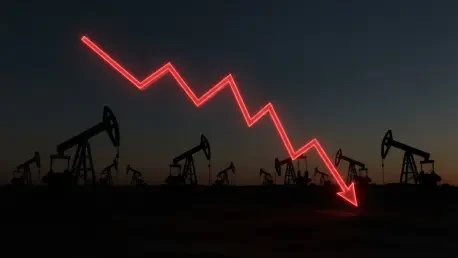
The technical barriers established during this bearish cycle forced a significant realignment of trading strategies for both WTI and Brent crude. As prices broke below established rising channels, the Relative Strength Index for major commodities remained below 40, confirming that downward momentum was the dominant force. Market participants eventually recognized that reclaimed resistance levels, such as $97.48 for WTI, were essential for any bullish thesis to remain valid. In the final analysis, the energy markets in late 2026 reached a point where speculative premiums were replaced by a harsh focus on supply realities and climatic shifts. For future resilience, investors started prioritizing high-frequency export data and localized weather models to anticipate demand gaps. This era demonstrated that ignoring the structural shift toward market-driven pricing models was a costly mistake for many. Consequently, the industry moved toward more flexible hedging strategies to mitigate the risks associated with this persistent bearish trend.