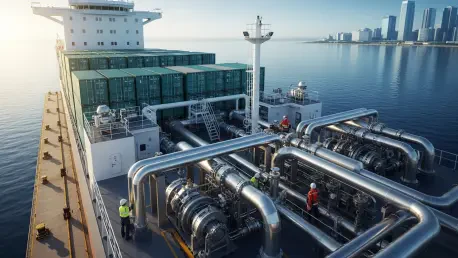

The maritime industry is currently witnessing a transformative shift toward sustainable propulsion as Seaspan Corporation and Hapag-Lloyd successfully finalize the world’s first full-scale methanol engine retrofit on a large container vessel. This landmark project, centered on the Seaspan Amazon, a 10,100 TEU vessel, represents a significant milestone in the quest to decarbonize global shipping routes. By successfully converting a conventional S90 engine to a dual-fuel methanol-capable system, these industry leaders have demonstrated that the existing global fleet can be adapted to meet stringent environmental targets without requiring total vessel replacement. The collaboration underscores a strategic commitment to reducing carbon intensity and pioneering technological solutions that address the urgent need for cleaner maritime operations. This technical feat required meticulous planning and significant investment, setting a new benchmark for the sector as it navigates the transition toward a greener era.
Engineering and Strategic Transformation: A Comprehensive Approach
Transitioning a massive propulsion plant like the MAN B&W ME-LGIM engine involves a highly complex mechanical overhaul that extends far beyond simple component replacement. Engineers focused on the integration of specialized fuel injection equipment and new cylinder heads designed to handle the unique chemical properties of methanol. One of the primary technical hurdles was addressing the energy density of methanol, which is approximately half that of traditional heavy fuel oil, requiring a sophisticated fuel delivery system to maintain engine performance. This necessitated the installation of high-pressure pumps and a comprehensive series of double-walled piping to ensure safety and prevent leaks within the engine room. Furthermore, the vessel’s control systems were updated with advanced software to manage the seamless transition between fuel types, ensuring that the ship maintains operational efficiency under varying load conditions. This successful conversion proves that the technology is now a scalable reality for the fleet.
Beyond the engine modifications, the Seaspan Amazon required a significant structural redesign of its fuel storage and handling infrastructure to accommodate the specific requirements of methanol. Since methanol is a liquid at ambient temperature, it offers advantages in handling compared to other alternative fuels, yet it still demands specialized tank coatings and rigorous ventilation systems. The project team utilized existing space on the vessel to incorporate new fuel tanks, ensuring that the cargo-carrying capacity was not compromised while maintaining the ship’s stability and trim. Safety protocols were enhanced with the installation of cutting-edge sensors and thermal imaging cameras, which are essential since methanol burns with a nearly invisible flame. Crew members underwent extensive training on the new bunkering procedures and emergency response strategies, bridging the gap between hardware installation and operational proficiency. This approach ensured that every aspect of the vessel architecture supported the transition.
Stakeholders throughout the global shipping industry recognized that the successful completion of the Seaspan Amazon retrofit established a new baseline for operational sustainability. This project moved the collective conversation from theoretical decarbonization to a practical, hardware-driven reality that addressed the immediate need for carbon reduction. Moving forward, vessel operators prioritized the assessment of their existing fleets for similar conversion opportunities, focusing on ships that offered the highest return on environmental investment. Strategic focus shifted toward the development of robust green methanol supply chains to ensure that the environmental benefits of the retrofitted engines were fully realized through low-carbon fuel sourcing. Regulators utilized the technical data from this deployment to refine safety standards and streamline bunkering protocols across international ports. By prioritizing the upgrade of high-capacity container ships, the maritime sector took a significant step toward achieving net-zero emissions.