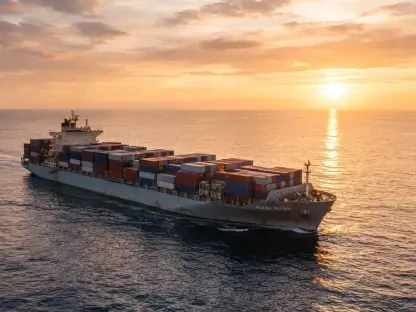

Deep-seated human factors and a general resistance to changing established operational routines are slowing the progress of environmental mandates within the shipping sector. The maritime industry is currently at a pivotal crossroads, attempting to transition from a century of reliance on fossil fuels to a future defined by zero-emission energy sources. Anthony Mollet, Executive Officer of the Marine Fuels Alliance (MFA), highlights that this shift is complicated by factors far beyond simple technological innovation. The primary obstacle is a “paralysis of choice” caused by an overwhelming array of potential fuel pathways, such as LNG, hydrogen, and ammonia. Without a singular international direction, stakeholders remain hesitant to commit the massive capital required for new infrastructure, fearing their investments may become obsolete. This uncertainty is compounded by the structural and psychological barriers that exist within the global shipping community. While some alternative fuel technology is ready, the lack of a cohesive global framework prevents adoption.
Foundation of the Current Transition Crisis
The absence of a unified international solution means that different regions are moving at vastly different speeds. While the European Union has introduced aggressive measures like the Emissions Trading System, these regulations lack global reach, creating a disjointed market. This fragmentation discourages global operators from making uniform changes, as compliance is often only necessary in specific jurisdictions rather than across the entire world’s oceans. Since the start of the current regulatory cycle in 2026, the discrepancy between regional mandates and international standards has become even more pronounced. Global shipping companies find themselves navigating a labyrinth of local rules that do not always align with the overarching goals of the International Maritime Organization. This lack of harmonization means that a vessel compliant in one port might face technical hurdles in another, leading to a fragmented approach to decarbonization that prioritizes local compliance over systemic change.
Economic disincentives further hinder progress, as fossil fuels remain significantly more affordable and accessible than greener alternatives. Currently, most companies only pivot toward biofuels or new energy sources when mandated by law, rather than as a proactive business strategy. This suggests that the current “carrots and sticks” provided by regulators are not yet powerful enough to shift the fundamental economic logic of the maritime market. For many shipowners, the high cost of green ammonia or methanol simply does not align with their operational margins when cheaper low-sulfur fuel oils are readily available. Furthermore, the infrastructure required to scale these new energy sources is still in its infancy, making the logistical hurdle as daunting as the financial one. Without a price on carbon that truly levels the playing field, the financial sector remains cautious about funding the massive fleet renewals necessary to achieve net-zero objectives. Consequently, the industry faces a stagnant period where progress is measured in pilot programs rather than fleet-wide transitions.
Addressing the Industry Knowledge Gap
Decarbonization is a highly technical field that requires a completely different skill set than traditional bunkering. For decades, the industry operated on a relatively straightforward understanding of fuel quality and performance. The transition to complex alternative fuels requires a level of education and retraining that much of the industry has yet to undergo, creating a significant barrier to implementation. Modern bunker operations now involve handling cryogenic liquids, highly toxic chemicals like ammonia, or pressurized hydrogen, each demanding unique safety protocols and technical expertise. This knowledge deficit is not limited to shipboard crews but extends to shoreside management and supply chain logistics providers. As the industry moves away from conventional fuel oils, the risk of operational errors increases if the personnel involved are not properly trained in the specific characteristics of these new energy carriers. Education must therefore be treated as a foundational element of the transition, rather than an afterthought, to ensure safety.
To bridge this gap, the Marine Fuels Alliance focuses on providing educational resources and training to help personnel understand the technical nuances of the energy transition. By fostering networks at both global and regional levels, the MFA aims to break down the silos that prevent effective collaboration. This support is particularly vital for small and medium-sized enterprises that lack the resources to participate in high-level global summits. The alliance serves as a central hub where suppliers and operators can share best practices and technical data, demystifying the complexities of alternative fuel adoption. Through its three pillars of support, promotion, and connection, the organization ensures that even smaller players in the market have access to the latest technological insights and regulatory updates. By democratizing information, the MFA helps to mitigate the competitive disadvantage faced by companies that cannot afford large research departments. This collective approach is essential for creating a more resilient and informed maritime community.
Operational Realities Versus Public Discourse
There is a significant disconnect between public discourse and the operational reality of the shipping industry. While the majority of news coverage focuses on experimental fuels, the vast majority of the actual market remains centered on fossil fuels. Liquefied Natural Gas has emerged as the clear frontrunner for the transitional phase, serving as a pragmatic bridge toward more advanced zero-emission solutions. The adoption of LNG allows shipowners to reduce their carbon footprint immediately while waiting for the technology and supply chains of hydrogen and ammonia to mature. However, the reliance on gas-based solutions is often criticized as a half-measure that delays the ultimate goal of absolute zero emissions. Despite these criticisms, the reality on the ground shows that LNG infrastructure is expanding rapidly, providing a reliable and proven alternative to traditional fuel oils. This pragmatic approach reflects the industry’s need for stability and reliability, as operators cannot afford to gamble on unproven technologies that may not be available for several years.
Interestingly, the volume of High-Sulphur Fuel Oil continues to grow despite tightening regulations. This trend is driven by the installation of exhaust gas cleaning systems, or scrubbers, on larger vessels, allowing them to remain compliant while continuing to use cost-effective traditional fuel. Meanwhile, biofuels are gaining some traction as “drop-in” solutions, though their scalability remains limited by feedstock competition with other sectors like aviation and land transport. The persistence of traditional fuel oils suggests that many operators are prioritizing short-term financial viability over long-term environmental alignment. While scrubbers offer a technical solution to sulfur limits, they do not address the core issue of carbon dioxide emissions, creating a regulatory loophole that many find economically attractive. This situation highlights the difficulty of phasing out carbon-intensive fuels when the financial incentives for doing so are still developing. As we move from 2026 into the future, the tension between maintaining low costs and meeting targets remains high.
Human Factors and Institutional Resistance
A major hurdle to decarbonization is the impact of human factors, specifically a general unwillingness to change established routines. Much of the maritime workforce consists of professionals who have spent their careers under a specific set of rules and are not necessarily interested in retraining or adopting what they might perceive as subjective political mandates. This cultural inertia makes it difficult to implement the radical changes necessary for a rapid transition to new energy sources. The resistance is often found at all levels of the organization, from the engine room to the boardroom, where traditional metrics of success still dominate decision-making processes. Overcoming this mindset requires more than just new technology; it necessitates a fundamental shift in corporate culture and a commitment to long-term sustainability that transcends immediate profit margins. Without addressing the psychological barriers to change, even the most advanced technical solutions will struggle to gain traction in an industry that has historically valued stability and tradition over rapid innovation.
Furthermore, the current regulatory landscape is often viewed as paradoxical or even punitive. Regional taxes are frequently seen by industry players as revenue-generating tools for governments rather than genuine incentives for environmental change. For these regulations to be effective, the penalties for non-compliance must be high enough to make the transition to expensive alternative fuels the most logical commercial choice for every operator. Currently, many companies find it more economical to pay the fines or purchase carbon credits rather than invest in the massive retrofitting required for zero-emission operations. This highlights a critical flaw in the current strategy: if the cost of “business as usual” remains lower than the cost of innovation, the industry will continue to lag behind its environmental goals. Regulators must therefore ensure that their policies are not just aspirational but are backed by economic structures that make decarbonization the most profitable path forward. Only by aligning mandates with financial incentives can the maritime sector transform.
Strategic Recommendations for Future Integration
The path toward a sustainable maritime industry required more than just the introduction of new fuels; it demanded a complete overhaul of global regulatory enforcement and industry-wide collaboration. To accelerate this transition, the sector needed to achieve true regulatory cohesion through the International Maritime Organization. Establishing a single, enforceable global system provided the certainty required for long-term capital investment. This unified approach reduced the apathy and confusion that had previously slowed the adoption of green technologies. By streamlining the communication between different sectors of the maritime value chain, organizations were able to move past the fragmented regionalism that had defined the early stages of the energy transition. Leaders and regulators eventually recognized that the technical misconceptions surrounding the quality and stability of alternative fuels could only be overcome through transparent data sharing and collective effort. This shift from competition to collaboration allowed the industry to address critical safety concerns.
Ultimately, the maritime industry realized that the human element was the most significant variable in the decarbonization equation. Successful companies were those that invested heavily in retraining their workforce and fostering a culture of adaptability. They moved beyond the “wait-and-see” approach and actively engaged with bunker suppliers and technology developers to secure their place in the new energy landscape. This proactive engagement helped bridge the operational gap between theoretical policy and day-to-day reality on the water. The transition was not just about swapping engines but about redefining the very nature of global trade and logistics. By embracing the difficult work of implementing a global energy shift, the industry ensured its relevance in a decarbonized world. The final message for stakeholders was clear: those who chose to lead the change found new opportunities for growth, while those who resisted were left behind by the relentless pace of global environmental standards. Through a commitment to action, the maritime community transformed a period of crisis into a foundation for a sustainable future.