
Lithuania is currently leading a rapid transition toward energy sovereignty by aiming for a one hundred percent renewable electricity share and ninety percent renewable district heating by 2030. This shift marks a broader regional transformation where the forests of the Baltic and Nordic states are being revalued through the lens of national security rather than just environmental preservation. Since the geopolitical upheaval in 2022, the reliance on external energy sources from Russia and Belarus has been systematically dismantled. Today, in 2026, the primary objective across Estonia, Latvia, and Lithuania has shifted toward securing a domestic supply chain that can withstand external shocks. The “security asset” designation of woodlands represents a departure from traditional industrial and ecological management, as governments now prioritize the stability of district heating and electrical grids. This integrated approach, often referred to as nexus thinking, treats land use and energy as a single strategic unit.
The Strategic Pivot: Domestic Bioenergy and Resource Security
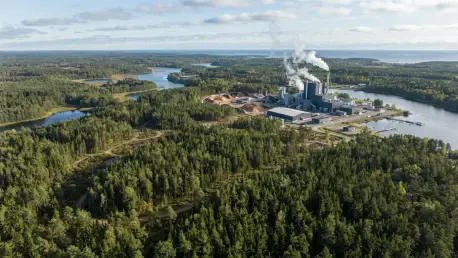
The sudden severance of Russian energy imports acted as an unprecedented catalyst for the Baltic Sea region, forcing a total reorganization of the bioenergy sector. What was once a supplementary renewable source has now become the cornerstone of national heating strategies. By 2026, the transition toward utilizing low-grade wood and forest residues has accelerated, effectively filling the massive void left by sanctioned natural gas. This pivot is not merely about increasing logging volumes; it is a sophisticated shift in how raw materials are funneled into the domestic economy. Regional policymakers are focusing on high-efficiency combined heat and power plants to maximize the energy output from every ton of biomass. This transition has been particularly visible in urban centers where large-scale infrastructure projects have been fast-tracked to ensure that the coming winters remain secure from energy volatility, grounding national stability in local forest resources.
To manage these burgeoning demands without depleting natural capital, the region has adopted a strict cascading use hierarchy for wood products. This policy ensures that high-quality timber is reserved for the construction industry and long-lived material products that continue to sequester carbon for decades. By 2026, the secondary streams—such as sawmill residues, branches, and thinning materials—are the only components legally and economically favored for bioenergy production. This hierarchical approach prevents the market from cannibalizing the industrial timber supply, which remains vital for economic growth. It also reflects a maturing bioeconomy where every part of the tree is accounted for within a circular system. Despite the immediate pressure for fuel, maintaining this balance is crucial for long-term climate targets. The integration of these hierarchies into National Energy and Climate Plans suggests a shift toward more deliberate and controlled land use.
National Divergence: Baltic Ambition versus Nordic Technology
While the overarching goal of energy independence is shared, the specific pathways taken by Baltic nations reflect their unique geographic and economic realities. Lithuania continues to lead with its aggressive decarbonization of the heating sector, while Latvia has positioned itself as a significant exporter of low-carbon electricity by blending biomass with wind and solar expansion. Estonia, meanwhile, has prioritized the digitalization of its forest management systems, creating a “strategic wood reserve” that allows for real-time monitoring of available resources. By 2026, the synchronization of the Baltic power grids with continental Europe has reached its final stages, effectively ending the historical dependence on the Russian-controlled BRELL ring. This physical decoupling is mirrored in the forest sector, where digital tracking ensures that wood flows are transparent and secure. These efforts illustrate a regional move toward a highly regulated, technology-driven model of energy sovereignty.
In contrast, the Nordic nations of Finland and Sweden are leveraging their technological expertise to integrate forests into a broader hydrogen and carbon-capture economy. Sweden has made significant strides in bioenergy with carbon capture and storage (BECCS), aiming to become a pioneer in carbon-negative technologies by 2028. However, Finland faces a more complex scenario; recent data indicates its forests have shifted from being net carbon sinks to net emitters due to intensive harvesting and the drainage of peatlands. Despite this environmental setback, the Finnish government has maintained a policy of active forest utilization, betting on “technological sinks” and advanced bio-refineries to offset their ecological footprint. This tension between immediate resource extraction and long-term carbon sequestration highlights the fragility of the current model. The Nordic approach remains focused on high-tech solutions to bridge the gap between industrial demands and environmental constraints.
Systemic Vulnerabilities: Supply Shocks and Governance Hurdles
The transition toward a security-centric forest model has been marred by significant supply-side disruptions that continue to ripple through the market in 2026. The removal of over twenty million cubic meters of timber from Russia and Belarus created an immediate deficit that has driven up raw material prices across the region. This scarcity has forced local industries to compete more aggressively for domestic wood, leading to increased logging pressure on sensitive ecosystems. The economic strain is particularly visible in the manufacturing sector, where the high cost of biomass has squeezed profit margins. Furthermore, this resource competition has highlighted a “multi-level fragmentation” in governance. While national governments prioritize immediate energy security, they often find themselves at odds with European Union biodiversity mandates. This conflict creates a volatile regulatory environment, making it difficult for long-term investors to commit to new bio-based industrial projects.
Governance gaps also exist horizontally across various government departments, where energy, forestry, and environmental policies are often developed in isolation. This siloing of expertise leads to conflicting signals; for example, energy security initiatives may inadvertently promote harvesting practices that degrade the very carbon sinks required for climate compliance. Although the five nations share a common market and face similar geopolitical threats, the response to supply chain disruptions has been largely uncoordinated. In 2026, market forces still dictate most of the resource flow, rather than a cohesive regional planning framework. This lack of strategic coordination leaves the Baltic and Nordic states vulnerable to further price spikes and resource shortages. To mitigate these risks, there is a growing recognition that a unified approach to biomass monitoring and trade is necessary to ensure that one country’s security does not come at the expense of its neighbor’s ecological stability.
Future Directions: Integrating Security with Ecological Integrity
To build a resilient and sustainable future, the Baltic Sea region must transition toward a “whole-of-government” approach that harmonizes trade, energy, and environmental objectives. This strategy requires the implementation of regional, real-time reporting systems for fuelwood to close existing data gaps and prevent illegal logging. By 2026, the focus is shifting toward adaptive harvesting limits that are directly tied to carbon-sink performance indicators, ensuring that forest extraction does not exceed ecological tipping points. Such a system would provide the necessary transparency to satisfy both national security needs and international climate obligations. Moreover, the integration of digital twins and satellite monitoring can offer a precise overview of forest health, allowing for more nuanced management. This technological leap is essential for moving beyond the reactive policies of the past several years and toward a proactive model that treats forests as a permanent, living infrastructure.
The transformation of Baltic forests into strategic security assets demonstrated how geopolitical crises could fundamentally rewrite environmental priorities. By 2026, the region successfully decoupled its heating and electricity sectors from hostile external suppliers, yet this achievement arrived with a realization of the ecological costs involved. Policymakers ultimately learned that treating energy security and climate goals as separate entities led to systemic inefficiencies and environmental degradation. To resolve these issues, they began implementing cross-border coordination frameworks that prioritized the health of the trans-regional forest ecosystem over short-term industrial gains. This new direction advocated for a balance where technological innovation in carbon capture complemented, rather than replaced, natural sequestration. These efforts provided a blueprint for other regions facing similar resource constraints, proving that long-term resilience was only achievable through the integration of ecological integrity with national defense strategies.