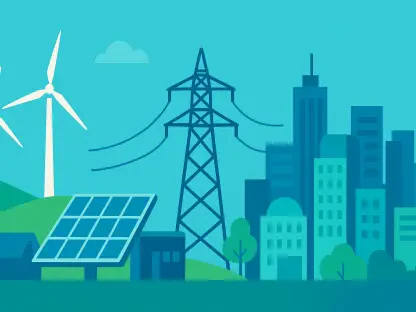

While the global race toward decarbonization often emphasizes the construction of vast solar arrays and wind farms across the Australian Outback, the most potent weapon in the climate arsenal remains entirely invisible to the naked eye. This silent revolution centers on the concept of demand-side reduction, a strategy that prioritizes the optimization of current energy usage rather than the endless expansion of generation capacity. Current policy frameworks frequently favor massive infrastructure projects that require years of planning and billions in capital investment, yet they overlook the immediate relief provided by reducing the total load on the national electricity market. By shifting the perspective from how much energy a nation can produce to how little it actually needs to function efficiently, Australia can bridge the persistent gap between its ambitious environmental targets and the practical limitations of its aging power grid. This approach is not merely about sacrifice; it is about leveraging sophisticated technology to ensure that every watt generated serves a meaningful purpose. Focusing on demand reduction provides a buffer that allows renewable energy transitions to occur without compromising reliability or affordability for the average citizen.
The Economic Power: Why Negawatts Rule the Grid
The most cost-effective unit of power in the current energy landscape is undoubtedly the “negawatt,” a term used to describe a unit of energy that is never consumed due to efficiency or conservation. Embracing this concept offers a triple win for the Australian economy, starting with a significant reduction in monthly utility bills for millions of suburban households struggling with the rising costs of living. Beyond the domestic sphere, commercial property owners have found that improving building performance through smarter climate control and insulation directly enhances their bottom line by lowering operational overhead. Government agencies also stand to benefit significantly, as reducing the overall demand on the system helps them avoid the astronomical costs associated with over-engineering the national grid to accommodate rare peak usage periods. By decreasing the total load, the nation can systematically reduce its historical reliance on expensive and carbon-heavy peaking generators that typically only operate during extreme heatwaves or winter cold snaps.
Grid stability has become an increasingly complex challenge as intermittent renewable sources like wind and solar provide a larger share of the nation’s electricity. When energy demand is managed proactively, it acts as a virtual battery, absorbing the stress that usually occurs during evening peaks when solar production drops off but residential use spikes. This stabilization reduces the necessity for rapid-response gas plants, which are both environmentally taxing and financially burdensome for the taxpayer to maintain in a standby state. The strategic implementation of demand-side management allows for a more graceful integration of green technologies, ensuring that the transition to a carbon-neutral economy does not result in the blackouts that often haunt large-scale industrial shifts. Industrial players who participate in demand-response programs are also finding that they can turn their operational flexibility into a revenue stream by temporarily reducing power draw during periods of high grid stress. This shift transforms demand reduction into a dynamic component of modern infrastructure.
Quantifiable Impact: Driving Change Through National Efficiency
The environmental dividends of a nationwide commitment to energy efficiency are both quantifiable and staggering when viewed through the lens of carbon sequestration. If the roughly 11 million households currently operating across Australia were to reduce their annual energy consumption by a mere 10 percent, the resulting reduction in carbon emissions would reach approximately 7.7 million metric tons. When these domestic efforts are paired with a 15 percent reduction in energy intensity across the commercial sector, the cumulative effect would be the removal of 20 million metric tons of carbon from the atmosphere every single year. To put these numbers into a more relatable context, such an achievement would be functionally equivalent to planting over 900 million mature trees across the continent. This massive boost to national climate targets is achievable without breaking ground on a single new construction project or clearing land for massive transmission lines. Such a strategy provides a verifiable path to net zero that complements the long-term goals of the government’s renewable energy expansion plans.
Achieving these ambitious goals required no futuristic breakthroughs but relied instead on the systematic application of high-impact, low-cost actions that were readily available to the public. Behavioral changes, such as optimizing thermostat settings by just a few degrees and eliminating standby power by switching off appliances at the wall, provided instant financial and environmental savings. These efforts were reinforced by the widespread adoption of affordable hardware upgrades, including high-efficiency LED lighting and the installation of weather seals to prevent costly air leaks. The integration of smart plugs and automated energy management systems further empowered individuals to take direct control of their carbon footprints while simultaneously lowering their daily cost of living. The progress observed from 2026 to 2028 suggested that future policy should prioritize mandatory efficiency ratings for rental properties and industrial-scale demand response to solidify the transition toward a truly sustainable economy.