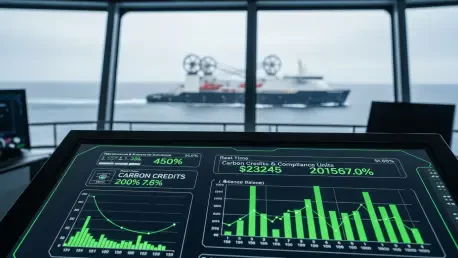

The global shipping industry stands at a critical juncture where the financial burden of decarbonization often outweighs the immediate operational benefits of adopting zero-emission technologies. While the FuelEU Maritime regulation and International Maritime Organization mandates have established clear trajectories for reducing greenhouse gas emissions, the capital expenditure required for methanol or ammonia propulsion remains a significant deterrent for many vessel owners. This financial gap creates a fragmented market where only the largest operators can afford early adoption, leaving the majority of the fleet struggling to meet tightening standards. However, the mechanism of compliance pooling offers a sophisticated solution by allowing diverse fleets to aggregate their carbon intensity metrics. By balancing high-performing green vessels against traditional fuel-burning ships, companies can optimize their regulatory standing while simultaneously de-risking the massive investments needed for synthetic fuels and advanced energy systems.
Mechanisms of Collective Emission Management
Compliance pooling functions as a regulatory bridge that allows multiple vessels, regardless of their individual fuel performance, to share a common emissions balance. Under this framework, a ship utilizing carbon-neutral e-fuels produces a surplus of compliance units because its actual emission profile is far below the mandated limit for the reporting period. These surplus units can then be transferred to older, more carbon-intensive vessels within the same pool to offset their deficits. This internal trading system prevents the imposition of heavy penalties on ships that are not yet ready for retrofitting or replacement. Moreover, the flexibility inherent in this system encourages owners to concentrate their green investments on a single, high-impact vessel rather than spreading limited resources across a fleet in small, ineffective increments. This concentration of capital accelerates the real-world testing of hydrogen-derived fuels and solidifies the demand signal that energy producers require to scale up green hydrogen production.
Beyond simple regulatory avoidance, pooling serves as a vital financial instrument that improves the bankability of sustainable maritime projects. When a shipping company can demonstrate that a newbuild green vessel will generate compliance surpluses that offset the costs of its existing fleet, the return on investment becomes much clearer to institutional lenders. This synergy reduces the perceived risk associated with the high premiums currently paid for renewable fuels like e-methanol or bio-LNG. Furthermore, pooling allows for the creation of cross-company agreements, where specialized green operators can partner with traditional carriers to trade compliance value. Such partnerships foster a more integrated maritime economy where the transition is funded by the collective efficiency of the industry rather than being stifled by individual capital constraints. By leveraging the compliance surplus of low-carbon pioneers, the broader industry can maintain operational continuity while systematically phasing out fossil fuels in a way that is both economically viable and sound for growth.
Strategic Integration of Alternative Energy Sources
The integration of wind-assisted propulsion and advanced biofuels into the pooling strategy further enhances the ability of operators to exceed baseline regulatory requirements. Flettner rotors and rigid wing sails are increasingly being paired with dual-fuel engines to maximize the compliance surplus generated by individual vessels. Every ton of carbon saved through wind energy directly translates into additional compliance headroom that can be distributed across the pool, effectively subsidizing the operation of standard vessels while they wait for updates. This dynamic creates a powerful incentive for the rapid adoption of energy-saving technologies that might otherwise be overlooked in favor of engine-based solutions. As the pool grows more efficient, the cost of carbon reduction drops, allowing for an aggressive pursuit of net-zero operations. The ability to mix various solutions within a pool ensures that different ship types can contribute to the overall decarbonization effort in the manner most suited to their specific routes.
Stakeholders recognized that establishing robust legal and digital frameworks for pool management was the essential next step in securing the future of green maritime finance. Legal experts developed standardized pooling agreements that clearly defined the ownership of compliance surpluses and the distribution of financial benefits among participants. Concurrently, digital monitoring and verification systems became the gold standard for ensuring that every gram of carbon saved was accurately recorded and credited within the pool. These advancements allowed for a transparent and liquid market for compliance credits, which in turn attracted a new wave of private equity into the maritime sector. Moving forward, the industry prioritized the synchronization of global standards to ensure that pooling remains a viable strategy across different jurisdictions. By treating emission performance as a tradeable commodity within these pools, the maritime community successfully unlocked the capital necessary to fund the next generation of zero-emission vessels.