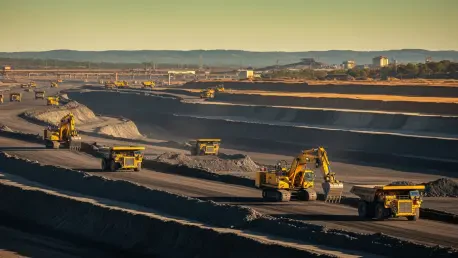

The Australian resource landscape is currently grappling with a fundamental paradox where traditional mining giants must reconcile massive profitability with an increasingly aggressive global decarbonization agenda. Yancoal Australia Ltd stands as a cornerstone of this complex sector, exerting a powerful influence over both thermal and metallurgical coal exports that reach every corner of the Pacific. With a multi-billion dollar market capitalization, the company oversees sprawling open-cut operations that define the industrial geography of the Hunter Valley and key regions in Queensland. However, as the global economic machinery shifts its gears toward sustainable and cleaner energy sources, Yancoal finds itself in an increasingly precarious position. The company is now forced to defend its market dominance while simultaneously navigating the turbulent waters of shifting investor sentiments and a rapidly changing regulatory landscape that prioritizes environmental outcomes over traditional energy production.
Market Volatility: Divergence and Commodity Price Normalization
Recent trading data illustrates a growing rift between coal and other energy commodities that previously moved in relative lockstep with one another. While oil and gas stocks frequently see substantial gains driven by crude price fluctuations and geopolitical tensions in the Middle East, coal equities like Yancoal have begun to move independently, often sliding even when the broader energy index experiences a significant rise. This decoupling suggests that sophisticated investors no longer view the energy sector as a monolithic entity, instead choosing to separate the long-term outlook for fossil fuels like coal from the more immediate and flexible demand for liquid hydrocarbons. Such a shift in market psychology indicates a deepening realization that coal faces unique structural headwinds that are not necessarily shared by its carbon-based counterparts, creating a challenging environment for valuation stability and making it harder for coal-heavy portfolios to attract traditional institutional capital.
This downward pressure is further reflected in the recent annual performance metrics, which have documented a double-digit percentage drop in share value over the current period. The record-high coal prices that were originally triggered by the global energy crisis a few years ago have effectively normalized, leading to significantly thinner revenue margins across the entire mining portfolio. Industry analysts suggest that the absolute peak of the coal cycle has likely passed, forcing the broader market to fundamentally reevaluate Yancoal’s valuation as the lucrative era of super-normal profits finally comes to a definitive end. This transition from a high-margin windfall environment to a more disciplined operational phase requires a focus on cost containment and efficiency. Without the cushion provided by historically high spot prices, the company must now prove its underlying value proposition to a market that is increasingly focused on the risk of stranded assets and long-term industrial decline.
Operational Integration: Strategic Assets and the Asian Export Pipeline
Yancoal’s operational strength remains deeply rooted in its portfolio of high-quality assets, including major productive sites such as Moolarben and the massive Mount Thorley Warkworth complex. These locations are not merely extraction sites but are vital components of the entire Asian industrial supply chain, providing the necessary caloric and metallurgical input for the energy and steel requirements of Japan, South Korea, and China. Because the company is so deeply integrated into these specific regional markets, its financial health remains inextricably linked to the energy policies and economic stability of its primary trading partners across the Pacific. The quality of the coal produced at these sites is often cited as a competitive advantage, as higher energy content and lower impurity levels are increasingly demanded by modern high-efficiency power plants and steel mills that are trying to optimize their own carbon footprints while maintaining industrial output levels.
The strategic reliance on the Asian export pipeline creates a unique set of risks and opportunities that require constant monitoring by management and stakeholders alike. As nations like Japan and South Korea implement more stringent emissions targets, the demand for high-quality Australian coal may remain stable in the short term, but the long-term trajectory is undeniably pointing toward a reduction in thermal coal consumption. This geographical concentration means that any sudden shift in Chinese trade policy or a rapid acceleration of renewable energy deployment in Northeast Asia could have an immediate and outsized impact on Yancoal’s balance sheet. Furthermore, the logistical complexity of maintaining these export routes requires significant ongoing investment in infrastructure and port access, which becomes increasingly difficult to justify as traditional lenders become more hesitant to finance projects that are perceived to have a limited operational lifespan in a net-zero world.
Structural Adaptation: Environmental Mandates and Capital Viability
The rise of environmental, social, and governance (ESG) standards presents a significant and multifaceted hurdle for the long-term corporate strategy of any major coal producer. Institutional investors are increasingly pulling capital out of high-carbon industries to meet their own net-zero targets and fiduciary duties, resulting in consistent and heavy selling pressure on stocks that do not align with a green transition. This trend raises difficult and perhaps existential questions regarding the terminal value of coal assets, as the threat of massive site rehabilitation costs and stranded reserves looms larger on the financial horizon. Moreover, the lack of traditional insurance and banking support for coal-related activities is driving up the cost of doing business, forcing companies like Yancoal to rely more heavily on internal cash flows for capital expenditure. This financial isolation creates a feedback loop where the perceived risk of the industry leads to higher costs, further depressing the valuation.
Management successfully identified that the path toward sustainability required a dual focus on operational efficiency and the diversification of the revenue base into metallurgical coal for steel production. By prioritizing low-cost production models, the company was able to remain profitable even when the commodity prices retreated toward their long-term historical averages. Future-focused strategies recognized that navigating the global energy transition involved more than just managing environmental risks; it required a proactive approach to climate litigation and the adoption of advanced carbon-capture technologies at the point of extraction. Investors ultimately shifted their focus toward companies that demonstrated a clear plan for asset rehabilitation and capital returns, ensuring that the terminal value of the mines was transparently communicated. This shift in strategy proved that while the thermal coal era was waning, the industrial necessity of carbon ensured a role for high-efficiency producers.