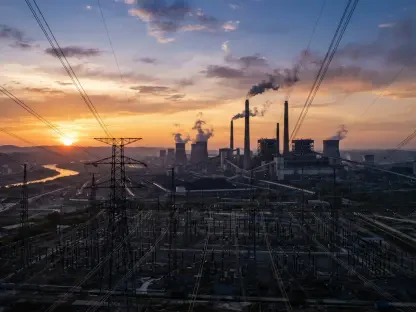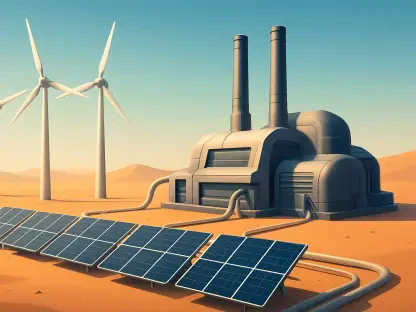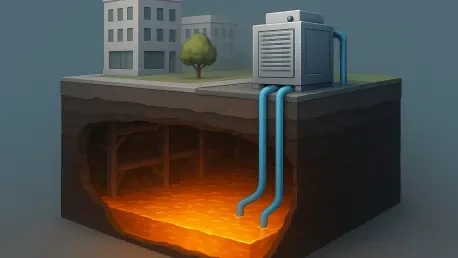

The transition from extracting carbon-heavy materials to harvesting geothermal warmth represents a significant environmental shift for communities built upon the foundations of the Industrial Revolution. In the current landscape of 2026, this transformation is visible across the northern reaches of the United Kingdom, where a legacy of coal mining is being repurposed to meet modern climate goals. For generations, these regions were the engine of British industry, but the closure of the pits left behind a vast, flooded subterranean world that remained largely ignored for decades. Today, the thermal energy trapped within these abandoned mine workings is recognized as a stable, low-carbon resource capable of heating homes and businesses. The technical transition involves a delicate balance of geological understanding and modern thermodynamic engineering, ensuring that the water which once posed a hazard to miners now serves as a reliable source of warmth. This evolution represents a broader commitment to a circular economy, where the physical remains of an old energy regime provide the literal foundation for a new, cleaner era. By utilizing existing infrastructure in this innovative way, the nation is successfully bridging the gap between its industrial heritage and its environmental obligations.
Subterranean Thermodynamics and the Mining Legacy
Engineering Foundations: The Circular Heat Loop
The technical viability of this energy source relies on the Earth’s natural ability to warm water trapped in abandoned mine workings. In regions like Northeast England, mine water remains at a consistent temperature of approximately 15 degrees Celsius at moderate depths, insulated by the surrounding rock strata. While this is not hot enough for direct domestic use, it provides an ideal foundation for industrial-scale heat pumps that can efficiently elevate the temperature. By using an “open-loop” system, engineers extract this water from one shaft and pass it through a heat exchanger to transfer its thermal energy to a secondary system. This method ensures that the mine water itself never enters the pipes of private homes, maintaining a clean and safe barrier between the underground environment and the consumer. The geological stability of the water temperature is the system’s greatest advantage, as it remains unaffected by seasonal changes or surface weather conditions. Unlike air-source heat pumps, which must work harder during the coldest months, mine-water systems benefit from a steady baseline of subterranean warmth throughout the year. This consistency allows for more predictable energy output and significantly lower operational costs for the utility providers managing the network.
Once the thermal energy has been harvested from the extracted water, the now-cooled liquid must be managed responsibly to maintain the integrity of the underground reservoir. The water is typically returned to the mine network through a separate injection borehole, often located at a different depth or distance to prevent the immediate mixing of warm and cool water. Over time, the massive thermal mass of the surrounding rock re-warms the returned water, effectively recharging the system. This creates a sustainable and continuous energy cycle that requires no new fuel inputs, essentially treating the earth as a massive, natural rechargeable battery. The depth of these mines, often reaching several hundred meters, ensures that the pressure and natural geothermal gradient keep the water at a functional temperature indefinitely. As long as the extraction rates are balanced with the natural heat-recovery capacity of the rock, these mines can serve as permanent fixtures in the regional energy mix. This circular approach minimizes the environmental footprint of the heating process and maximizes the utility of existing geological features that were previously considered industrial liabilities.
From Extraction to Compression: The Role of Industrial Heat Pumps
At the heart of every mine water project is the industrial heat pump, a piece of technology that bridges the gap between low-grade geothermal warmth and high-temperature heating requirements. These machines operate on the same principle as a domestic refrigerator but in reverse, using a small amount of electricity to move and concentrate heat. When the mine water enters the facility, it gives up its heat to a refrigerant with a very low boiling point. As the refrigerant evaporates into a gas, it is fed into a compressor, where the increase in pressure causes its temperature to spike dramatically. This concentrated heat is then transferred to the water circulating in a district heating network, reaching temperatures as high as 80 degrees Celsius. This high-temperature water is sufficient to provide both space heating and domestic hot water to various building types, including those with older radiator systems that were not originally designed for low-temperature heat sources. The efficiency of this process is measured by the coefficient of performance, which often exceeds four or five, meaning that for every kilowatt of electricity used to run the pump, four or five kilowatts of heat are delivered to the customer.
The distribution of this heat requires an extensive network of insulated underground pipes, commonly referred to as a district heating network. These networks act as a centralized heating system for entire neighborhoods or commercial districts, eliminating the need for individual gas boilers in every building. Because the heat is generated at a central energy center, the maintenance and operational risks are shifted away from the homeowner and onto the utility provider. This centralized model also allows for greater flexibility, as the system can be integrated with other renewable sources, such as solar thermal or waste heat from data centers, to further improve efficiency. In many cases, the installation of these pipes coincides with broader urban regeneration projects, allowing cities to modernize their infrastructure while simultaneously reducing their carbon footprint. The integration of high-powered heat pumps with these expansive networks represents a major leap forward in urban engineering, providing a scalable solution for decarbonizing heat in densely populated areas where individual heat pump installations may be physically or economically impractical.
Implementation Across Public and Private Sectors
Municipal Infrastructure: The Gateshead Network Model
The adoption of mine water heating in Britain is being driven by local government initiatives that prioritize regional decarbonization and energy security. In Gateshead, the local council has established one of Europe’s largest city-scale networks, which now services hundreds of homes, local colleges, and major cultural landmarks like the Baltic Centre for Contemporary Art. This project is not just an environmental statement but a core piece of public infrastructure designed to provide long-term stability in energy pricing. By owning and operating the network, the council can ensure that the benefits of low-carbon heating are shared across the community, particularly in social housing developments where energy poverty is a significant concern. The Gateshead system serves as a live laboratory for other municipalities, demonstrating that large-scale geothermal projects are technically feasible and can be integrated into the existing fabric of a modern city. The success of this initiative has triggered a wave of similar proposals across other former mining towns, as leaders recognize the potential for mine water to act as a catalyst for both economic growth and environmental progress.
The environmental impact of the Gateshead network is substantial, with the potential to save tens of thousands of metric tons of carbon dioxide over its operational life. By displacing traditional gas-fired boilers, the system directly contributes to the national goal of achieving net-zero emissions. Furthermore, the infrastructure is designed for longevity, with a projected lifespan that far exceeds that of conventional heating systems. The council has also focused on the educational aspects of the project, using the energy center as a hub for teaching students about renewable technology and the industrial history of the region. This holistic approach ensures that the project is integrated into the social and cultural identity of the town, rather than being viewed merely as a technical utility. As the network continues to expand, it is increasingly being used to attract new businesses to the area, as companies seek out locations with low-carbon infrastructure to meet their own corporate sustainability targets. The Gateshead model proves that local authorities can play a decisive role in the energy transition by taking direct action to repurpose their industrial heritage.
Commercial Innovation: Industrial Applications and Corporate Efficiency
In the private sector, forward-thinking companies are leveraging mine water technology to achieve remarkable levels of operational efficiency and carbon reduction. Lanchester Wines, a major regional employer, pioneered the commercial application of this technology by operating large-scale open-loop systems to heat its massive warehouse and bottling facilities. For a business with high energy demands and significant floor space, the transition to mine water heating offered a way to decouple operational costs from the volatility of fossil fuel markets. By tapping into the flooded workings beneath their site, they achieved a coefficient of performance that produces five to six units of heat for every unit of electricity consumed. This efficiency allowed the business to reduce its carbon emissions by approximately 80 percent, a feat that would have been impossible with traditional heating methods. Their success has served as a powerful case study for other industrial operators, showing that geothermal mine water is a commercially viable alternative that offers a strong return on investment through reduced utility bills and carbon tax savings.
The use of mine water in a commercial context also offers unique advantages for temperature-sensitive industries. For Lanchester Wines, maintaining a consistent temperature in warehouses is critical for product quality, and the stability of the geothermal source provides a level of reliability that weather-dependent renewables cannot always match. Beyond heating, these systems can also be adapted for industrial cooling, using the relatively cool mine water to absorb excess heat from machinery or storage areas. This dual-use potential makes the technology particularly attractive for energy-intensive sectors like food processing, manufacturing, and data management. As more companies face pressure from investors and regulators to disclose and reduce their environmental impact, the ability to point to a localized, renewable heat source becomes a significant competitive advantage. The commercial sector’s involvement is crucial for the wider rollout of this technology, as private investment helps to drive down costs and foster innovation in heat pump design and borehole drilling techniques. These private-public synergies are essential for creating a robust market for mine-based thermal energy.
Economic Benefits and Social Resilience
The Consumer Experience: Reliability and Affordability in Energy
For the average resident, the transition to mine water energy is designed to be a seamless experience that prioritizes comfort and economic predictability. Because the heat is delivered through a district network, homeowners no longer have to worry about the maintenance, repair, or eventual replacement of a traditional gas boiler. Instead, they interact with a simple heat interface unit that provides instant warmth and hot water on demand, much like a conventional system but without the combustion of fossil fuels on-site. Resident testimonials frequently highlight the “ordinariness” of the service as its greatest asset, noting that the system provides consistent performance without requiring significant changes in daily habits. This high level of public acceptance is vital for the widespread adoption of green technology, as it proves that decarbonization does not have to come at the expense of convenience or reliability. When people see that their homes are just as warm—if not warmer—than they were with gas, the psychological barrier to adopting renewable energy is effectively removed.
The economic benefits for the end-user are equally compelling, particularly in an era of fluctuating global energy prices. Mine water systems often result in lower monthly utility bills because the primary energy source is locally sourced and virtually inexhaustible, insulating consumers from the price shocks associated with imported natural gas. Many district heating schemes also offer energy credits or fixed-rate structures that provide long-term financial security for families. In social housing contexts, this transition has been particularly transformative, as it directly addresses energy poverty by providing affordable, high-quality heat to those who need it most. The reliability of the system also reduces the indirect costs associated with heating, such as the need for emergency repairs during the winter months. By making green energy the most affordable and reliable option, the technology is fostering a sense of economic resilience within the community. This alignment of environmental goals with financial incentives ensures that the transition to sustainable heating is not just a policy mandate but a popular movement supported by the residents themselves.
The Just Transition: Psychological Reconnection to Industrial Heritage
Beyond the tangible financial and environmental benefits, there is a deep psychological and cultural connection to these projects in former mining towns. For decades, these communities felt left behind by the decline of the coal industry, watching as the pits that once defined their identity were capped and forgotten. Repurposing these old workings into clean energy sources provides a powerful sense of pride and continuity, transforming a symbol of industrial loss into one of modern renewal. This narrative helps residents embrace the technology as an extension of their own history, rather than an alien imposition from the outside. The idea of “mining” heat instead of coal resonates deeply with the local heritage, allowing a new generation of workers to find employment in a field that honors their ancestors’ labor while looking toward the future. This emotional connection is a critical component of a “just transition,” ensuring that the regions that fueled the first Industrial Revolution are not marginalized during the current green revolution.
The social resilience fostered by these projects extends to the physical landscape as well. As abandoned mine sites are revitalized into energy hubs, they often become focal points for further community development, such as new parks, educational centers, or business parks. This revitalization helps to heal the physical and social scars left by the rapid deindustrialization of the late 20th century. Local schools often incorporate these energy centers into their curriculum, teaching children about the science of geothermal energy and the history of the ground beneath their feet. This fosters a sense of stewardship and curiosity about the environment, preparing the next generation for careers in the growing green economy. By anchoring the energy transition in the specific history of the place, these projects create a more cohesive and supportive community. The psychological shift from viewing mines as a source of pollution to viewing them as a source of life-sustaining warmth is a profound cultural achievement that strengthens the social fabric of the entire region.
Navigating Technical and Global Challenges
Subterranean Risk Management: Mapping and Material Integrity
Despite the clear benefits, implementing mine water heat systems involves significant technical hurdles that require advanced engineering and geological expertise. One of the primary challenges is the lack of accurate historical data regarding the layout of the mines. Many British coal mines were mapped by hand centuries ago, and as the mines were abandoned and flooded, the physical condition of the tunnels became difficult to verify. Modern drilling campaigns frequently encounter unmapped workings or structural collapses that were not recorded in historical documents, leading to high failure rates for boreholes and increased project costs. Developers must account for these subterranean risks with high contingency budgets and the use of advanced geophysical surveys, such as seismic imaging and 3D modeling, to “see” into the earth before drilling begins. The complexity of the underground environment means that every project is unique, requiring a bespoke engineering approach that considers the specific geology and mining history of each site.
Another significant technical hurdle involves the chemical composition of the mine water itself. Over decades of stagnation, the water in abandoned mines often becomes highly mineralized and can contain high levels of iron, manganese, and sulfur. This water is frequently corrosive or prone to “scaling,” where mineral deposits build up inside pipes and heat exchangers, potentially clogging the system and reducing efficiency. To combat this, engineers must use specialized materials, such as high-grade stainless steel or titanium, for the components that come into direct contact with the mine water. Regular maintenance and chemical treatment are also required to ensure the long-term integrity of the system. These operational demands add a layer of complexity to the management of mine water networks, requiring a workforce with specialized skills in both traditional plumbing and advanced chemical engineering. Addressing these technical risks is essential for the long-term viability of the technology, as any significant system failure could undermine public confidence in geothermal energy as a whole.
Global Scalability: Turning Industrial Liabilities into Sustainable Assets
The successful integration of mine water heat systems into the national grid demonstrated that the transition was as much about logistics as it was about geology. Policymakers and industry leaders prioritized the creation of comprehensive subterranean maps, which allowed developers to mitigate the risks associated with drilling into uncharted shafts. The establishment of standardized engineering protocols further ensured that the technology could be exported to other mining regions, such as the Appalachian basins in the United States or the industrial heartlands of Germany and China. Research initiatives focused on the dual use of these reservoirs, exploring how mine water could provide cooling for data centers during the summer months while maintaining heating capacity for the winter. These steps were essential in proving that abandoned mines were not merely liabilities but were, in fact, strategic national assets.
The decision to invest in this technology finalized the shift toward a more resilient energy grid, as communities across the globe looked toward the British model as a blueprint for their own industrial transformations. By the time the primary networks were operational, the narrative surrounding the mining legacy had fundamentally changed, shifting from one of environmental loss to one of sustainable opportunity. Public and private stakeholders collaborated to finalize the regulatory frameworks that governed these subterranean assets, ensuring that environmental protections remained paramount throughout the process. This collective effort paved the way for international partnerships, where engineering firms shared their expertise with global counterparts facing similar challenges. Ultimately, the lessons learned from the initial pilot projects served as a definitive guide for urban decarbonization strategies, proving that historical industrial liabilities could indeed be transformed into permanent, clean energy solutions.