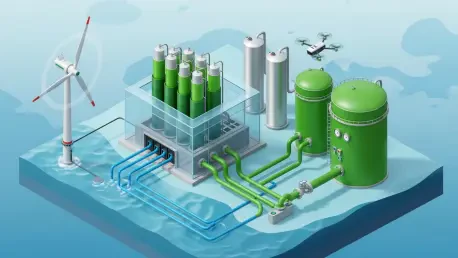

While the global push for carbon neutrality has long identified hydrogen as a cornerstone of the future energy mix, the prohibitive cost of splitting water molecules has historically tethered this vision to expensive noble metals. The green hydrogen production represents a significant advancement in the global energy sector. This review explores the evolution of the technology, its key features, performance metrics, and the impact it has had on various applications. The purpose of this review is to provide a thorough understanding of the technology, its current capabilities, and its potential future development.
The Evolution of Proton-Exchange Membrane Water Electrolysis
Proton-Exchange Membrane Water Electrolysis, or PEMWE, operates on a deceptively simple premise: using electricity to separate water into oxygen and hydrogen gas. However, the internal environment of these systems is notoriously hostile, characterized by extreme acidity and high voltage. This necessitates hardware that can facilitate rapid proton transport while remaining chemically inert, a combination that has historically required the use of gold-standard materials.
Beyond the laboratory, PEMWE has emerged as a critical tool for decarbonization because it can fluctuate its output in response to the intermittent nature of solar and wind power. Unlike traditional alkaline electrolyzers, PEMWE systems respond quickly to grid changes, making them the preferred bridge between renewable energy generation and industrial fuel demand.
Material Innovations for Cost-Effective Hydrogen Production
Oxygen-Deficient Rutile Coatings and Conductivity
A primary breakthrough in this field involves the engineering of highly crystalline, oxygen-deficient rutile coatings. Traditionally, titanium oxide acts as a perfect insulator, which is detrimental to an electrochemical cell that requires high electron flow. By strategically inducing oxygen vacancies within the rutile crystal lattice, researchers have created a material that maintains the legendary corrosion resistance of titanium while behaving like a conductor. This dual-functionality ensures that the protective layer does not become a bottleneck for energy efficiency.
Substituting Titanium with Specialized Steel Substrates
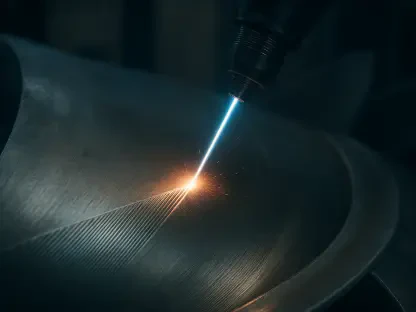
The shift from expensive titanium structural components to more affordable steel represents a major economic turning point. Through Physical Vapor Deposition (PVD), these new rutile coatings are applied to steel substrates with atomic precision. This process allows manufacturers to utilize the structural strength and low cost of steel without the risk of the material dissolving in the acidic PEMWE environment. The result is a significant reduction in the bill of materials for high-capacity stacks.
Innovations in Manufacturing and Process Efficiency
Recent advancements have moved beyond material science into the realm of streamlined manufacturing logic. By integrating PVD coating techniques directly into the production line, the industry is transitioning away from artisanal, small-batch assembly toward high-throughput fabrication. This move toward making clean technology economically competitive with fossil fuels is essential for scaling the “green” version of hydrogen to match the price of “gray” hydrogen derived from natural gas.
Industrial Implementation and Real-World Use Cases
Real-world applications of these material breakthroughs are already visible in the deployment of coated bipolar plates within industrial-scale electrolyzers. These plates are the backbone of the electrolyzer stack, and the new coatings have successfully extended their operational lifespan while reducing internal resistance. Furthermore, the transition toward coating porous transport layers—complex, mesh-like structures—offers a path to decarbonize heavy industry and the long-haul transportation sector, where high energy density is a non-negotiable requirement.
Technical Barriers and Economic Hurdles
Despite these leaps, technical barriers remain, particularly regarding the complexity of coating intricate porous structures. Ensuring an even, protective layer inside a 3D mesh without clogging the pores or leaving vulnerable gaps is an ongoing engineering challenge. Additionally, the financial barriers to achieving absolute price parity with fossil fuels require further optimization of the supply chain. Collaborative international research and industrial partnerships continue to focus on these micro-scale structural vulnerabilities to ensure long-term reliability.
Future Outlook and the Path to Commercialization
The trajectory of green hydrogen production is now aimed at the full commercialization of base-metal-heavy systems. Moving forward from current milestones, the focus is shifting toward the total elimination of iridium and platinum catalysts in favor of more abundant earth metals. These future developments are expected to transform green hydrogen from a niche, subsidized energy carrier into a mainstream, affordable fuel source that can power everything from transoceanic shipping to green steel manufacturing.
Final Assessment of Technological Feasibility
The recent progress in material science effectively demonstrated that the capital expenditure of PEMWE systems can be slashed without compromising performance. By rethinking the interface between chemistry and metallurgy, the industry moved closer to a sustainable energy equilibrium. This evolution proved that targeted innovations in coating technology could fundamentally alter the bioenergy landscape. The successful integration of steel-based components signaled a permanent shift in how the global community approaches the net-zero transition.