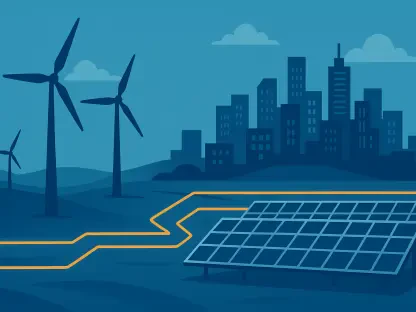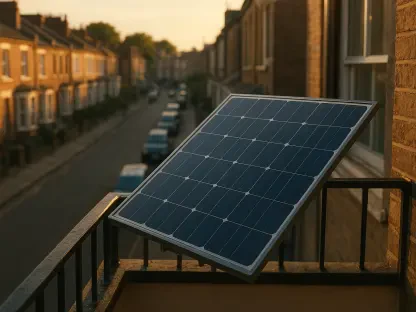

The transition toward home battery adoption in the Netherlands is described as a binary switch that will flip instantaneously on the first day of 2027. For more than two decades, the Dutch energy landscape thrived under a net metering policy that was essentially a global gold standard for solar adoption. This system allowed nearly three million households to treat the national grid as a frictionless, infinite power bank, where every kilowatt-hour of excess summer sun could be retrieved in the winter at no additional cost. However, the sheer success of this model eventually became its undoing. Throughout 2025 and into the current months of 2026, the volume of solar energy being fed back into the infrastructure has reached a breaking point, resulting in frequent periods of negative wholesale prices. In June 2025 alone, there were over one hundred hours where the grid was so saturated that producers were forced to pay to offload their electricity. This volatility has already prompted utility providers to levy significant feed-in fees on residential solar owners, setting the stage for a dramatic structural shift in how Dutch residents interact with their energy supply.
The Economic Boom and Market Scale
Projected Growth and Financial Valuation
Industry experts and research institutions such as Dutch New Energy Research have forecast an unprecedented surge in demand as the 2027 regulatory deadline approaches. The annual installed capacity for residential storage is expected to skyrocket from less than one gigawatt-hour in 2025 to over 4.5 GWh by 2027, representing a fivefold increase in a remarkably short timeframe. This explosive growth is unique to the Netherlands because it functions like a binary switch, moving from a dormant state to full market maturity almost instantly. Unlike other European nations where battery adoption grew steadily over a decade, the Dutch market is experiencing a compressed evolution. By the time the new regulations take full effect, the hardware market alone is projected to reach a valuation of approximately €2.1 billion. This surge will solidify the country’s position as the third-largest hub for home energy storage in Europe, trailing only the established giants of Germany and Italy.
Market Maturity and Strategic Positioning
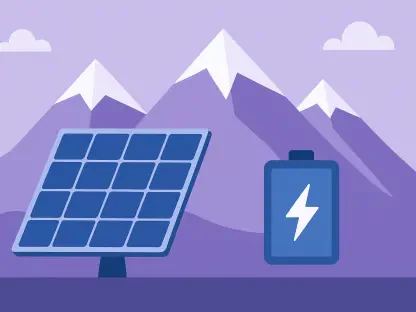
The speed at which the Dutch market is maturing has forced global manufacturers to rethink their regional strategies. For many years, Germany was the undisputed leader in European energy storage, but the immediate necessity created by the Dutch policy shift has made the Netherlands the new primary target for product launches. Companies are no longer viewing the region as a secondary market; instead, it has become a proving ground for the next generation of high-capacity residential systems. This rapid scaling provides a massive opportunity for manufacturers capable of meeting a sudden spike in demand while maintaining high standards for reliability. The transition is not just about installing batteries; it is about the total transformation of a nation’s energy culture. As households recognize that their solar panels are less valuable without a way to store the output, the race to secure hardware has become a national priority, driving prices and innovation at a pace rarely seen in the renewable sector.
The Impact of Policy Termination
The official abolition of net metering remains the most significant driver for this economic transition. Once the “switch is flipped” on January 1, 2027, the financial compensation for power exported to the grid will drop to a mere fraction of the retail cost, estimated at around 0.055 euros per kWh. In contrast, purchasing electricity during peak evening hours or during the winter will continue to cost residents approximately 0.24 euros per kWh when including taxes and distribution fees. This massive price delta transforms residential batteries from an environmental luxury into a fundamental financial necessity. Homeowners who previously viewed the grid as a free resource are now faced with the reality of paying for the privilege of donating their excess energy. This fiscal pressure is the catalyst that will move millions of households toward self-sufficiency, effectively decoupling them from a grid that has become increasingly expensive and unstable during periods of high solar production.
Competitive Landscapes and Hardware Dominance
The Dominance of Chinese Hardware Manufacturers
Chinese manufacturers have successfully seized the lion’s share of the Dutch hardware market by leveraging massive production scales and sophisticated logistics networks. Brands such as Votai and Sungrow currently control nearly forty percent of the stationary battery market, outperforming local European competitors in both price and availability. Their success is deeply rooted in an electrician-centric strategy, where they provide extensive technical support and localized service centers to overcome the chronic shortage of qualified installers. For instance, some manufacturers have established major logistical hubs in central Europe to ensure that technical assistance is available within minutes for local contractors. By focusing on the people who actually perform the installations, these firms have built a level of brand loyalty that is difficult for newcomers to break. This presence ensures that when a Dutch homeowner asks for a recommendation, the local technician is likely to suggest a Chinese brand that they trust and know how to install quickly.
Installation Efficiency and Technical Support
Product design has become a critical competitive edge in the Dutch market, with a specific focus on modular and cable-free systems that can be commissioned in a matter of seconds. In an environment where labor is expensive and technicians are in short supply, a battery that can be stacked and connected without complex wiring is worth a premium. Modern residential units now feature designs where modules can be clicked together in ten seconds, and backup power units can be clipped onto standard distribution rails almost instantly. By drastically reducing the time required for a single installation, these manufacturers allow technicians to complete more projects in a single day, increasing the profitability for installation firms. This focus on “speed-to-grid” has solidified the dominance of these manufacturers in the physical hardware sector. The emphasis is no longer just on the chemical capacity of the battery, but on how quickly it can be integrated into a home’s existing electrical infrastructure without requiring extensive modifications.
The Growing Plug-in Battery Segment
A distinct and rapidly growing sub-sector known as “plug-and-play” or plug-in batteries is also gaining traction among renters and budget-conscious homeowners. These devices are designed to bypass the need for professional installation entirely by plugging directly into standard household wall outlets. This segment is characterized by intense price competition, often referred to in the Netherlands as kiloknallen, a term typically used for selling goods by the kilogram at a steep discount. While these units offer lower capacity than stationary systems, their ease of use and lower entry price make them highly attractive for a large demographic. Brands like Anker and EcoFlow dominate this space, catering to a massive audience looking for immediate, low-cost energy solutions that do not require permanent changes to a property. Although the profit margins in this segment are becoming increasingly thin as the technology becomes commoditized, the sheer volume of sales provides a significant revenue stream for companies targeting the mass market.
The Future of Energy Management
Software Orchestration and Virtual Power Plants
While the sale of physical hardware is currently booming, a new and more lucrative profit center is emerging in the form of software orchestration and energy scheduling. Local Dutch energy retailers, such as Frank Energie, have begun acting as energy orchestrators by remotely managing thousands of household batteries via cloud-based platforms. These companies do not necessarily manufacture the hardware themselves; instead, they control the dispatching of energy based on real-time market prices. By deciding when a battery should charge from the grid at low or negative prices and when it should discharge to sell power back at a premium, these retailers capture a significant portion of the value chain. This model is remarkably similar to ride-hailing platforms that do not own vehicles but control the dispatch system. The long-term value of a residential battery is increasingly tied to the digital intelligence that manages it, turning the physical unit into a node within a larger virtual power plant.
Economic Viability for Modern Households
The financial incentive for Dutch homeowners to adopt storage technology is becoming clearer as the gap between buying and selling electricity widens. Analysis suggests that a properly configured residential storage system can increase a home’s direct consumption of its own solar power from thirty percent to as much as seventy percent. Beyond simple self-consumption, smart batteries that participate in energy arbitrage can generate additional revenue by taking advantage of price fluctuations throughout the day. However, this revenue is often shared between the homeowner and the service provider that supplies the management software. This highlights a critical shift in the industry where the chemical components of the battery are only half of the equation. The digital layer that provides market access and algorithmic scheduling is what ultimately determines the payback period and the long-term return on investment for the consumer, making the choice of software provider just as important as the choice of battery brand.
Strategic Evolution and Future Considerations
The Dutch residential energy storage market represented a significant milestone in the global transition toward decentralized power systems. Stakeholders across the industry observed as the Netherlands successfully navigated the challenges of grid saturation and policy reform, providing a blueprint for other nations facing similar solar adoption curves. Manufacturers realized that while hardware excellence was necessary to enter the market, long-term survival depended on the ability to integrate with European energy trading platforms and virtual power plant operators. The industry moved beyond the era of simple one-off sales and shifted toward a model defined by ongoing energy services and smart management. Analysts noted that the true victors in this transition were those who could bridge the gap between the physical battery in the basement and the digital markets in the cloud. As the market matured, it became clear that the integration of hardware and software was the only sustainable way to provide value to both the grid and the individual homeowner.