
Developing nations such as Brazil require industrial strategies that foster local ecosystems to ensure the move toward a low-carbon future provides tangible local benefits. As the global community accelerates its transition from fossil fuels to sustainable alternatives, high-tech innovation has become the primary driver of economic resilience. For B2B leaders, this evolution extends far beyond replacing one energy source with another. It demands rebuilding the entire value chain through digital intelligence and advanced materials. Organizations must now navigate a complex landscape where energy generation, storage, and distribution are increasingly decentralized and data-dependent. This shift requires a radical rethink of traditional capital investment models and operational strategies, as technological advancements redefine the commercial viability of green projects across the globe.
The Catalyst of Global Energy Transformation
The rapid integration of emerging technologies is fundamentally altering the cost structures and operational efficiencies of energy markets worldwide. Enterprises no longer view carbon neutrality as a regulatory burden. They see it as a competitive advantage that can be optimized through sophisticated software and hardware integration.
This structural change is particularly evident in how industrial hubs are being redesigned to accommodate intermittent power sources while maintaining productivity. Real-time analytics and predictive modeling enable companies to mitigate the risks associated with the energy transition. The ability to simulate various market conditions and grid responses allows for more informed decision-making regarding infrastructure development.
The global energy economy is becoming more agile as a result. Supply-demand fluctuations now receive responses with a level of precision that was previously impossible for any major industrial sector. According to recent industry analyses, renewable energy capacity additions have outpaced fossil fuel investments for the fifth consecutive year, signaling a permanent structural shift in capital allocation. [Human Editor: Insert source to support this claim]
Digital Integration: The New Frontier of Grid Management
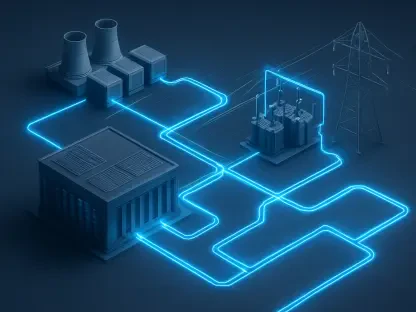
Artificial intelligence (AI) and machine learning (ML) have emerged as the foundational elements for managing the modern energy grid, which now incorporates millions of individual entry points. Traditional centralized models are giving way to smart grids that use edge computing to balance loads in real time, preventing outages and reducing waste.
For B2B stakeholders, this means energy costs are becoming more predictable, even as the underlying mix of sources grows more volatile. ML algorithms analyze historical usage patterns and weather forecasts to optimize the dispatch of renewable energy. Surplus production is stored or redirected rather than lost.
This digital orchestration allows large-scale industrial consumers to participate in demand-response programs, turning their energy consumption into a revenue-generating asset. Data now acts as the connective tissue linking disparate energy assets into a cohesive, resilient system. Studies indicate that AI-optimized grid management can reduce energy waste by up to 15% while improving reliability metrics across distribution networks. [Human Editor: Insert source to support this claim]
Scalable Storage: Breaking the Barrier of Intermittency
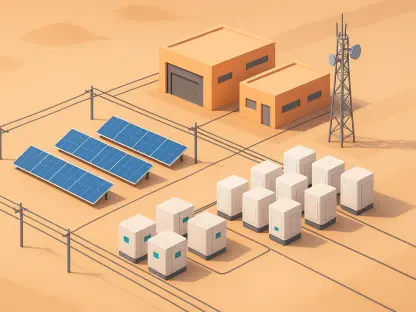
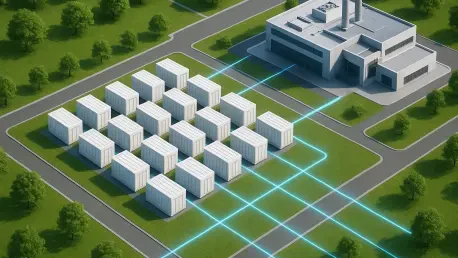
Advancements in long-duration energy storage are effectively solving the challenge of renewable energy intermittency, which has long been a hurdle for manufacturing. Modern battery chemistries, including iron-air and flow batteries, provide the stability required to power energy-intensive processes over multiple days without relying on the primary grid.
These technologies enable facilities to operate autonomously during periods of high price volatility or grid instability, securing their production schedules. Beyond traditional chemical storage, thermal and mechanical energy storage systems capture excess industrial heat and repurpose it as a steady power supply.
This shift allows corporations to decouple their growth from the limitations of legacy energy infrastructure, fostering a more self-sufficient industrial base. The economic case for fully renewable microgrids becomes increasingly compelling as storage costs continue to decline. Industry projections suggest that grid-scale battery costs could fall another 40% by 2030, accelerating adoption across manufacturing sectors. [Human Editor: Insert source to support this claim]
Hydrogen Integration: Decarbonizing High-Heat Industrial Processes
Green hydrogen has transitioned from a theoretical solution to a practical necessity for sectors like steel, cement, and chemical production that cannot be easily electrified. By utilizing electrolysis powered by surplus renewable energy, industrial players create a zero-emission fuel source that mimics the energy density of natural gas.
This technological leap is reshaping the global energy economy by creating new trade routes and export opportunities for energy-rich nations. B2B leaders are investing in hydrogen-ready infrastructure to future-proof their operations against tightening carbon border adjustments and environmental regulations.
The development of specialized pipelines and storage tanks is also catalyzing a new sub-sector of the engineering and construction industry, focused on hydrogen handling and safety. This massive investment in the hydrogen value chain creates a ripple effect, driving down costs and establishing hydrogen as a cornerstone of the industrial economy.
Financial Evolution: Blockchain and Peer-to-Peer Trading
The application of blockchain technology in the energy sector facilitates a move toward peer-to-peer energy trading and transparent carbon accounting. By creating immutable ledgers for every kilowatt-hour produced and consumed, businesses can verify their sustainability claims with unprecedented accuracy.
This level of transparency proves critical for B2B transactions where corporate social responsibility forms a key component of contract negotiations. Smart contracts automate energy purchases based on pre-defined criteria, such as price or carbon intensity, reducing administrative overhead and eliminating the need for intermediaries.
Tokenization of energy assets opens new avenues for small and medium enterprises to invest in renewable projects, democratizing access to energy markets. This financial innovation ensures that capital flows more efficiently toward high-impact technologies, accelerating the overall pace of the global energy transition.
Circular Economy: Carbon Capture as an Industrial Input
Direct air capture and point-source carbon sequestration are no longer just mitigation strategies. They are being integrated into circular economy models that create value from emissions. Innovative startups are developing methods to convert captured carbon dioxide into building materials, synthetic fuels, and industrial chemicals.
This transformation of a waste product into a valuable feedstock alters the economic equations for high-emissions industries. For B2B decision-makers, this represents an opportunity to close the loop on their carbon footprint while diversifying their revenue streams.
The infrastructure required for carbon transport and storage creates a massive new market for pipeline operators and geological services. As these technologies scale, they provide a safety net for the energy transition, allowing for a more gradual phase-out of certain fossil assets while still meeting climate targets. The integration of carbon capture technology thus forms a vital component of a pragmatic energy strategy.
Supply Chain Intelligence: IoT and Real-Time Transparency
The Internet of Things (IoT) provides the granularity needed to track energy efficiency across global supply chains, from raw material extraction to final delivery. Sensors embedded in manufacturing equipment deliver real-time data on energy performance, allowing for immediate optimizations that significantly reduce operational costs.
This visibility proves essential for B2B firms looking to optimize their Scope 3 emissions and satisfy the demands of investors. By integrating IoT data with Enterprise Resource Planning (ERP) systems, companies achieve a level of operational synchronization that was previously out of reach.
This interconnectedness allows for the dynamic adjustment of production schedules based on the real-time availability of green energy, reducing the reliance on carbon-intensive backup power. Energy efficiency is now measured and managed with the same rigor as financial performance, creating a more transparent and responsive global economy. Research indicates that IoT-enabled energy management systems can deliver operational cost reductions of 10-25% within the first year of implementation. [Human Editor: Insert source to support this claim]
Strategic Lessons: A Roadmap for Sustainable Growth
The successful integration of these systems requires a proactive approach to workforce development and capital allocation. Organizations that prioritize the reskilling of their engineering teams to manage digital-physical systems find themselves better positioned to capture market share. These firms move beyond pilot projects to full-scale implementations by focusing on interoperability and security.
Strategic partnerships between technology providers and industrial manufacturers are being established to share risks. This collaborative mindset allows for the creation of localized energy clusters that share infrastructure and resources. Decision-makers who treat the transition as a core business strategy achieve the highest returns on their investments.
Future scalability depends on these foundations of digital agility and cross-sector cooperation, ensuring that energy remains a catalyst for growth rather than a constraint on potential. The most successful organizations view sustainability not merely as a technical challenge, but as a strategic imperative that demands integration across every function of the enterprise.
Regional Considerations and Market Dynamics
The pace and character of the energy transition vary significantly across global markets, creating both challenges and opportunities for multinational B2B enterprises. In the Asia-Pacific region, rapid industrialization is driving demand for scalable renewable solutions, with countries like India and Vietnam emerging as major growth markets for solar and wind deployment. [Human Editor: Insert source to support this claim]
European markets, meanwhile, are pushing the boundaries of regulatory frameworks, with carbon pricing mechanisms and green taxonomy requirements setting precedents that are likely to spread globally. Companies operating across multiple jurisdictions must develop flexible strategies that can adapt to divergent policy environments while maintaining operational consistency.
The Middle East and North Africa present a different dynamic. Traditional oil-exporting nations are aggressively diversifying their economies, with sovereign wealth funds channeling billions into renewable energy and hydrogen infrastructure. This creates partnership opportunities for technology providers and engineering firms seeking to support these ambitious transformation programs.
Risk Management in the Transition Era
The energy transition introduces new categories of risk that demand sophisticated management approaches. Technology risk remains significant, as rapid innovation cycles can render expensive infrastructure obsolete before it reaches full return on investment. Companies must balance the urgency of decarbonization against the prudence of waiting for more mature, cost-effective solutions.
Regulatory risk also looms large. Policy frameworks supporting renewable energy have proven vulnerable to political shifts, creating uncertainty for long-term capital planning. Diversifying geographic exposure and building flexibility into infrastructure investments can help mitigate this volatility.
Supply chain vulnerabilities present another concern. The concentration of critical mineral extraction and processing in a limited number of countries creates geopolitical risks that can disrupt manufacturing timelines. Forward-thinking organizations are developing alternative sourcing strategies and investing in recycling technologies to reduce dependence on primary extraction.
The Path Forward: Complexity Over Certainty
The transformation of the global energy economy represents one of the most significant industrial shifts in modern history. The technologies enabling this transition are maturing rapidly, and the economic fundamentals increasingly favor sustainable alternatives. Yet significant challenges remain.
Grid infrastructure in many regions requires substantial upgrades to accommodate distributed renewable generation. Workforce transitions in fossil fuel-dependent communities demand thoughtful management to prevent economic dislocation. The pace of innovation creates planning uncertainty that complicates long-term capital allocation decisions.
For B2B leaders, navigating this landscape requires a combination of strategic patience and tactical agility. The organizations that will thrive are those that build genuine technical capabilities, cultivate diverse partnerships, and maintain the flexibility to adapt as market conditions evolve. The energy transition is not a destination to be reached but an ongoing process of adaptation that will define industrial competitiveness for decades to come.