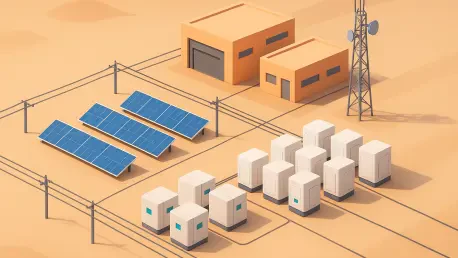

Africa currently accounts for more than three-quarters of the global population lacking electricity, necessitating decentralized solutions like mini-grids to achieve universal access. This regional necessity reflects a broader global shift where traditional, centralized energy infrastructures are increasingly unable to meet the specific reliability and sustainability demands of modern industry. As global electricity consumption surges due to the proliferation of automated manufacturing and data-heavy operations, the risk of green energy scarcity has transformed from a theoretical concern into a tangible operational threat. Consequently, forward-thinking enterprises are reclassifying energy from a standard utility expense to a strategic asset that must be managed, generated, and optimized internally. This transition represents a fundamental change in how corporations view their physical footprint, turning rooftops and industrial lands into high-yield power plants that insulate businesses from volatile market pricing and grid instability. By decoupling from the traditional utility model, firms gain the agility to navigate an era defined by resource constraints and environmental mandates.
Introduction
The global transition toward self-generated renewable energy marks a departure from the historical reliance on fossil-fuel-dependent centralized grids. Initially, the adoption of on-site renewables was largely confined to consumer-facing brands seeking to bolster their sustainability credentials through high-visibility projects. However, the paradigm in 2026 has shifted toward economic pragmatism and long-term security. Industrial and B2B entities are now the primary drivers of this movement, recognizing that an independent energy supply is essential for protecting against the increasing instability of regional power networks. The convergence of falling hardware costs and sophisticated energy management software has made the business case for self-generation undeniable, even for organizations with lower margins. This strategy is no longer about public relations; it is about ensuring that the power required for production remains affordable, clean, and entirely within the control of the enterprise.
The Economic Transition: Turning Energy into a Strategic Asset
Industrial leaders now recognize that relying solely on national grids exposes them to escalating costs and potential downtime during periods of peak demand. By investing in on-site generation, companies can secure long-term price certainty, which is a critical factor for maintaining competitive margins in energy-intensive sectors. Solar technology remains the preferred choice for self-generation due to its relative affordability and manageable regulatory requirements. Commercial solar installations often achieve a full return on investment within a seven-year window, while the hardware itself remains productive for nearly three decades. This financial stability allows organizations to redirect capital that would have been spent on utility bills into core business innovation. The ability to forecast energy costs with precision for the next twenty years provides a level of budgetary confidence that was previously impossible under the traditional utility model, where prices are subject to geopolitical shocks and carbon taxes.
Beyond immediate cost savings, the move toward self-generation addresses the rising cost of carbon. In 2026, regulatory frameworks globally have placed a premium on low-carbon production, making traditional electricity more expensive as utilities pass on the costs of their own transitions to consumers. Enterprises that produce their own clean power effectively hedge against these regulatory risks, positioning themselves as preferred partners in green supply chains. Large-scale procurement contracts increasingly favor suppliers who can prove a low carbon intensity of their operations, turning an internal energy investment into a powerful tool for market differentiation. This economic shift is further supported by the secondary market for excess energy, where businesses can sell surplus power back to the grid or to neighboring industrial facilities, creating a new revenue stream from formerly passive real estate.
Technological Foundations: Solar Power and the Concept of Negawatts
Solar technology continues to be the dominant choice for B2B self-generation because it can be integrated into existing industrial infrastructure with minimal disruption. Unlike wind or geothermal projects, which require specialized geography and extensive permitting, solar arrays utilize underused rooftop space or parking lots. Modern high-efficiency panels coupled with intelligent inverters allow for maximum energy harvest even in regions with moderate sunlight. However, strategic energy management involves more than just adding generation capacity; it requires a rigorous commitment to energy efficiency. Industrial experts often cite the concept of negawatts—the energy that is never consumed—as the most cost-effective resource available to a firm. By modernizing machinery and implementing smart monitoring systems, companies reduce their baseline demand, which in turn makes self-generation systems more effective and easier to scale for the long term.
A holistic approach ensures that on-site power plants are sized appropriately for actual needs rather than wasted on inefficient legacy processes. When generation and efficiency are synchronized, the resulting reduction in carbon footprint becomes a byproduct of a sound fiscal strategy rather than an expensive external mandate. Advanced sensors and artificial intelligence now play a central role in this synchronization, predicting energy needs based on production schedules and weather forecasts. This level of oversight allows facility managers to shift energy-intensive tasks to times when on-site production is at its peak, further reducing the reliance on external providers. The technological landscape of 2026 has made it possible to treat an industrial plant as a smart ecosystem where every kilowatt is accounted for and utilized with maximum precision, ensuring that the return on investment for renewable hardware is realized as quickly as possible.
Geographic and Policy Factors: Navigating Global Energy Realities
The geographic context plays a vital role in determining the structure of self-generation projects, as national policies and natural resources vary significantly. In sun-drenched regions such as parts of Africa and Southeast Asia, solar intensity provides high physical yields, often making decentralized systems the only reliable way to power industrial hubs far from urban centers. Conversely, in Northern Europe, where solar intensity is lower, aggressive government incentives and tax rebates provide the financial bridge necessary to make self-generation attractive for small and medium enterprises. These regional differences mean that a global corporation must tailor its energy strategy to the specific regulatory and environmental conditions of each site while maintaining a unified global sustainability objective. Understanding these nuances is critical for decision-makers who manage international footprints and seek to standardize their operational costs across different jurisdictions.
Policy environments are also evolving to facilitate the growth of corporate microgrids and peer-to-peer energy trading. Many governments have recognized that private investment in energy infrastructure reduces the strain on public utilities, leading to streamlined permitting processes for industrial renewable projects. In markets with less mature grids, corporations often find that they must lead the way, providing the infrastructure that the public sector cannot yet deliver. This proactive stance not only reduces immediate operational costs but also prepares the enterprise for future carbon pricing mechanisms that are likely to become more stringent. By aligning with local energy goals, businesses can often unlock additional funding or secure preferential status for future expansions. Navigating this complex interplay of local policy and global strategy is a hallmark of the modern industrial leader.
Operational Integration: Managing the Transition to Self-Generation
Technical integration remains a primary hurdle for many organizations, requiring a shift in how facility managers approach their daily operations. Managing a private power plant involves monitoring fluctuating weather patterns, maintaining battery health, and ensuring that on-site production remains synchronized with the broader grid. These challenges have birthed a new niche in industrial services, where specialized energy management firms partner with manufacturers to handle the technical complexities of self-generation. This collaborative model allows B2B leaders to reap the benefits of energy independence without needing to develop an entire internal department dedicated to power plant engineering. Ultimately, the successful transition to self-generation depends on viewing energy as a dynamic part of the production line rather than a static external input that is simply paid for at the end of the month.
Integrating these systems requires a cultural shift within the organization as much as a technical one. Staff must be trained to understand how their operational decisions impact energy consumption and generation efficiency. For example, scheduling maintenance during peak solar production or optimizing the start-up times of heavy machinery can significantly impact the overall effectiveness of the system. This level of integration often leads to broader operational improvements, as the increased visibility into energy use frequently reveals other inefficiencies in the production process. The data generated by these systems provides a new layer of business intelligence that can be used to optimize everything from supply chain logistics to factory floor layouts. When treated as an integral component of the business, self-generation becomes a catalyst for broader digital transformation and operational excellence.
Resilience through Storage: Bridging the Intermittency Gap
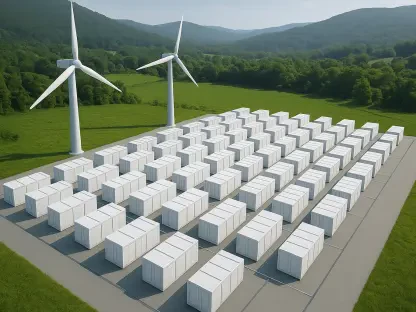
The effectiveness of any self-generation strategy is inherently tied to the ability to store energy for use when production is low. Battery storage technology has advanced rapidly, providing the necessary buffer to manage the intermittency of solar and wind power. For industrial facilities, this means the ability to maintain operations during grid outages or to avoid expensive “demand charges” that utilities levy on high-volume users. Storage systems also allow businesses to participate in demand-response programs, where they can provide support back to the grid during emergencies in exchange for financial compensation. This dual role of battery systems—as both an internal safeguard and a grid-balancing asset—enhances the overall value of the renewable energy investment. As storage costs continue to decline, the dream of total grid independence is becoming a practical reality for an increasing number of industrial sites.
Energy storage is not limited to chemical batteries; many industrial sites are exploring thermal and mechanical storage solutions that leverage their existing processes. For example, using excess midday solar energy to pre-heat water or cool industrial spaces can be a highly efficient way to “store” energy without the need for traditional battery hardware. This creative approach to storage demonstrates the ingenuity required to make self-generation work in diverse industrial contexts. By diversifying the types of storage used, companies can create a more resilient energy profile that is less dependent on any single technology. This multi-layered approach to energy security is essential in an era where power reliability is directly linked to business continuity. The integration of advanced storage is the final piece of the puzzle that allows corporations to truly take control of their energy destiny.
A Forward-Looking Strategy for Energy Resilience
The shift toward self-generated clean energy represented a significant milestone in industrial evolution as corporations took full ownership of their power needs. Organizations that prioritized early adoption secured a lasting competitive advantage by stabilizing overhead costs and ensuring operational continuity. This strategic autonomy did more than just reduce emissions; it fundamentally redefined the relationship between industry and the resources required to fuel global progress. Looking ahead, the focus must remain on integrating advanced storage solutions and exploring collaborative microgrid models that allow industrial parks to share surplus energy. By embracing these innovations, businesses transformed their operations into resilient hubs that thrived despite the challenges of a volatile energy market. Final investments in these systems ensured that the transition to a decentralized future was both profitable and sustainable.