
The flickering neon digits at the local gas station serve as a daily economic briefing for millions, yet the complex machinery behind those numbers remained a restricted territory for decades. For the average individual, the movement of energy prices often felt like an external force of nature—inevitable, opaque, and entirely uncontrollable. While most investors spent the last several years tracking the explosive growth of technology stocks or the erratic swings of digital currencies, the most influential asset in their lives was the crude fluid powering global commerce. Historically, the $3 trillion global oil market operated like a gated community where the entry fee was a high-value contract for 1,000 barrels, effectively barring the public from direct participation.
Today, those gates are being dismantled, transforming a specialized industrial arena into a digital landscape accessible to the modern trader. This transition from an institutional fortress to an open asset class is not merely a change in trading logistics; it reflects a broader evolution in the global economy. As technological innovation and financial engineering remove the velvet rope, the ability to interact with energy markets is shifting from a corporate privilege to a common financial tool. This democratization matters because oil remains the primary driver of inflation and a critical factor in household spending, making energy literacy a universal necessity.
The Price of Gasoline Is the Only Portfolio Update Most People Ever See
For decades, the standard interaction with the oil market was limited to the pump, where price fluctuations directly impacted the cost of living without offering any means of protection. While a surge in prices could strain a household budget, the tools to hedge against such risks were reserved for massive shipping conglomerates and airline giants. This disconnect meant that while the public bore the brunt of energy volatility, they were excluded from the financial mechanisms that managed it. The market was a private club where decisions made in distant boardrooms dictated the economic health of the street.
However, the current shift is allowing the individual to move from being a passive consumer to an active participant. By opening the market, financial institutions have acknowledged that energy exposure is an inherent part of every modern portfolio. From 2026 to 2030, the integration of energy trading into standard brokerage apps is expected to grow, providing people with the same precision in managing energy costs that they currently have with equities. This change represents a significant psychological shift, as the “universal” commodity finally becomes a manageable asset for the many rather than a speculative tool for the few.
From Sovereign Wealth to Smartphone Apps: Why the Shift Matters
The migration of oil trading from sovereign wealth funds to smartphone applications signifies a fundamental change in how the global economy functions. Oil is no longer just a physical resource moving through pipelines; it has become a transparent financial instrument that reflects real-time geopolitical sentiment. As traditional barriers fall, the individual’s ability to navigate this space provides a necessary cushion against the very inflation that oil prices often trigger. This accessibility allows for a more comprehensive approach to wealth management, where energy costs are no longer a variable that is simply accepted but a risk that is actively managed.
Furthermore, this democratization provides a layer of resilience to the broader economic system. When more people understand the drivers of energy pricing—such as supply quotas and refining capacities—the market benefits from a more informed participant base. This shift toward inclusivity also challenges the dominance of traditional energy cartels by diversifying the types of capital flowing into the market. It marks the maturation of the digital economy, where complex industrial commodities are distilled into accessible data points, allowing anyone with an internet connection to express a view on the world’s most vital resource.
Breaking the Gates: The Mechanics of Market Democratization
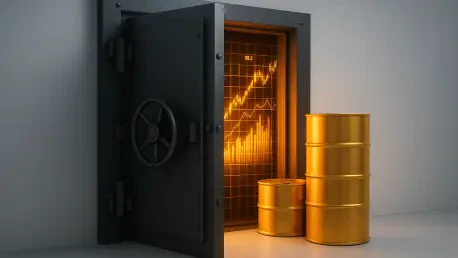
The most tangible evidence of this market opening is the shrinking size of trading contracts. The evolution from the massive 1,000-barrel West Texas Intermediate contract to the revolutionary 10-barrel micro-contracts has redefined the capital requirements for entry. Previously, a single position required an institutional outlay that was far beyond the reach of a retail investor. Today, the capital threshold has dropped significantly, with some positions accessible for less than $1,000. This granular approach allows for precise exposure without the need for the staggering leverage that once made commodity trading a high-stakes gamble.
In addition to smaller contracts, the rise of Exchange-Traded Funds and user-friendly digital interfaces has eliminated the need for physical infrastructure. In the past, participating in the oil market required a deep understanding of shipping berths and storage logistics, but modern platforms have replaced these hurdles with liquid financial instruments. This technological leap has acted as a magnet for new participants, particularly during periods of geopolitical stress. For instance, the surge in Micro WTI volume during recent international conflicts highlighted how retail participation spikes when the global public seeks to respond to dramatic shifts in the energy landscape.
Expert Perspectives on the Retail Effect and Market Stability
Analysts and industry strategists remain divided on the long-term implications of widespread retail participation in the energy sector. Many believe that the influx of individual traders provides a necessary boost to liquidity, offering a more robust cushion for commercial producers to hedge their risks. By having a larger pool of participants, the market can theoretically absorb large trades with less friction, leading to more efficient price discovery. This added depth is often seen as a positive evolution that brings the oil market in line with the transparency and fluidness of the modern stock exchange.
However, there is a persistent concern regarding the “noise” factor that retail traders might introduce. Professional strategists argue that individual participants often trade on headlines and emotional reactions rather than fundamental data like refinery maintenance schedules or inventory levels. The historic price collapse in April 2020 serves as a cautionary tale, where a disconnect between financial speculation and the physical reality of oil storage created unprecedented market distortions. While state-owned producers and multinational corporations still maintain ultimate veto power over long-term benchmarks, the presence of impulsive retail capital adds a layer of short-term volatility that the market must now learn to navigate.
A Strategic Framework for Navigating the New Oil Landscape
Effective participation in the modern oil market required a disciplined approach that moved beyond simple speculation. Investors recognized the importance of assessing their total exposure, considering how price swings influenced their broader financial health. By utilizing micro-instruments, they gained the ability to express economic views with precision, ensuring they did not over-leverage their positions during times of uncertainty. The focus shifted toward long-term fundamental trends, such as the balance between production quotas and global demand, rather than chasing short-term social media hype.
This strategic evolution emphasized the need to filter out market noise and focus on supply-demand logic. Managing emotional volatility became a primary objective for those who sought to use oil as a legitimate hedging tool. The democratization of the market ultimately proved that while the barriers to entry had fallen, the requirement for rigorous analysis remained higher than ever. Individual participants successfully integrated energy into their broader financial strategies, recognizing that the $3 trillion market was no longer a closed circle but a vital component of a well-rounded and resilient economic plan.