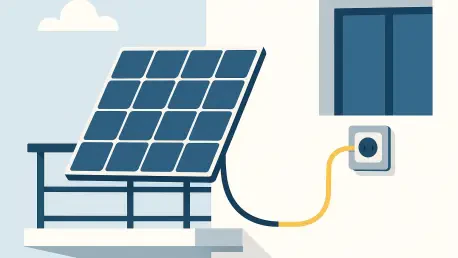

For individuals living in multi-family dwellings or condos, plug-in solar technology provides a functional pathway to energy independence without the need for permanent structural modifications. This paradigm shift represents a democratization of renewable energy, moving away from the expensive, centralized residential arrays that have dominated the market for decades. Traditional installations often require professional crews, permit approvals that can take months, and high upfront capital costs that alienate renters and apartment owners. In contrast, plug-in solar kits, frequently referred to as balcony solar or DIY solar, consist of one or two panels paired with a micro-inverter that feeds electricity directly into a standard wall socket. This approach bypasses the complex wiring of the main electrical panel. As urban density increases, the demand for modular and portable power solutions has forced manufacturers to refine these systems for aesthetic integration and safety standards across various global markets.
Technical Standards: Installation and Operational Efficiency
At the core of the plug-in solar revolution is the micro-inverter, a device that converts direct current from the panels into alternating current compatible with household circuits. Modern systems available from 2026 to 2028 are engineered with integrated safety features, such as automatic shut-off switches that prevent power from flowing if the unit is unplugged, mitigating the risk of electric shock. These components are designed for high efficiency even in partial shade, a common issue in dense metropolitan environments. Installation typically involves securing the panels to a balcony railing or a small flat surface using weather-resistant brackets. Because the system is rated below the threshold requiring heavy-duty industrial permits in many regions, a single person can complete the setup in less than an hour. This convenience factor is a primary driver for the adoption of such technology among younger demographics who value flexibility and speed over the permanence of traditional infrastructure.
Beyond hardware, software integration within these plug-in kits has reached a level of sophistication that mirrors professional-grade industrial monitoring. Most current systems come standard with smartphone applications that provide real-time data on energy production, consumption patterns, and cost savings. This transparency allows users to adjust their energy usage habits, such as running high-demand appliances during peak sunlight hours to maximize the utility of their generated power. Furthermore, the modular nature of these systems means that a household can start with a single panel and expand their capacity as budget or space allows. This scalability is particularly beneficial for those transitioning between living situations, as the entire kit can be dismantled and relocated with ease. Unlike fixed rooftop systems that become a permanent asset of the property, plug-in solar remains the personal property of the resident, ensuring that the investment travels with them safely when they move between residences.
The emergence of plug-in solar as a viable energy source underscored the necessity for flexible infrastructure in a rapidly changing climate. Governments that incentivized these small-scale deployments observed a measurable decrease in peak demand on local grids, which demonstrated the collective power of decentralized generation. For the average consumer, the path forward involved assessing balcony orientation and local sunlight exposure to determine the most effective placement for maximum yield. Future considerations necessitated a continued dialogue between technology providers and utility companies to ensure that grid stability was maintained as more micro-generation points came online. Stakeholders identified that the next logical step was the integration of compact battery storage units with plug-in systems, allowing for energy usage during evening hours. By embracing these modular solutions, urban dwellers successfully bridged the gap between passive consumption and active energy production for a resilient future.