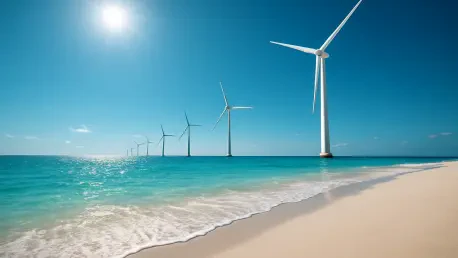

Regional leaders are increasingly advocating for a national energy strategy that prioritizes the preservation of landscapes as essential infrastructure for rural economic survival. This shift comes as the industrialization of countryside vistas reaches a tipping point, where the benefits of renewable energy production often clash with the traditional economic drivers of small-town America. For decades, the charm of rolling hills and pristine coastlines served as the primary draw for seasonal visitors, fueling a multi-billion-dollar hospitality industry that sustains thousands of small businesses. However, the rapid deployment of massive wind turbines, standing hundreds of feet tall with flashing strobe lights and rhythmic mechanical noise, has transformed these serene environments into industrial zones. As developers push for higher density installations from 2026 to 2030, the tension between carbon reduction goals and local economic stability has intensified, leaving many communities to wonder if the price of green progress is the permanent erosion of their unique natural heritage.
Economic Displacement: Visual Impacts and Local Revenue
The Downward Pressure on Tourism Metrics
The visitor economy relies heavily on the aesthetic integrity of the natural environment, a factor that becomes increasingly fragile when large-scale industrial hardware is introduced into the visual field. Recent data indicates that travelers seeking nature-based retreats are significantly less likely to book accommodations in regions where the horizon is dominated by mechanical structures. This trend is particularly evident in coastal communities and mountain ranges where the panoramic views are the central product being sold to the public. When these views are compromised, the perceived value of the destination drops, leading to shorter stays and lower spending at local restaurants and shops. The psychological impact of industrial blight cannot be overstated, as the very sense of escape that tourists seek is shattered by the presence of spinning blades and aviation safety lights. Over time, this leads to a gradual but persistent decline in hotel occupancy rates and a subsequent loss of local tax revenue that sustains public services.
Residential Real Estate and Market Volatility
Homeowners in rural districts have expressed growing concern regarding the stability of their property values as massive wind arrays move closer to residential boundaries. Market analysis shows that homes located within a two-mile radius of large turbines often experience a notable decrease in resale value compared to similar properties in unaffected zones. The primary drivers for this depreciation include view shed impairment and the perceived health risks associated with flicker and noise. Prospective buyers, particularly those looking for retirement homes or vacation properties, are frequently deterred by the industrial aesthetic, leading to extended days-on-market for listings. In some extreme cases, property sales have stalled entirely, trapping families in homes they can no longer sell at a fair market price. This stagnation creates a ripple effect throughout the local economy, as decreased home equity limits consumer spending and reduces the borrowing power of residents, creating a cycle of decline that is difficult to stop.
Strategic Planning: Balancing Energy and Preservation
Regulatory Frameworks and Impact Assessments
To address these challenges, several jurisdictions have begun implementing more stringent setback requirements and mandatory visual impact assessments before any new permits are granted. These regulations often require developers to prove that their installations will not significantly harm the aesthetic character of the region or diminish the economic value of surrounding land. Advanced 3D modeling and virtual reality simulations are now used to give residents a realistic view of how proposed projects will look from their own porches or local landmarks. This level of transparency is essential for building trust, yet it often reveals that the scale of modern turbines is fundamentally incompatible with certain high-value landscapes. Furthermore, some states are exploring the creation of no-build zones in areas designated as critical for tourism, effectively shielding the most sensitive environments from industrial development to ensure that long-term economic stability is not sacrificed for short-term energy gains.
Sustainable Alternatives: The Path to Resolution
The shift toward a more balanced energy portfolio involved prioritizing offshore wind or distributed solar technologies that did not carry the same visual and economic baggage as onshore wind farms. Many community leaders advocated for the modernization of the electrical grid to better integrate small-scale renewable sources located closer to urban centers where the energy was actually consumed. This approach reduced the need for massive transmission lines and industrial-scale installations in sensitive rural areas, thereby protecting the property values and tourism revenue that these communities depended on for survival. Successful regions established clear boundaries for industrial growth and required comprehensive economic impact studies that accounted for the total value of the landscape. They also implemented strict decommissioning bonds to ensure that when the turbines reached the end of their lifespan, the land was restored to its original state. These proactive measures ensured that the pursuit of renewable energy did not come at the expense of the people.