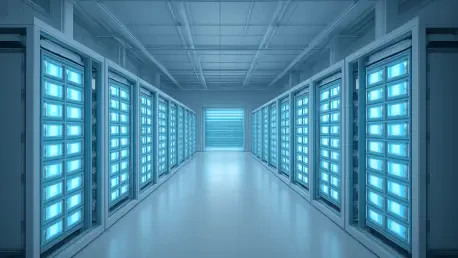

Massive investments in hyperscale and colocation facilities are currently necessary to support the unprecedented power demands generated by artificial intelligence workloads. As of 2026, the global push for generative AI and large language models has forced data center operators to rethink their power distribution architectures from the ground up. The sheer density of modern GPU clusters, often exceeding 100 kilowatts per rack, has rendered traditional lead-acid battery systems nearly obsolete due to their footprint and limited discharge rates. Consequently, the industry is witnessing a massive transition toward high-density energy storage solutions capable of providing instantaneous, high-burst power. This shift is not merely a technical upgrade but a multibillion-dollar transformation of the supply chain. Market analysts now project that the sector for data center batteries will surpass the ten billion dollar mark by 2028, driven by the need for localized resilience and safety.
Strategic Energy Infrastructure: The Power Behind Artificial Intelligence
Efficiency Gains: The Shift to Lithium Iron Phosphate
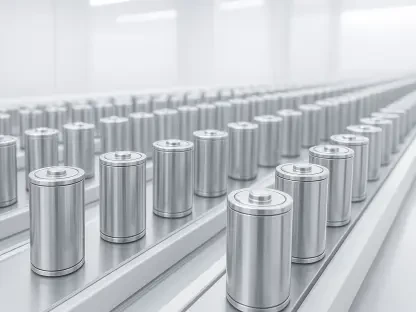
The widespread adoption of Lithium Iron Phosphate chemistry has become the cornerstone of modern data center energy strategy in 2026. Unlike the nickel-manganese-cobalt variants used in previous years, this chemistry provides a superior safety profile and a longer lifecycle, which are critical for facilities operating at near-maximum capacity around the clock. These batteries offer a significant reduction in total cost of ownership by eliminating the need for frequent replacements and reducing the cooling load within the uninterruptible power supply rooms. Furthermore, the compact nature of lithium-ion systems allows operators to reclaim valuable floor space for additional server racks, directly increasing the revenue potential of the facility. As AI-driven demand continues to surge, the ability to pack more energy into a smaller footprint has transitioned from a luxury to a fundamental requirement for staying competitive in the increasingly crowded hyperscale market.
Beyond simple footprint reduction, the integration of advanced battery management systems has enabled a more granular approach to power health monitoring. Modern installations utilize real-time analytics to predict cell failure and optimize discharge cycles, ensuring that the backup system is always ready for the intense transient loads characteristic of AI processing. These systems also facilitate peak shaving, where data centers draw on stored battery power during periods of high grid prices or peak demand. By 2027, this practice is expected to become standard, allowing operators to significantly lower their operational expenditures while reducing the strain on the public electrical grid. The synergy between intelligent software and robust hardware has turned the battery room from a passive insurance policy into an active asset for economic optimization. This evolution reflects a broader trend toward the industrialization of data center components to meet current needs.
Grid Resilience: Advanced Storage and Sustainability
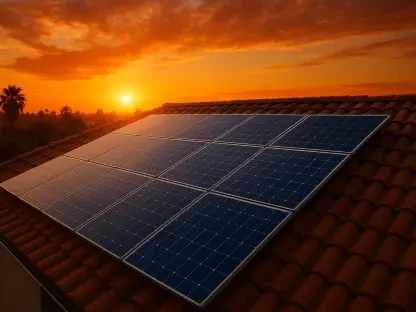
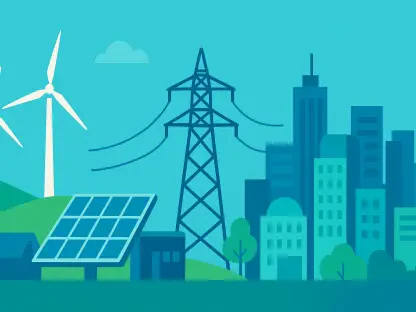
The industry moved decisively to integrate these complex energy systems as the primary defense against power instability and rising utility costs. Engineers prioritized modular designs that allowed for rapid scaling alongside the deployment of next-generation AI hardware, ensuring that the energy buffer grew in lockstep with processing power. Moving forward, the focus must shift toward deep-cycle integration with onsite renewable sources like solar and wind, turning data centers into decentralized energy hubs. Operators should evaluate the potential for grid-interactive UPS systems that can sell excess capacity back to the utility companies, creating new revenue streams. Investing in workforce training for the maintenance of high-voltage lithium systems will also be critical to ensure operational safety and longevity. By adopting a proactive stance on energy storage technology, the sector successfully bridged the gap between explosive digital growth and the physical grid.