
Christopher Hailstone brings a wealth of experience in navigating the complex intersection of grid reliability and the rising demand for electricity. As a leading voice in utility strategy and energy management, he has spent years helping organizations adapt to a landscape defined by both rapid industrial expansion and the urgent need for renewable integration. Today, we sit down with him to discuss the groundbreaking partnership between Central Georgia Electric Membership Corp. and Base Power, exploring how a 50-MW residential battery fleet can serve as a critical buffer against massive industrial load growth while providing unprecedented resilience for local homeowners.
Our conversation explores the strategic deployment of distributed energy storage as a tool for grid stabilization. We dive into the operational mechanics of managing hyperscale data center demands, the technical specifications of residential backup systems, and the economic shifts occurring as utilities move from traditional infrastructure toward flexible, customer-sited assets. Hailstone provides a deep look at how these technologies reduce wholesale costs and offer a new layer of security for the modern energy consumer.
As massive industrial projects, such as the proposed 240-MW Equinix data center campus near Hampton, begin to tap into the regional grid, how does the deployment of distributed storage change the way a utility manages these high-intensity loads?
When you have a massive 240-MW campus coming online, it places an incredible amount of stress on the existing infrastructure, often requiring immediate and expensive upgrades. By deploying 50 MW of distributed storage, we aren’t just adding raw capacity; we are creating a flexible, shock-absorbing layer that stabilizes the entire 14-county territory southeast of Atlanta. We can monitor the grid’s pulse and charge these residential systems when wholesale power prices and member demand are low, then discharge them strategically to blunt the sharp edges of peak demand. This maneuver prevents the grid from feeling the full, jarring weight of industrial expansion while ensuring that everyday members don’t suffer from voltage fluctuations. It’s about transforming the grid from a rigid pipe into a breathing ecosystem that can handle the heavy “hum” of data centers without breaking a sweat.
Looking at the technical capabilities of the 39.2-kWh units being deployed, what does this level of backup power mean for the individual household and the broader reliability of the Georgia grid?
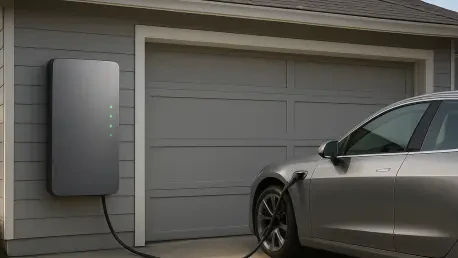
These units represent a significant leap in residential technology because a 39.2-kWh battery is a substantial asset capable of providing up to 36 hours of backup power during a total outage. For a family in rural Georgia, that means the lights stay on, the air conditioning keeps the heat at bay, and the refrigerator stays cold even when a severe storm knocks out the main transmission lines. On the utility side, having thousands of these units networked together allows Central Georgia EMC to shave demand peaks and mitigate price spikes that would otherwise drive up wholesale costs for everyone. It turns the home from a passive, vulnerable endpoint into an active participant in grid health, providing a level of “peace of mind” that simply wasn’t possible with older, smaller storage options. We are essentially installing a miniature power plant in every garage to serve the collective good of the membership.
Base Power is expanding from the deregulated Texas market into the regulated environment of Georgia; what are the strategic differences in how value is extracted from these battery fleets across different regulatory landscapes?
In the restructured Texas market where Base Power has already established a fleet of over 750 MWh across 30,000-plus homes, the focus is often on energy arbitrage and addressing transmission costs through rapid response to market volatility. Moving into a regulated market like Georgia with a member-owned cooperative, the main value proposition shifts toward reducing capacity obligations and alleviating distribution grid congestion. Because cooperatives are not-for-profit, they have a powerful incentive to minimize wholesale power costs and avoid the billions in debt associated with traditional infrastructure spending. Whether we are talking about the Illinois zone of the PJM Interconnection or the far west Texas pilot with El Paso Electric, the core principle remains the same: distributed storage is the most cost-effective way to defer grid upgrades. We are using software and chemistry to solve problems that we used to solve with steel and concrete.
How does this decentralized approach to energy storage compare to traditional, large-scale utility infrastructure when it comes to long-term grid resilience?
Traditional utility infrastructure is often a “top-down” solution that is slow to build and vulnerable to single points of failure. In contrast, customer-sited distributed batteries deliver benefits directly at the distribution level where people actually live and work, offering a much more granular level of control. Recent analysis shows that these systems offer additional value by boosting local resilience and allowing utilities to bypass the red tape and land-use conflicts associated with massive new transmission projects. By tapping into a fleet that is set to begin its Georgia deployment in 2027, we can implement solutions in months rather than the decades it takes to build a new substation or power plant. It’s a nimble, scalable strategy that responds to the actual growth of the community in real-time, ensuring that the grid stays robust even as demand for digital infrastructure skyrockets.
What is your forecast for distributed energy storage?
I expect to see a massive acceleration in these utility-private partnerships as more regions face the dual pressure of hyperscale data center growth and the need for residential reliability. By the end of this decade, the concept of a “passive” home will be obsolete, replaced by millions of interconnected batteries that act as a giant, virtual power plant. This shift will not only lower wholesale costs and reduce the need for fossil-fuel peaker plants, but it will fundamentally change the emotional relationship people have with their utility. We are moving toward a future where every home is a fortress of reliability and every member is a partner in a cleaner, more stable energy economy.