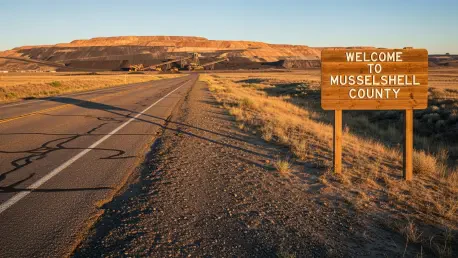

In the high-desert landscapes of central Montana, the quiet collapse of a political career serves as a loud warning to any local official attempting to prepare for an inevitable economic shift that threatens the status quo of fossil fuel dependency. Robert Pancratz, a former County Commissioner in Musselshell County, discovered that fiscal responsibility can be a dangerous liability when it clashes with the immediate anxieties of a community reliant on a single employer. His primary defeat in 2024 was not just a local electoral shakeup; it represented a broader refusal to acknowledge the fragility of an extraction-based economy in a rapidly changing world. For many in this region, the Signal Peak Energy mine is more than just a place of work; it is the financial lifeblood that funds schools, maintains roads, and provides a sense of cultural identity that resists any talk of a post-coal future. Consequently, the attempt to create a “Plan B” was not seen as a prudent safety net but as a betrayal of the industry that has kept the county afloat for decades. This tension illustrates a profound challenge facing rural Americhow to manage a necessary energy transition when the very word has been weaponized into a political death sentence for those tasked with governing the fallout of market shifts.
Navigating the Fiscal Realities of Energy Production
The Crow Revenue Act: A Financial Double-Edged Sword
The conflict in Musselshell County intensified with the introduction of the Crow Revenue Act, a piece of federal legislation designed to keep the Signal Peak mine operational by streamlining access to federal coal reserves. While the act was publicly celebrated as a lifeline for the local workforce, a closer analysis by Pancratz revealed a significant fiscal flaw that threatened the county’s long-term stability. By transferring coal ownership to a private intermediary, the legislation inadvertently terminated the federal royalty payments that the local government relied upon to fund essential services. For an incumbent focused on the bottom line, this was an unacceptable trade-off that would leave a multi-million-dollar hole in the budget, yet his attempts to address this technicality were quickly distorted by political opponents. Rather than being seen as a move to protect the county’s financial interests, his caution was reframed as a direct attack on the mine’s viability and an alignment with outside environmental interests that sought to shut down the extraction industry entirely.
The fiscal reality of Musselshell County is increasingly precarious, as the reliance on a single commodity creates a revenue trap that limits the ability of local leaders to act independently. When the Signal Peak mine faces legal challenges or shifts in global demand, the entire county’s budget fluctuates in tandem, leaving little room for the kind of infrastructure investment needed to attract new businesses. Pancratz’s focus on the loss of federal royalties was an attempt to break this cycle by ensuring that the county remained compensated for the extraction occurring within its borders. However, in an environment where the mine’s immediate operation is equated with the community’s survival, any demand for better terms is interpreted as a gamble with the town’s future. The resulting political atmosphere makes it nearly impossible to have a nuanced discussion about tax codes or royalty distributions without triggering a defensive reaction from both the industry and the electorate. This paradox ensures that even when a corporation’s legislative maneuvers might harm the public treasury, the fear of losing the employer altogether silences any meaningful push for accountability or financial reform.
Cultural Identity and the Semantics of Economic Change
Beyond the technicalities of tax revenue and royalty payments, the debate over coal in the American West is deeply rooted in the cultural identity of the people who live and work in extraction regions. The word “transition” has evolved into a political pejorative, carrying with it the baggage of perceived abandonment by urban elites and a dismissal of the blue-collar heritage that built the region. For a risk analyst like Pancratz, transition meant a pragmatic assessment of market volatility and the inevitable depletion of natural resources, requiring a diversified economic portfolio to weather the coming storm. To the average voter in Musselshell County, however, the term signaled the end of a way of life and the replacement of high-paying industrial jobs with uncertain and often lower-paying alternatives. This linguistic divide creates a barrier that prevents local leaders from communicating the necessity of change without sounding like they are advocating for the destruction of their own community.
This cultural entrenchment is further solidified by the absence of a visible and viable alternative to the coal industry, making the prospect of any change seem like an existential threat. In many parts of Montana and Wyoming, the mining industry does not just provide jobs; it provides a sense of purpose and a connection to a legacy of rugged self-reliance that is central to the local ethos. When a politician suggests that the county needs to prepare for life after coal, they are not just discussing a budget line item; they are questioning the foundation of the community’s social structure. This emotional connection allows industry advocates to frame any move toward diversification as a lack of faith in the workers and the industry that has sustained them for generations. Consequently, the political discourse becomes less about the best way to pave roads or fund schools and more about a loyalty test to the coal mine. This environment favors candidates who offer simple, steadfast support over those who offer complex, multifaceted plans for a future that many residents are not yet ready to accept.
Political Consequences and Corporate Influence
Strategic Maneuvering and the Impact of Industry Briefings
The 2024 primary campaign demonstrated how the active involvement of a dominant industry can shift the electoral landscape in favor of candidates who prioritize corporate interests over long-term fiscal planning. A defining moment in the race was the release of a leaked recording from a county commission meeting, which captured local leaders discussing aggressive negotiating tactics to secure a fiscal safety net from the mining company. While these discussions were aimed at holding a major corporation accountable for its impact on local infrastructure, the recording was strategically used to paint the incumbents as reckless and hostile toward the county’s primary employer. This narrative suggested that the commissioners were “playing chicken” with the town’s economy, a charge that resonated deeply with a workforce already anxious about job security and the mine’s future. The effectiveness of this tactic illustrated the power of framing, as a prudent attempt to protect the public interest was successfully recharacterized as a dangerous gamble that threatened the community’s survival.
Mark Olson’s victory over Pancratz was not merely a change in personnel but a shift in the philosophy of local governance toward a more industry-centric approach. Olson campaigned on a platform of unwavering support for the Signal Peak mine, a message that was reinforced by direct briefings from the company’s executive leadership and public endorsements from mining associations. This alignment provided voters with a sense of security, as they were offered a candidate who promised to maintain the status quo rather than one who spoke of the difficult work required for economic evolution. The industry’s role in the campaign went beyond simple advocacy; it served as a primary source of information for the electorate, effectively setting the terms of the debate. By positioning the mine as the only path to prosperity, proponents were able to marginalize any discussion of the multi-million dollar budget deficit or the decaying public services that were the primary concern of the incumbent, signaling a clear preference for short-term stability.
Institutional Dependency and the Risks of Single-Industry Economies
The long-term consequences of prioritizing short-term industrial stability are becoming evident in the physical and financial decay of communities that have failed to diversify their economic bases. Musselshell County currently faces a crisis of crumbling infrastructure, with roads and bridges that were never designed for the heavy industrial traffic generated by massive mining operations. Because the tax base is so heavily tied to the production levels and market price of coal, there is a constant shortage of funds needed for basic maintenance, let alone for the modernization of public utilities. The refusal to plan for a post-coal economy has left the county without a “Plan B,” creating a situation where the survival of the mine is the only viable path forward, regardless of the environmental or social costs. This dependency creates a cycle of diminishing returns, where the county must offer more incentives and fewer regulations just to keep the industry from leaving, further eroding the public’s bargaining power and limiting resources.
Transitioning away from a legacy of coal dependency required local governments to adopt more transparent and data-driven approaches to fiscal management and regional cooperation. To mitigate these risks, several Western counties established permanent mineral trust funds, which were designed to capture a portion of current extraction revenues for the benefit of future generations. These funds acted as a financial shock absorber, allowing communities to maintain essential services even during periods of market volatility or when specific mines ceased operations. By decoupling the immediate operating budget from the fluctuating price of a single commodity, these counties reduced the political pressure to approve industrial requests without oversight. Furthermore, the implementation of rigorous, independent fiscal audits helped clarify the actual cost of industrial activity on public infrastructure, providing local officials with the evidence needed to negotiate fairer terms. This shift toward a more analytical form of governance proved essential in breaking the revenue trap that had previously kept rural areas in a state of perpetual economic anxiety and political stagnation.