
The rolling hills of Western Pennsylvania represent far more than a scenic landscape; they serve as the foundational bedrock where the American industrial identity was forged through fire, grit, and relentless engineering. Since the inception of the United States, this specific corner of the Appalachian Basin has operated as a crucible for visionary individuals who looked at the earth not just as soil, but as a vast repository of untapped kinetic energy. The area’s rugged terrain and dense mineral deposits acted as a demanding proving ground, forcing early entrepreneurs to develop sophisticated methods for extraction that the world had never seen. As the nation observes its semiquincentennial in 2026, the legacy of this region remains at the forefront of the global conversation regarding resource management and industrial progress. By pioneering the extraction of coal, oil, and gas, Western Pennsylvania set the standard for how modern societies power their dreams and fuel their infrastructure. This spirit of technical risk-taking continues to influence global markets, ensuring the region remains a primary engine of advancement.
Unlocking Global Potential: The Role of the Marcellus Shale
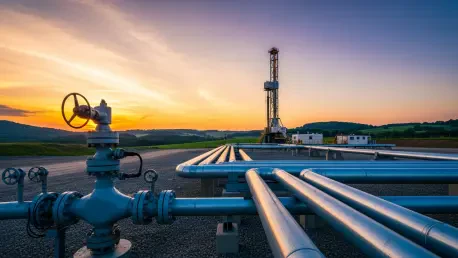
A profound shift in the global energy paradigm began with the drilling of the Renz No. 1 Well in rural Washington County, marking the start of a modern revolution that redefined natural gas production. While the fundamental principles of hydraulic fracturing had been understood by geologists for over a century, it was the strategic integration of advanced horizontal drilling that finally unlocked the vast potential of the Marcellus Shale. This technical breakthrough allowed operators to navigate the narrow horizontal seams of organic-rich rock thousands of feet below the surface, accessing energy reserves that were previously considered unreachable. The convergence of these two distinct technologies transformed the Appalachian Basin from a declining industrial zone into one of the most productive gas fields in human history. This development did not just provide a local economic boost; it signaled a new era where domestic production could effectively compete on a global scale through technological superiority and efficiency.
The sheer magnitude of the Marcellus Shale formation is difficult to overstate, as it constitutes one of the largest and most concentrated natural gas reservoirs on the planet. Spanning approximately 31,000 square miles across several states, with its heart firmly planted in Pennsylvania, the formation contains enough recoverable fuel to meet the entire energy demand of the United States for several decades. This abundance provided the nation with a critical buffer against global supply chain volatility and established the region as a primary pillar of modern energy security. Beyond the immediate heat and electricity it provides, the Marcellus supply became a foundational feedstock for the petrochemical industry, driving a resurgence in regional manufacturing. The ability to produce high volumes of gas at a low cost ensured that the region remained a central player in the global economy, influencing international trade balances and domestic policy decisions throughout the current decade.
Establishing the Foundation: The Birth of the Petroleum Industry
Long before the natural gas boom dominated the headlines, the birth of the global petroleum industry occurred in the quiet forests of Titusville during the mid-nineteenth century. In 1859, Edwin Drake achieved a feat many believed was impossible by successfully adapting salt-well drilling techniques to strike liquid crude oil at a depth of nearly seventy feet. This specific moment in time transitioned petroleum from a mere geological curiosity, often collected in small batches from surface seeps, into a massive commercial powerhouse. Drake’s innovative use of an iron pipe to prevent borehole collapse allowed for deeper and more consistent drilling, a method that would eventually become the gold standard for the entire global oil industry. This breakthrough provided the necessary catalyst for a worldwide shift in energy consumption, moving humanity away from whale oil and wood toward a more efficient and energy-dense liquid fuel that could be transported across vast distances with relative ease.
The rapid commercial success of Drake’s oil discovery was only made possible through the refining breakthroughs led by Samuel Kier within the industrial corridors of Pittsburgh. By developing a sophisticated distillation process to transform raw crude oil into a clean-burning, smoke-free kerosene, Kier created a high-demand market for lighting that replaced expensive and scarce alternatives. This synergy between Drake’s extraction methods and Kier’s chemical processing turned Western Pennsylvania into the world’s first true energy hub, capable of meeting the lighting and heating needs of a rapidly urbanizing society. The infrastructure built to support this burgeoning trade, from pipelines to refineries, laid the groundwork for the modern industrial complex that defines the global energy landscape today. The region did not just export a commodity; it exported the very concept of an integrated energy supply chain that prioritized efficiency and mass-market accessibility above traditional artisanal methods.
Driving Modern Efficiency: From Mechanical Coal Mining to Rare Earths
The mid-twentieth century witnessed another monumental shift in energy production as the coal industry transitioned from grueling manual labor to sophisticated high-tech automation. In 1948, the introduction of the Joy Continuous Miner in the small town of Daisytown effectively replaced the dangerous practices of blasting and hand-hewn extraction with automated cutting arms. This revolutionary machine utilized a rotating head equipped with carbide-tipped teeth to rip coal directly from the seam, loading it onto integrated conveyor systems in a single, fluid motion. The impact on mine safety and productivity was immediate and profound, as the machine allowed for much higher extraction rates while simultaneously reducing the exposure of workers to unstable roof conditions. This shift toward mechanical automation set the stage for the modern digital mining practices that dominate the sector in the current decade, proving that Western Pennsylvania’s innovators were always focused on refining the process of resource recovery.
While mechanical advancements significantly boosted coal production volumes, they also fundamentally reshaped the regional workforce by shifting the industry toward a smaller group of highly specialized operators. This evolution required a new set of technical skills, moving the labor force away from physical brawn and toward the management of complex electromechanical systems. Today, that same culture of relentless innovation is being redirected toward the extraction and processing of rare earth minerals, which are essential components for the microchip and semiconductor industries. Researchers and companies in the region are developing new techniques to recover these critical elements from legacy mining waste, turning environmental liabilities into strategic assets for the global tech supply chain. This ongoing adaptation ensures that the region remains at the sharp edge of the technological race, providing the raw materials necessary for the next generation of computing and clean energy storage solutions.
Sustaining the Industrial Legacy: Strategic Adaptation and Growth
The historical trajectory of Western Pennsylvania demonstrated that industrial leadership was never a static achievement but a continuous process of technical adaptation and risk management. Stakeholders within the region focused on creating a collaborative ecosystem where academic research from institutions like Carnegie Mellon and the University of Pittsburgh integrated directly with industrial application. This synergy ensured that breakthroughs in material science and automated robotics moved quickly from the laboratory to the field, maintaining a competitive edge in a volatile global market. The decision to invest in specialized infrastructure for both traditional fuels and emerging mineral extraction provided a blueprint for other industrial regions seeking to remain relevant in a shifting economic climate. By prioritizing long-term geological surveying and the modernization of transport networks, the region solidified its role as an indispensable node in the international energy grid, proving that legacy industries could serve as the foundation for future-facing technologies.
Actionable strategies for the coming years were founded on the successful integration of environmental stewardship with aggressive industrial expansion. Local leaders and engineers recognized that the long-term viability of energy production depended on developing carbon-capture technologies and minimizing the surface footprint of drilling operations. By investing in closed-loop systems for water recycling in the Marcellus Shale and implementing real-time methane monitoring, the region provided a sustainable model for resource recovery that met global standards for transparency and safety. These technical solutions were exported as a comprehensive framework, allowing Western Pennsylvania to influence international regulations and industry best practices. This commitment to balancing output with ecological responsibility ensured that the industrial heartland remained a primary driver of the global energy transition. The focus shifted from mere extraction to the holistic management of energy lifecycles, cementing a legacy that was as much about ingenuity as it was about the raw materials.