
The decommissioning of the Trawsfynydd nuclear power station represents a monumental shift in how the energy industry manages the complex legacy of mid-twentieth-century power generation. Standing as a prominent example of Magnox reactor technology, the site has spent the last two decades undergoing a meticulous process of cleaning and containment. This effort has finally reached a major milestone with the removal of all legacy intermediate-level waste from its historic storage vaults. The achievement is not merely a logistical success; it serves as a blueprint for other aging nuclear facilities worldwide that are currently navigating the transition from active generation to long-term environmental restoration. By successfully isolating radioactive materials accumulated over decades, the engineering teams have significantly lowered the radiological risk profile of the site, marking the end of a high-hazard cleanup phase and signaling a new chapter for the local Welsh environment.
Technical Execution and Waste Retrieval
Robotics and Remote Handling Systems
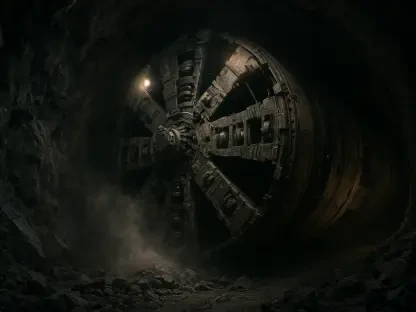
Building on this foundation, the retrieval of solid intermediate-level waste from sub-surface vaults required a level of precision and robotic integration rarely seen in industrial demolition. These vaults, which housed radioactive components from the plant’s operational years, presented a challenging environment due to radiation levels that prohibited human entry. Engineers utilized custom-built remote handling systems, featuring articulating arms and advanced sensors, to extract materials and place them into modern containment vessels. This process involved the mechanical lifting of waste and the real-time monitoring of radiation levels and structural integrity within the aging concrete. Every step was choreographed to ensure that no contaminants escaped, requiring a robust ventilation and filtration network. The successful extraction of these materials demonstrates a sophisticated evolution in robotic technology, proving that legacy hazards can be safely neutralized via innovation.
Encapsulation and Long-Term Containment
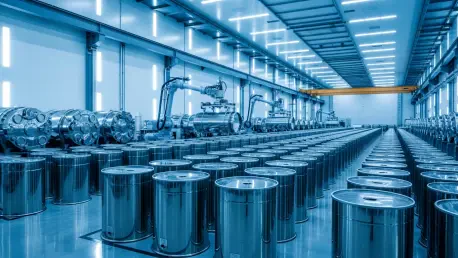
Following the successful extraction of these components, the focus shifted to the long-term stabilization of the radioactive material within a secure and permanent matrix. Waste was processed through an onsite encapsulation plant where it was stabilized within high-density concrete. This encapsulation ensures that the radioactive isotopes are locked into a solid form that prevents leaching or accidental dispersal during storage. These solidified blocks were then sealed within robust stainless-steel drums, each tracked with digital tagging to maintain a permanent record of its contents. This systematic approach to waste conditioning is critical for safety, as it transforms loose, hazardous debris into a predictable inventory. The completion of this phase means that the most significant radiological hazards have been contained, allowing the site to move away from active waste management. It also provides data that will inform future decommissioning projects at other sites.
Environmental Preservation and Future Planning
Care and Maintenance Implementation
This approach naturally leads to a focus on the long-term status of the site as it moves toward its final environmental state. With the primary waste cleanup now finished, the Trawsfynydd facility is prepared to enter a prolonged period of dormancy known as the care and maintenance phase. During this time, the iconic reactor buildings will remain under strict surveillance, allowing the residual radioactivity within the core structures to naturally decay over several decades. This strategy is a deliberate choice intended to minimize the immediate risk to workers and the environment while also reducing the volume of waste for final site clearance. The transition requires the decommissioning teams to shift their focus from intensive engineering and retrieval tasks to long-term asset management and monitoring. Modern sensor networks and remote surveillance technologies will play a vital role in ensuring the integrity of the containment structures remains uncompromised at all times.
Economic and Ecological Site Repurposing
In light of these operational shifts, the project reached a stage where broader environmental and economic implications became the primary focus. Stakeholders and environmental agencies formulated strategies to integrate the landscape back into the surrounding national park once all final restoration targets were met. This process necessitated a shift toward the physical demolition of non-essential structures and the comprehensive remediation of soil to satisfy modern ecological requirements. Planning for the site’s future centered on retaining the specialized workforce to apply their expertise toward emerging low-carbon energy sectors or new decommissioning projects elsewhere. The success at Trawsfynydd demonstrated that long-term investment in specialized robotics and containment technology effectively neutralized complex radiological hazards. Industry leaders utilized these findings to implement similar waste-retrieval solutions at other aging facilities to accelerate timelines.