
The global energy sector has finally transitioned from the era of speculative blueprints to a tangible industrial reality as nuclear developers begin breaking ground on the first generation of factory-built power units. For decades, the conversation surrounding nuclear power was dominated by the immense costs and decade-long timelines associated with massive gigawatt-scale plants, but the emergence of Small Modular Reactors (SMRs) has fundamentally altered this narrative. We are currently witnessing a decisive move where the focus is no longer on the theoretical elegance of reactor physics, but on the gritty, practical details of supply chain management, site preparation, and capital procurement. This transition represents a significant pivot from “dreaming” about carbon-free energy to the “execution” phase, where the survival of technology firms depends on their ability to deliver physical assets on schedule. As heavy industry and national grids demand more reliable baseload power, the pressure to move from demonstration units to commercial fleets has reached a fever pitch, creating a high-stakes environment where only the most logistically sound projects will thrive.
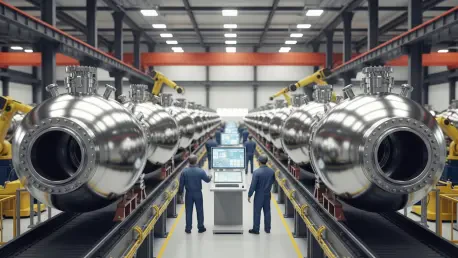
The maturity of the industry is being tested by its ability to navigate the complex web of infrastructure requirements and labor availability. Success is currently defined by how well a company can translate a digital twin into a physical structure while managing the volatile costs of specialized materials like high-assay low-enriched uranium (HALEU) and advanced steel alloys. This shift has essentially initiated a process of natural selection within the nuclear sector, weeding out designs that are too complex to manufacture or too expensive to insure. The move toward execution is also a response to the urgent need for decarbonization in sectors that cannot easily rely on intermittent renewable sources. By focusing on modularity and factory-based assembly, developers aim to bypass the traditional construction delays that have historically plagued the nuclear industry. This new era is characterized by a “steel on the ground” mentality, where the primary objective is to prove that nuclear energy can be scaled with the same efficiency as other modern manufacturing processes, thereby securing its place in a diversified and resilient global energy portfolio.
Divergent Technological Pathways for Industrial Deployment
The current technological landscape for SMRs is characterized by a significant variety of designs, yet the market is beginning to prioritize those that leverage established light-water technology. These Light-Water Reactors (LWRs) are currently leading the charge because they utilize the existing knowledge base and regulatory frameworks developed over sixty years of traditional nuclear operations. Systems like the GE-Hitachi BWRX-300 or the NuScale VOYGR represent a pragmatic approach, essentially shrinking the proven mechanics of large-scale reactors into a more manageable, modular format. By using standard water-based cooling and conventional fuel, these projects significantly reduce the technical risk for utilities and investors who are wary of unproven cooling mediums. The goal here is rapid deployment through the use of existing supply chains, allowing for a quicker transition from the first-of-a-kind (FOAK) unit to a standardized fleet. This path is favored by many North American and European utilities that need to replace aging coal-fired plants with reliable, carbon-free capacity without venturing too far into the experimental unknown.
In contrast to the conservative light-water approach, a second wave of “next-generation” reactors is carving out a niche in specialized industrial applications. High-Temperature Gas Reactors (HTGRs) and Molten Salt Reactors (MSRs) are being developed to provide more than just electricity; they are designed to deliver the intense thermal energy required for chemical manufacturing, steel production, and hydrogen generation. For example, projects focusing on TRISO fuel technology offer a level of passive safety and high-temperature output that conventional water reactors simply cannot match. While these designs face more rigorous regulatory scrutiny and require new fuel supply infrastructures, their ability to decarbonize heavy industry makes them indispensable for a comprehensive energy transition. The challenge for these advanced designs lies in the transition from pilot plants to commercial scale, as they must prove their reliability in harsh industrial environments. As the market matures, we are likely to see a bifurcation where light-water SMRs handle the bulk of grid stabilization, while advanced reactors are integrated directly into industrial clusters to provide high-grade process heat and hydrogen.
Competitive Advantages in Global Regulatory Frameworks
Regulatory efficiency has become the primary battleground for global nuclear leadership, with the United States currently taking a proactive stance through legislative reform. The passage of the ADVANCE Act in 2024 has fundamentally shifted the mandate of the Nuclear Regulatory Commission (NRC), encouraging it to streamline the licensing process for non-traditional designs and reduce the financial burden on early-stage developers. This shift provides American firms with a distinct “regulatory velocity,” allowing them to move through the arduous safety review process with greater predictability. By creating a clear pathway for modular designs, the U.S. government is effectively de-risking the pre-construction phase, which has historically been the most significant barrier to private investment. This legislative support is not merely about cutting corners; it is about modernizing a 20th-century bureaucracy to keep pace with 21st-century manufacturing speeds. As a result, the U.S. has become a magnet for “deep-tech” capital, attracting global innovators who see a faster route to market in the American regulatory environment than in more cautious or fragmented jurisdictions.
Europe presents a different regulatory dynamic, where the focus is on cross-border coordination and the harmonization of industrial standards through the EU SMR Alliance. While the European approach seeks to create a unified market that can support a massive, continent-wide supply chain, it must also navigate the diverse and often conflicting nuclear policies of individual member states. Countries like France and Poland are aggressively pushing for rapid deployment to ensure energy sovereignty, while other regions remain more hesitant, creating a patchwork of regulatory requirements that can slow down the “modular” promise of SMRs. For a reactor to be truly modular, it must be built to a standard design that is accepted across multiple jurisdictions without significant modifications. The European Union’s strategy currently emphasizes this standardization to achieve economies of scale, yet the speed of execution remains tied to the political will of its members. Consequently, the global competition for SMR dominance is being decided as much in the offices of regulators as it is in the laboratories of engineers, with “time-to-license” becoming a critical metric for commercial success.
Financial Hurdles and the Quest for Patient Capital
The financial architecture required to sustain the shift from concept to execution is undergoing a major transformation, moving away from traditional venture capital toward more robust, “patient” institutional funding. Building a nuclear reactor, even a small one, remains a multi-billion dollar undertaking that requires a long-term horizon for returns, which often clashes with the quick-exit strategies of typical tech investors. To bridge this gap, we are seeing the rise of public-private partnerships where government grants, such as those from the Department of Energy’s Advanced Reactor Demonstration Program, act as a catalyst for private equity. This “blended finance” model is essential for navigating the high-cost FOAK phase, where the first units of a new design are inevitably more expensive than subsequent models. The current challenge for developers is to secure enough capital to survive the “valley of death” between the successful operation of a prototype and the start of mass production. Only by reaching a steady state of manufacturing can these companies achieve the cost reductions necessary to compete with natural gas or subsidized renewables.
A significant disparity in investment levels has emerged between the North American and European markets, largely driven by the depth of the private capital ecosystem in the United States. American SMR startups have successfully raised hundreds of millions in private funding, bolstered by the prospect of lucrative power purchase agreements with tech giants and heavy industry. In Europe, the funding model relies more heavily on state-led initiatives like the UK Advanced Nuclear Fund or the France 2030 program. While state backing provides a stable foundation, it can also be subject to shifting political tides and slower bureaucratic processes. To maintain momentum, the industry is increasingly looking toward “economies of series,” where the objective is to build ten identical reactors rather than one giant bespoke plant. This shift requires a fundamental change in how the financial world views nuclear risk; instead of seeing each project as a unique construction challenge, investors are beginning to treat SMRs as a predictable manufacturing product. This evolution in financial thinking is critical for unlocking the trillions of dollars needed to replace fossil fuel assets on a global scale.
Data Infrastructure as the Primary Market Catalyst
One of the most unexpected and powerful drivers for the current SMR execution phase is the explosive growth of the artificial intelligence and cloud computing sectors. Hyperscale data centers require enormous amounts of reliable, carbon-free, 24/7 power to operate their cooling systems and server racks, making them the perfect “anchor tenants” for modular nuclear projects. Unlike traditional utilities, which must balance the needs of a diverse residential and commercial base, tech companies have the capital and the specific demand profile to sign long-term power purchase agreements (PPAs) that make SMR projects bankable. We are seeing a flurry of agreements where developers are being commissioned to build small reactors directly adjacent to data center campuses. This localized, behind-the-meter power generation solves two problems at once: it provides the tech sector with the green energy it needs to meet environmental targets, and it provides nuclear developers with a guaranteed customer, bypassing the complexities of the wholesale electricity market.
This symbiotic relationship is also leading to a trend of “upsizing” within the SMR category, as developers realize that the energy needs of AI clusters often exceed the initial capacity of the smallest reactor designs. Some firms have adjusted their output from 50 or 70 megawatts up to 300 megawatts or more to capture better economics while still maintaining the benefits of modular, factory-based construction. This strategic shift suggests that the “small” in SMR is a relative term, and the market is currently gravitating toward a “sweet spot” that balances the ease of transport with the power requirements of massive industrial users. By focusing on these high-demand “islands” of consumption—like data centers, mines, and remote industrial hubs—the SMR industry is finding a path to commercialization that does not rely solely on replacing large-scale power plants. This niche-first strategy allows the technology to mature and the supply chains to harden in a controlled environment before attempting to dominate the broader utility market, ensuring that the transition to execution is grounded in immediate commercial utility.
Strategies for Long-Term Industrial Survival
The transition from conceptual design to industrial execution was finalized through a period of intense consolidation where the market favored standardization over variety. The industry successfully moved beyond the era of perpetual research and development by prioritizing the creation of robust, domestic supply chains and the simplification of reactor licensing protocols. By focusing on the “economies of series,” developers finally demonstrated that the cost of nuclear power could be reduced through repetitive manufacturing rather than just scaling up the size of the pressure vessel. Governments played a decisive role by acting as first-movers, providing the necessary loan guarantees and regulatory certainty that allowed private capital to flow into the sector with confidence. This collective effort transformed the nuclear sector into a modern manufacturing industry, where the success of a project was measured by the speed of its factory throughput rather than the novelty of its engineering.
The lessons learned during this execution phase provided a clear roadmap for the next stage of the global energy transition. To maintain this momentum, stakeholders focused on the development of a highly skilled workforce capable of operating and maintaining a decentralized fleet of modular reactors. Educational institutions and trade unions collaborated to create specialized training programs that bridged the gap between traditional nuclear physics and modern industrial robotics. Furthermore, the international community established a framework for the cross-border licensing of standard designs, which allowed a reactor manufactured in one country to be deployed in another with minimal regulatory friction. This move toward global interoperability ensured that SMRs could be deployed rapidly in emerging economies, providing a reliable path to electrification without increasing carbon emissions. By treating the reactor as a standardized product rather than a bespoke construction project, the industry secured its long-term viability and established nuclear energy as a cornerstone of a resilient, decarbonized global infrastructure.