
A Record-Breaking Quarter in the Face of Regional Instability
When the gears of global trade grind to a halt in the Strait of Hormuz, the world usually expects a collapse, but for certain giants, it becomes a definitive moment to redefine the limits of financial resilience. Saudi Aramco shattered expectations this quarter by posting an adjusted net income of $33.6 billion, a 26% increase over the previous year. This performance exceeded analyst forecasts of $31.2 billion, highlighting the company’s ability to thrive as Brent crude soared 95% to settle above $101 per barrel.
This surge tells a story of a corporate titan that converted a period of intense global energy anxiety into a masterclass in financial outperformance. The figures reveal a system designed to withstand extreme volatility while capitalizing on market shifts that left international competitors struggling to maintain their fiscal balance.
The Geopolitical Context: Understanding the Billion-Barrel Shortage
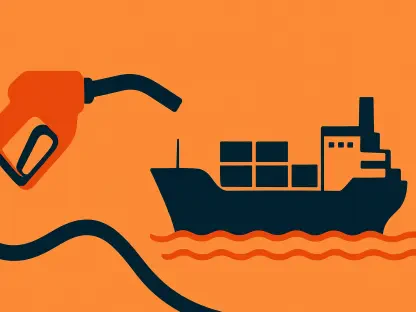
The primary driver behind this revenue jump was a profound shift in energy security caused by the ongoing regional conflict and the resulting blockade of the Strait of Hormuz. This vital sea lane’s closure effectively removed nearly a billion barrels of oil from global reach, creating a supply vacuum that sent shockwaves through every sector of the economy. Current success is tied directly to the instability that exposed the extreme vulnerability of traditional maritime oil routes.
This shortage triggered a massive redirection of trade flows as nations sought reliable alternatives to disrupted shipping lanes. As the blockade persisted, the scarcity of supply drove commodity values toward record highs, fundamentally altering the competitive landscape for major global energy producers.
Dissecting the Financial Engines: Aramco’s $33.6 Billion Net Income
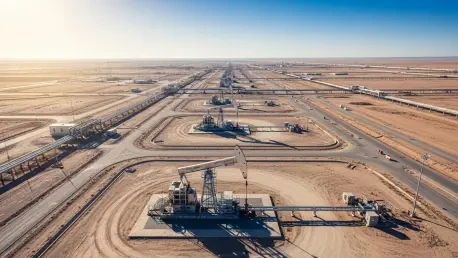
The 34% rise in profit from the previous quarter resulted from strategic infrastructure utilization and high commodity prices. Central to this success was the maximum use of the East-West Pipeline, which operated at its full capacity of 7.0 million barrels per day to bypass the Hormuz chokepoint. By leveraging this midstream asset, the company ensured that supply remained steady while competitors faced severe shipping constraints.
This period demonstrated how logistical independence creates a unique environment for exponential revenue growth. The ability to maintain operational flow when the primary artery of world oil was severed proved to be the ultimate differentiator in the latest fiscal reporting cycle.
Industry Perspectives: The Fragility of Modern Energy Systems
CEO Amin Nasser labeled the East-West Pipeline a “critical supply artery,” a sentiment echoed by leaders at the oilfield services firm SLB who believe the current conflict laid bare systemic weaknesses. Recent military escalations, including missile strikes and the seizure of tankers, reinforced the expert consensus that the world’s energy supply chain is far more precarious than previously thought.
These firsthand observations suggest that a stabilized supplier role is now the primary anchor for a volatile global market. The industry consensus has moved away from simple cost-efficiency toward a focus on total security, as experts recognize that geopolitical risk is now a central operational reality.
Strategic Frameworks: Maintaining Supply Continuity and Shareholder Value
The approach prioritized midstream diversification and capital discipline to manage a commodity enterprise during a global shock. By utilizing redundant infrastructure, the organization successfully mitigated the loss of major shipping lanes. The firm also maintained a remarkably low gearing ratio of 4.8% while simultaneously increasing the base dividend to $21.9 billion.
Strategic redundancy protected both operational flow and investor interests during the height of the energy crisis. Future solutions looked toward inland transport networks to reduce reliance on vulnerable sea corridors, ensuring that resilience remained the priority for long-term energy stability. This framework provided a clear path for navigating a world where traditional logistics are no longer guaranteed.