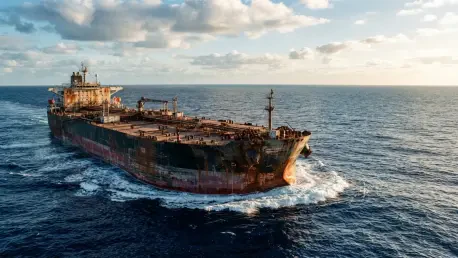

Global maritime corridors are currently experiencing a period of unprecedented volatility as escalating geopolitical tensions in the Middle East drive oil tanker charter rates to levels five times higher than historical benchmarks. This sudden surge in logistics costs has fundamentally altered the economic landscape for energy-producing nations like Malaysia, where the state-owned Petronas and various private players navigate a complex web of logistical bottlenecks and shifting trade routes. While the Strait of Hormuz remains a critical choke point, the rerouting of vessels and subsequent decrease in fleet efficiency have created a shortage of available tonnage, pushing the daily equivalent for Very Large Crude Carriers on Middle East-to-Asia routes toward the $1.4 million mark. This environment forces a critical reevaluation of energy security and supply chain resilience, as the cost of moving a single barrel of crude now carries a significant premium that ripples through the entire national economy.
Divergent Outcomes: Windfalls for Upstream and Shipping Entities
The sharp appreciation in charter rates provides a substantial tailwind for Malaysia’s shipping heavyweights and upstream producers who are positioned to capitalize on the global scramble for secure transport. National shipping giant MISC Bhd stands at the forefront of this windfall, as the demand for Very Large Crude Carriers and Long Range tankers remains high due to prolonged delivery times and a tighter global fleet. As charterers compete for limited vessel availability, shipping companies can command premium prices that significantly bolster their quarterly earnings and overall market valuation. Furthermore, the higher price of crude oil, often a byproduct of the same geopolitical instability driving tanker rates, translates into increased petroleum revenue for the federal government. This influx of capital supports ongoing exploration and production activities, encouraging domestic players to accelerate offshore projects that might have previously seemed marginal under lower price regimes.
Beyond the immediate revenue gains for vessel owners, the current logistical climate has sparked a strategic redeployment of assets across the maritime sector. Fleet operators are increasingly switching Long Range 2 tankers from transporting refined petroleum products to carrying crude oil to capture the higher profit margins available in the crude market. This shift creates a secondary effect by tightening the supply of tankers available for refined goods, thereby reinforcing the upward pressure on rates across all vessel classes. For Malaysia, which serves as a major hub for regional trade, this trend necessitates a sophisticated approach to fleet management and scheduling to ensure that export commitments are met without incurring prohibitive spot-market costs. The resulting efficiency crunch means that even with higher revenues, operators must maintain rigorous focus on technical management to avoid downtime. This focus on operational excellence ensures that the benefits of high charter rates are not entirely eroded by rising insurance and fuel costs.
Downstream Risks: Refining Pressure and Strategic Adjustments
While the upstream and shipping segments celebrate increased profitability, the downstream sector faces a much more precarious situation as rising transportation and insurance premiums squeeze refining margins. Malaysian refineries, which rely on a steady influx of feedstock, are seeing their operational costs balloon because the price of delivering crude oil has skyrocketed. These facilities operate on thin margins under normal circumstances, and the current spike in logistics expenses often outpaces the rise in the prices of finished products like gasoline and diesel. Consequently, downstream entities are forced to absorb these costs or pass them on to consumers, which creates a challenging environment for maintaining domestic price stability. The added burden of war-risk insurance premiums for vessels traversing sensitive corridors further complicates the financial outlook for these companies. This dynamic highlights the vulnerability of the downstream sector to external shocks that disrupt the traditional cost structures of global energy transport.
The recent surge in global tanker rates served as a catalyst for a fundamental restructuring of how Malaysia approached its maritime energy strategy. Stakeholders recognized that relying solely on historical price patterns was no longer viable in an era of frequent geopolitical shifts and logistical bottlenecks. In response, the industry shifted toward a model that emphasized the optimization of domestic refining capacity to reduce the dependency on expensive refined imports. Government agencies and private enterprises collaborated to enhance the strategic petroleum reserve, providing a necessary cushion during periods of extreme market tightness. Furthermore, the adoption of more fuel-efficient vessel technologies and alternative routing strategies became a standard practice to mitigate the impact of rising bunker costs and insurance premiums. These measures successfully transitioned the sector from a reactive posture to a more proactive and resilient framework. Moving forward, the focus remained on diversifying energy sources and strengthening regional partnerships.