
For decades, the global economy has functioned as a hostage to the narrow, volatile waters of the Strait of Hormuz, where a single geopolitical misstep could trigger a catastrophic collapse of energy supply chains across the entire planet. However, the current environment has forced a dramatic reevaluation of this dependency as regional powers face a combination of persistent security threats and new economic pressures. The threat of a 20% cargo fee on shipments passing through the strait has turned a long-standing strategic concern into an immediate fiscal crisis. Gulf nations are no longer simply discussing alternatives; they are aggressively building a future where their economic survival is not tied to a single, vulnerable waterway.
Reevaluating the World’s Most Critical Energy Chokepoint
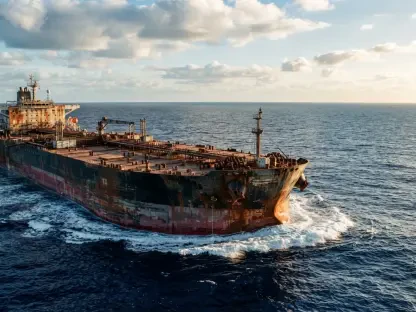
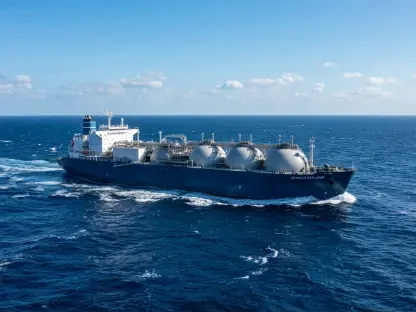
The Strait of Hormuz has historically served as the primary artery for global energy, with roughly one-fifth of the world’s oil and a significant portion of its liquefied natural gas (LNG) transiting its narrow passage. This maritime corridor has long been the center of global energy security, dictating the flow of trade from the Persian Gulf to the major markets of Asia, Europe, and the Americas. The shipping lanes are so vital that any disruption, whether intentional or accidental, immediately resonates through global stock markets and energy pricing.
In recent years, the dominance of this route has been challenged by the evolving nature of maritime regulations and the increasing sophistication of regional military capabilities. The vulnerability of large tankers to asymmetrical threats has necessitated a shift in how energy flow is secured. Regional players are increasingly recognizing that the traditional reliance on international maritime protection is no longer sufficient. Consequently, there is a marked transition toward technological solutions and alternative logistics that can bypass the chokepoint entirely, ensuring that energy remains a reliable commodity.
Strategic Initiatives and Economic Drivers Reshaping Trade Routes
Emerging Tactics: Pipeline Expansion and Shuttling Logistics
The acceleration of pipeline projects has become the primary mechanism for bypassing the traditional maritime routes. Saudi Arabia’s Petroline, or the East-West Pipeline, stands as the most prominent example of this strategy, providing a direct link from eastern oil fields to the Red Sea. By expanding this network, Riyadh has significantly enhanced its capacity to move crude to ports like Yanbu, which sit safely outside the reach of the Strait of Hormuz. This land-based infrastructure offers a level of stability that maritime shipping cannot match, particularly during periods of heightened regional tension.
In parallel, the United Arab Emirates has refined a sophisticated shuttling strategy designed to mitigate maritime vulnerability. By utilizing smaller, more agile vessels to move oil to deep-water hubs outside the chokepoint, such as those in Fujairah, the UAE can load larger tankers in open waters. This tactic reduces the amount of time that high-value cargo spends in the high-risk zones of the Persian Gulf. Moreover, the development of massive onshore storage facilities in Fujairah has created a strategic buffer, allowing the nation to maintain export volumes even if the strait were to be temporarily obstructed.
Quantifying the Shift: Export Volumes and Infrastructure Projections
Current market data indicates a substantial diversion of oil volumes away from the Strait of Hormuz. Analysts suggest that the combination of pipeline expansions and east-coast loading facilities has already rerouted nearly 4 million barrels per day. The performance indicators for the Petroline show that it is operating at record efficiency, while the Fujairah port facilities are reaching new heights in cargo throughput. These figures represent a fundamental change in the region’s logistics footprint, signaling that the move toward terrestrial alternatives is gaining measurable momentum.
Looking ahead to the next 24 months, regional capacity for alternative export routes is projected to grow by an additional 30%. This forecast is driven by the completion of new pumping stations and the expansion of terminal facilities along the Red Sea. As these projects come online, the global energy pricing structure will likely become less sensitive to news from the Persian Gulf. The ability to guarantee supply through multiple geographical exits provides a level of market confidence that has been absent for the last several decades.
Navigating the Complex Realities of Alternative Logistics
While the shift toward land-based infrastructure provides a solution to the Hormuz dilemma, it creates a new set of challenges known as the balloon effect. By redirecting traffic toward the Red Sea, nations are inadvertently concentrating risk at other critical passages like the Bab el-Mandeb. This strait remains a flashpoint for regional conflict, meaning that the security burden has simply moved from one narrow waterway to another. Navigating this reality requires a broader maritime security framework that addresses multiple chokepoints simultaneously rather than focusing on a single one.
Furthermore, geographical and technological constraints continue to hinder landlocked or geographically limited producers like Kuwait and Iraq. These nations lack easy access to secondary coastlines, making them more dependent on the cooperation of their neighbors for pipeline transit. The high capital expenditure required for rapid infrastructure deployment also poses a barrier to entry for smaller regional players. To protect these vulnerable networks from sabotage or cyberattacks, nations are investing heavily in advanced monitoring technologies and automated defense systems along their vast pipeline corridors.
Policy Pressures and the New Maritime Security Framework
The proposed 20% cargo toll has fundamentally reshaped regional economic policy, forcing exporters to weigh the cost of the strait against the investment required for new routes. This policy pressure has accelerated the adoption of international compliance and security standards as nations seek to lower their operational risks. The shift in maritime insurance has been particularly influential, as insurers have begun to favor routes that avoid high-risk zones. This financial incentive is driving shippers to select alternative pathways even when the logistical path is longer or more complex.
Collaboration between Gulf nations and global military powers has also intensified to secure these alternative routes. New security frameworks are being established that emphasize shared intelligence and joint patrols along both maritime and terrestrial corridors. This collective approach ensures that as the energy flow shifts, the security apparatus shifts with it. By aligning regional interests with global energy stability, these partnerships are creating a more resilient framework for energy trade that transcends the traditional reliance on the U.S. Navy’s presence in the Persian Gulf.
The Long-Term Trajectory of Middle Eastern Energy Logistics
In the long term, the Strait of Hormuz is expected to see a decline in its status as a tool for geopolitical leverage. As more oil and gas move through pipelines and automated ports, the ability of any single actor to hold the global economy hostage will diminish. Emerging technologies in port automation and cross-border pipeline monitoring are making these alternative routes more efficient and less prone to human error or political interference. This technological evolution is a cornerstone of the regional pivot toward a more stable and predictable energy market.
Furthermore, the shift toward renewable energy and the diversification of trade partners are acting as market disruptors. As the world moves toward a lower-carbon future, the demand for traditional oil transit may stabilize, allowing the focus to shift toward the logistics of hydrogen and other green fuels. The expansion of terminals along the Red Sea and the East Coast is positioning the region to be a hub for these new energy sources. The long-term trajectory points toward a diversified energy landscape where the physical geography of the Persian Gulf no longer dictates the terms of global engagement.
Final Assessment of the Regional Pivot and Investment Outlook
The strategic transition away from a total reliance on the Strait of Hormuz represented a fundamental realization that economic survival required geographical diversity. Gulf nations effectively demonstrated that the “oil weapon” could be neutralized through the rapid deployment of terrestrial infrastructure and sophisticated maritime shuttling. This pivot provided a necessary buffer against the unpredictable nature of regional politics and the rising costs of traditional shipping routes. Stakeholders across the energy sector prioritized these investments to ensure that global supply chains remained intact despite localized volatility.
Investors identified new opportunities in the expansion of Red Sea logistics and the technological fortification of pipeline networks. The shift appeared permanent as the regional energy landscape evolved into a multi-nodal system rather than a single-artery dependency. By embracing automation and cross-border collaboration, the Middle East successfully prepared for a future where energy security was defined by flexibility and resilience. These actionable steps ensured that the region remained the cornerstone of global energy trade while significantly reducing the risks that had plagued the market for years.