
A New Era of Energy Dominance and Reliability
The American energy landscape is currently navigating a period of unprecedented electricity demand as artificial intelligence and advanced manufacturing tax the existing infrastructure beyond its previous limits. Policy shifts at the federal level have moved decisively away from restrictive ideological debates toward a pragmatic “all-of-the-above” strategy. This realignment prioritizes the expansion of the domestic power supply through the Office of Energy Dominance Financing (EDF), an entity tasked with deploying billions to ensure the grid remains reliable and robust. By focusing on “energy addition,” the strategy aims to integrate diverse fuel sources to support a growing economy while maintaining affordability for residential and industrial consumers.
Historical Context and the Shift in Federal Strategy
To appreciate the current trajectory, one must observe the fundamental evolution of federal energy financing over the last several years. Previously, the Department of Energy’s Loan Programs Office focused heavily on nascent technologies and early-stage renewable ventures that often struggled with scalability. However, the current strategy represents a comprehensive pivot toward “energy dominance,” rebranding the office to reflect a focus on utility-scale stability. Historically, the U.S. power grid relied on a steady baseload from coal and aging nuclear plants, but as coal units retired, a critical gap in grid firmness emerged. The recent announcement of $10.1 billion in loans to leaders like Constellation Energy and Alliant Energy signifies a return to prioritizing projects that leverage proven infrastructure to deliver immediate generation results.
The Strategic Pillar of Nuclear Modernization
Maximizing Existing Assets Through Nuclear Uprates
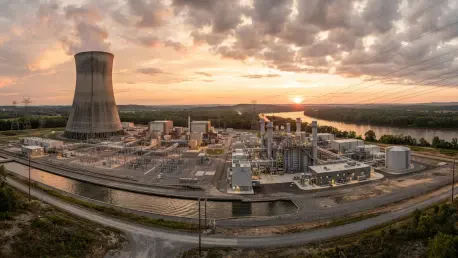
The revitalization of the domestic nuclear fleet serves as a central component of this modernized energy framework. Rather than solely waiting for the long-term construction of new reactors, federal efforts are prioritizing “uprating,” which involves technical upgrades that allow existing reactors to safely increase their output. A $5 billion conditional loan commitment to Constellation Energy highlights this tactic, targeting facilities in Illinois, Maryland, and Pennsylvania to add approximately 1.1 GW of capacity. This approach offers a faster, more cost-effective route to increasing carbon-free power compared to greenfield developments, effectively utilizing the existing safety record and workforce of current plants.
Balancing the Grid with Natural Gas and Storage
While nuclear provides the necessary baseline, the inherent variability of modern energy demands requires flexible, dispatchable solutions to maintain balance. The DOE has finalized $5.1 billion in loans for Alliant Energy to develop 2.6 GW of capacity across Iowa and Wisconsin, utilizing a mix of natural gas-fired plants and large-scale storage. This investment recognizes that gas-fired generation, when paired with high-capacity batteries, acts as a critical bridge for grid reliability during peak loads. By integrating these technologies, utilities can ensure a consistent power supply that remains resilient even when weather-dependent sources are unable to meet immediate demand.
Regional Market Integration and Grid Stability
The complexities of the domestic energy landscape are often defined by regional market requirements and the unique needs of local infrastructure. EDF investments are strategically concentrated in critical markets such as the Midcontinent Independent System Operator (MISO) and PJM Interconnection, which provide power to the industrial heartland. These regions face the specific challenge of replacing massive amounts of retired coal capacity without causing consumer prices to skyrocket. By utilizing the $300 billion in available lending authority, the administration assists utilities like AEP Texas and Southern Co. in navigating these regional pressures through a mix of customized technology deployments.
Emerging Trends in Utility Financing and Innovation
Looking ahead, the pace of utility financing is expected to accelerate as more providers adopt this new federal playbook for infrastructure deployment. Industry observers anticipate a broader “nuclear renaissance” that includes not only uprates but also the reactivation of mothballed facilities and the deployment of Small Modular Reactors (SMRs). Economically, the movement toward dominance suggests a future where regulatory frameworks are streamlined to favor projects capable of high-volume generation. Experts suggest that the fusion of traditional baseload power with advanced battery storage will soon become the standard architectural model for any utility seeking federal backing.
Key Insights for a Diversified Energy Portfolio
An analysis of these federal investments reveals that the philosophy of “energy addition” has officially replaced the concept of simple energy replacement. The objective is now to grow the total pool of available power to meet the rising needs of the digital economy rather than merely substituting one source for another. For policymakers and investors, the primary recommendation is to prioritize projects that offer both technological diversity and grid-firming capabilities. Real-world application of this data indicates that regions embracing a balanced mix of nuclear and natural gas will likely experience lower pricing volatility and significantly higher levels of long-term grid resilience.
Conclusion: Securing the Path Forward
The massive $10.1 billion investment in Constellation and Alliant Energy underscored a pivotal moment for the American power grid. By doubling down on nuclear uprates and natural gas infrastructure, the nation positioned itself to meet the increasing electricity demands of the decade. This strategy acknowledged that a secure energy future required a foundation built on reliability and pragmatic asset management. As the sector moved forward, the success of this multifaceted approach offered a clear blueprint for maintaining economic competitiveness. Stakeholders prioritized actionable steps to streamline the deployment of high-capacity storage while ensuring that baseload stability remained the highest priority for national security and technical innovation.