
Christopher Hailstone, a seasoned authority in energy management and grid security, joins us to discuss the pivotal findings of a recent industry survey that charts India’s path toward a clean energy future. As the nation crosses the threshold where non-fossil sources make up over half of its installed capacity, the focus is shifting from simple expansion to the complex reality of day-to-day electricity delivery. Hailstone provides a deep dive into the expectations of hundreds of energy professionals, the massive grid investments required, and the strategic evolution of the power sector. We will explore how the industry plans to navigate the gap between raw capacity and reliable generation while maintaining economic stability.
With roughly three out of four energy professionals now predicting that renewables will surpass coal as India’s primary electricity source by 2035, how do you interpret this optimism given the current heavy reliance on thermal power?
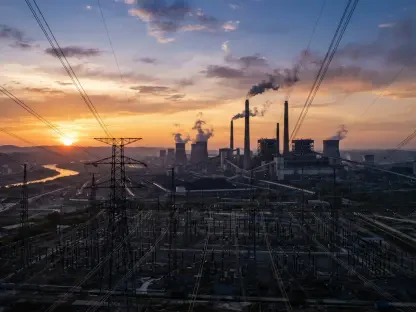
The survey conducted across major hubs like Delhi NCR, Mumbai, and Bangalore reveals a profound shift in confidence, with 28% of the 250 professionals surveyed even anticipating this crossover by 2030. This optimism is remarkable because it suggests a transition that could outpace current planning assumptions, yet we must temper this with the hard data from the recent fiscal year. As of 31 July 2026, while we reached 300.5 GW of total non-fossil capacity, thermal sources still generated about 1,307 billion units compared to just 478 billion units from hydro and other renewables. This creates a visceral sense of urgency in the industry because building the capacity is only the first step; the true challenge is ensuring those green megawatts can match the sheer volume of energy currently provided by coal. It is a story of a sector that sees its destination with absolute clarity but is now waking up to the staggering scale of the execution gap that remains.
Grid integration and reliability have been identified as the single largest barrier by nearly 30% of industry experts. What specific infrastructure is needed to ensure the system doesn’t buckle under the weight of variable renewable energy?
The transition will not be won by megawatts alone, but by the firmness and intelligence of every megawatt-hour that actually reaches a home or factory. To manage the 1,121 GW of capacity projected for 2035-36, we need a grid that acts as a responsive system involving storage, transmission, and sophisticated market mechanisms working in perfect harmony. It is a massive technical struggle to move away from a thermal-dependent system, and 29% of professionals are rightly worried that without proactive grid investments, we risk transferring unacceptable costs to the consumer. We need more than just wires; we need a stronger architecture of delivery that links policy and capital to flexible generation that can react in real-time to the variability of the sun and wind. This infrastructure must be able to absorb, store, and move clean energy across the country seamlessly, or the ambition of a green grid will remain an elusive dream.
Solar energy is the clear favorite for growth, with 61% of respondents choosing it over wind or green hydrogen. What is driving this preference, and how do climate commitments influence the investment landscape?
Solar’s dominance is being driven by a powerful combination of falling costs—which 27% of professionals cite as a primary factor—and the massive weight of climate and Net Zero commitments mentioned by 32% of participants. There is a tangible excitement around solar because it feels like a solved technology that is ready to scale, unlike wind energy or green hydrogen which were selected by 14% and 11% of respondents respectively. However, this rush toward solar brings its own set of logistical challenges, such as the 18% of experts who are deeply concerned about the hurdles of land acquisition and the slow pace of permitting. The industry is signaling a preference for the most competitive clean energy source, but this focus means we must work even harder to ensure our financing and policy structures can support such a rapid expansion. It is a race where the technology is ready, but the money, cited as a barrier by 24% of people, is still trying to catch up with our environmental ambitions.
You’ve noted that coal’s role will likely evolve rather than simply disappear in a binary contest. How should the industry approach the modernization of thermal assets to support a grid that is 70% non-fossil?
We have to stop looking at this as a binary fight between coal and renewables and instead view it as a strategic evolution where coal provides the necessary reliability. Even as non-fossil capacity grows to 70% by the middle of the next decade, coal is still expected to provide nearly half of the actual electricity generated, which underscores its role as a vital safety net. This means we must invest in upgrading our existing thermal assets to be more flexible, allowing them to complement the 43% contribution from renewables rather than competing with them. The real test is creating a system where thermal power is a responsive backup that can step in when renewable output dips, preventing blackouts and stabilizing the market. It is a nuanced transition that requires us to honestly acknowledge that our operating power system remains substantially thermal-dependent even as we build for a cleaner future.
What is your forecast for India’s energy transition?
My forecast is that while the industry’s ambition will continue to drive rapid capacity additions, the actual crossover point where renewables produce more electricity than coal will be dictated entirely by the speed of our grid modernization. We will likely see a period of intense volatility where solar capacity surges, but the system struggles to “firm up” that power, leading to a renewed focus on storage technologies and market reforms. I expect that by 2035, India will have successfully established itself as a global leader in clean energy, but coal will still have a seat at the table as a provider of strategic reliability. The gap between the 1,121 GW of projected capacity and the actual units generated will eventually close, but only if we treat the grid as the intelligent heart of the nation rather than just a collection of power plants. The next decade will be defined by how well we bridge the gap between the technology we have and the sophisticated delivery systems we desperately need.