
Christopher Hailstone joins us to discuss the significant shifts occurring in the global energy landscape, focusing on the recent initiatives to decouple electricity costs from volatile fossil fuel markets. With his extensive background in energy management and grid reliability, Hailstone provides a deep dive into the mechanics of utility pricing, the impact of windfall taxes on renewable investment, and the logistical hurdles of expanding green infrastructure to urban environments. This discussion explores the transition toward a more stable, clean-energy-driven economy while addressing the persistent role of gas in maintaining grid security.
Domestic electricity bills often mirror gas market spikes even when renewables are abundant. How would weakening this link specifically stabilize household budgets, and what technical hurdles exist when transitioning to a pricing model that reflects the lower running costs of wind and solar?
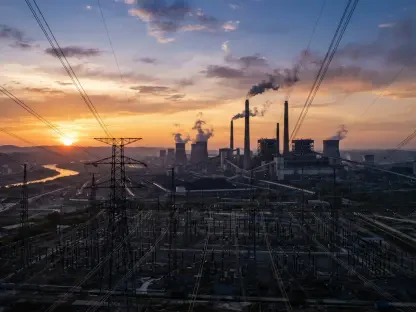
The current system operates on a marginal pricing model where the last unit of energy needed to meet demand—often gas—sets the price for the entire market, which feels like being trapped on a fossil fuel rollercoaster. By weakening this link, we can shield families from the sudden, jarring price hikes caused by international conflicts, such as the tensions involving Iran, which send shockwaves through the wholesale market. The technical challenge lies in the fact that while wind and solar have nearly zero marginal running costs, the wholesale market wasn’t originally designed to prioritize these variations, leading to a disconnect where green energy is abundant but bills remain high. Transitioning within the next year requires a sophisticated consultation process to ensure that the cheaper generation costs of renewables are directly reflected in the consumer’s pocket rather than being obscured by the price of a gas burner.
Moving older renewable projects onto fixed-price contracts involves increasing the windfall tax on excess profits to 55%. How will this tax hike incentivize generators to accept fixed terms, and what are the long-term risks if these companies refuse to make the voluntary switch?
Increasing the windfall tax from 45% to 55% starting July 1 serves as a powerful financial lever, essentially telling older generators that their days of harvesting massive profits from gas-driven price spikes are numbered. This tax, which is now slated to extend beyond its original 2028 expiration, creates a “push” factor that makes the stability of a fixed-price contract look far more attractive than the volatile, heavily taxed alternative. If these companies refuse to switch, we risk a persistent financial friction where the government must continue to intervene with heavy-handed taxation to prevent “excess profits” from being drained away from struggling households. Furthermore, a failure to migrate these projects—which account for about one-third of the nation’s electricity—could delay the broader goal of making clean energy the undisputed standard for affordable living.
New initiatives aim to expand solar panel installations and electric vehicle charging for residents who lack private driveways. What specific infrastructure changes are needed to make these technologies accessible, and how might these adjustments impact the overall cost of living for urban families?
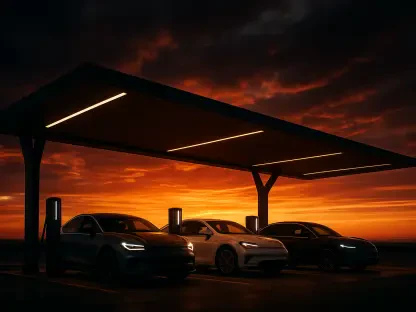
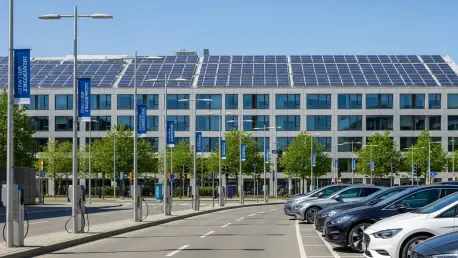
To truly democratize clean energy, we have to look at the physical constraints of our cities and amend planning laws that currently make it difficult for those without driveways to charge an electric car. This involves a sensory transformation of our streets, where charging points become as common as lamp posts and businesses are empowered to blanket their rooftops with solar panels without drowning in red tape. For an urban family, this means moving away from the high costs of public charging hubs or being locked out of the solar revolution entirely, providing them with the tools to lower their own overhead. These adjustments are designed to take the pressure off family budgets by ensuring that the benefits of the clean energy shift aren’t reserved only for those with suburban garages.
Certain European nations exhibit less vulnerability to gas spikes because of their specific energy mix. What lessons can be drawn from those systems to ensure a smooth transition within the next year, and what role must gas play when weather conditions limit renewable output?
Countries like Spain and France have built systems that are less reliant on gas for their daily electricity needs, offering a blueprint for how a diversified mix can act as a shock absorber against global market volatility. However, we must remain realistic about the fact that gas still plays a critical role as a backstop when the sun isn’t shining and the wind isn’t blowing across our landscapes. The goal is not to eliminate gas overnight, which would be a gamble with grid security, but to ensure it is the exception rather than the rule that dictates the price of every kilowatt-hour. We are learning that the solution to a fossil fuel crisis is not to double down on those fuels, but to manage their decline while scaling up the reliable “baseload” potential of clean alternatives.
Some analysts argue that government levies and subsidies contribute significantly to high electricity costs. In what ways could a new pricing structure mitigate these additional fees, and how should policymakers balance the need for cheap energy with the financial requirements of clean energy investment?
There is a legitimate concern that piling taxes and levies onto electricity bills makes it harder for people to embrace the very electric technologies we are promoting. A new pricing structure could mitigate this by moving older, subsidized projects onto fixed contracts, essentially streamlining the way we pay for the green transition and avoiding the “wasteful” or “expensive” labels often attached to older subsidy regimes. Policymakers have to walk a tightrope, ensuring that clean energy remains an attractive investment for the private sector while simultaneously making sure that the wholesale price of electricity is low enough to incentivize people to switch away from gas heating and petrol cars. It is a balancing act of ensuring that the financial requirements of 21st-century infrastructure do not become a barrier to the people who need affordable energy the most.
What is your forecast for the future of electricity pricing and energy security?
I anticipate a period of “stabilized transition” where, within the next year, we will see the first real cracks in the dominance of gas-linked pricing, leading to more predictable, if not immediately plummeting, household bills. As we successfully migrate one-third of our generation capacity to fixed-price contracts, the impact of international geopolitical shocks will begin to fade from our monthly statements, replaced by a domestic energy security built on wind and solar. While the debate over levies and the 55% windfall tax will remain heated, the ultimate trajectory is toward a grid that prizes stability over speculation. For the average consumer, this means the end of the “fossil fuel rollercoaster” and the beginning of an era where electricity is finally priced as the abundant, renewable resource it is becoming.