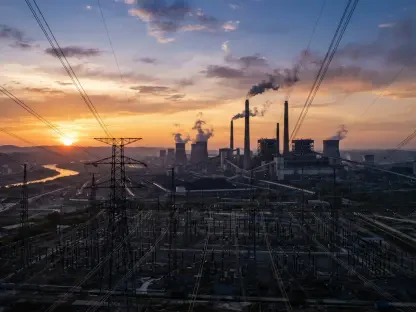

The arrival of a nineteen million dollar invoice for Washington electricity customers signals a confusing shift in the energy economy where residents pay for a massive plant that does not produce any power. The Centralia coal facility, a 730-megawatt relic once destined for the history books, currently occupies a state of expensive “readiness” mandated by federal authorities. Instead of witnessing the planned decommissioning of a high-emission site, the public now faces the financial reality of keeping a dormant turbine prepared for an emergency that may never materialize. This situation brings to light a critical friction point in the American energy landscape: the immense fiscal burden of maintaining aging infrastructure that no longer fits into state climate objectives but remains tethered to federal reliability requirements.
This regulatory standoff serves as a bellwether for the difficulties inherent in transitioning a national power grid away from fossil fuels. While Washington state lawmakers successfully passed mandates to eliminate coal-fired power by the end of 2025, the U.S. Department of Energy utilized its emergency authority to halt that progress. The result is a legislative and financial limbo where the costs of a fossil-fuel past continue to accumulate, despite the state’s aggressive pursuit of a renewable future. The Centralia case illustrates how the intersection of grid security and environmental policy can create unexpected liabilities for the very consumers these policies were intended to protect.
The High Cost: Paying for an Empty Fuel Tank
The bill currently facing ratepayers is not a charge for the consumption of energy, but rather a premium for the mere possibility of its existence. TransAlta, the Calgary-based owner of the Centralia facility, recently petitioned the Federal Energy Regulatory Commission to recover nearly twenty million dollars for a period in which the plant produced nothing. This “readiness” cost ensures that the plant remains staffed and functional, even as its primary fuel source becomes increasingly incompatible with local environmental regulations and state-wide carbon reduction targets.
Because the Department of Energy intervened to keep the plant available, the facility could not proceed with its original plan to transition into a cleaner natural gas operation. This freeze in time has essentially turned a depreciating asset into a mandatory insurance policy for the regional grid. For the average consumer, this translates into higher monthly bills that provide no tangible increase in service or a reduction in the local carbon footprint. The situation highlights a growing tension between the fiscal reality of aging infrastructure and the political desire for a rapid energy transition.
A Legal Tug-of-War: Federal Mandates versus State Ambitions
At the heart of this dispute is Section 202(c) of the Federal Power Act, a decades-old provision that allows federal regulators to override state environmental laws during energy emergencies. The Department of Energy maintains that the Pacific Northwest grid is currently too fragile to lose the 730 megawatts provided by the Centralia coal unit. However, this assertion clashes directly with Washington’s legislative mandate to cease coal operations to meet urgent climate goals, creating a jurisdictional vacuum where neither state nor federal plans can be fully realized.
Environmental advocates and state officials have voiced significant frustration over what they perceive as a lack of transparency regarding the necessity of these emergency orders. Critics argue that by forcing the plant to remain operational, the federal government is effectively subsidizing a polluting industry at the expense of local health and policy autonomy. This impasse has left the facility stuck between a state-ordered retirement and a federal-ordered extension, with no clear path forward that satisfies both reliability and sustainability.
The Anatomy: A Multi-Million Dollar Request for Fossil Fuel Maintenance
Breaking down the nearly twenty million dollar request reveals the granular costs of maintaining a nineteenth-century technology in a modern era. TransAlta’s filing covers fixed overhead such as employee salaries, insurance premiums, and essential maintenance supplies required to keep the unit on standby. These expenses are incurred regardless of whether the plant fires a single boiler, meaning ratepayers are essentially paying for a fully staffed stage where the actors never perform.
The financial liability only increases if the plant is actually called into service. A single startup sequence can cost ratepayers over five hundred seventy-seven thousand dollars, with operational rates escalating quickly after the initial power delivery. Beyond these immediate costs, an estimated twenty-three million dollars in further repairs is anticipated to keep the aging machinery functional for future emergency windows. This growing price tag highlights the inefficiency of using old coal plants as stopgap measures when the equipment itself requires constant and expensive life-support.
National Trends: The Growing Price Tag of Emergency Grid Orders
Centralia is not an isolated example of this phenomenon; it is part of a rising national trend where federal intervention delays the retirement of coal infrastructure. Across the United States, at least six major power plants have seen their lifespans extended by emergency orders, leading to a collective burden of approximately two hundred thirty-five million dollars for American ratepayers. This pattern suggests a systemic reliance on emergency powers that may be masking a lack of long-term investment in more flexible, modern grid solutions.
Expert skepticism continues to mount as market data often contradicts the dire warnings used to justify these emergency declarations. In some instances, energy supplies in the region were described by industry executives as “flush,” raising questions about why an expensive coal unit was deemed essential. This discrepancy suggests that federal mandates might be providing unnecessary subsidies to obsolete plants, complicating the efforts of utilities that were trying to plan for a cleaner and more predictable energy transition.
Shifting the Focus: Moving From Stopgap Measures to Sustainable Grid Reliability
Navigating this complex energy transition required a move away from short-term emergency fixes toward a more integrated planning framework. Ratepayers and advocacy groups found that demanding transparency in regulatory filings was essential for ensuring that emergency declarations reflected actual market conditions. By pushing for evidence-based reliability assessments, stakeholders were able to question the necessity of maintaining idle infrastructure and encouraged a more rigorous scrutiny of federal overrides that bypassed state environmental standards.
A more effective long-term strategy eventually focused on accelerating the conversion of retired coal sites into natural gas or renewable energy hubs rather than merely extending the life of obsolete units. This shift ensured that the power grid remained stable without forcing consumers to subsidize the maintenance of aging and polluting facilities. Ultimately, the lessons from the Centralia impasse demonstrated that true grid reliability was better achieved through modern investment and clear regulatory pathways rather than through the expensive prolongation of a fading era.