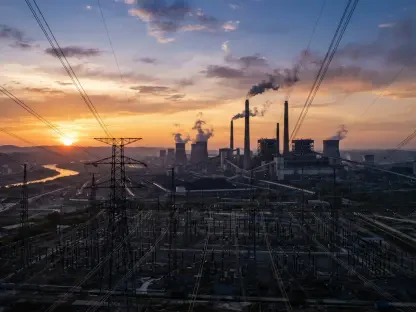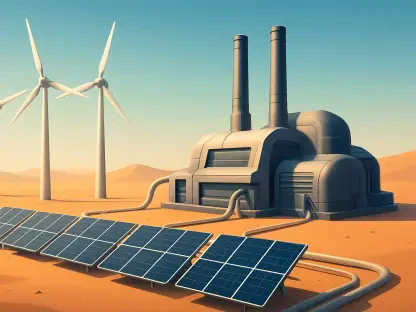

As the global climate crisis intensifies, nations that contribute the least to atmospheric carbon levels are often the ones demonstrating the most aggressive leadership in the transition toward a sustainable economy. Malaysia, representing less than one percent of global emissions, recently redefined its economic trajectory by anchoring its future in the National Energy Transition Roadmap (NETR). This strategic framework is not merely an environmental pledge; it is a comprehensive overhaul of how the nation generates and consumes power, aiming for a seventy percent renewable energy capacity by 2050. By positioning decarbonization as a primary driver for industrial growth, the government seeks to decouple economic expansion from fossil fuel dependency. This shift acknowledges that the survival of regional industries depends on their ability to adapt to a low-carbon world. Consequently, the push for net-zero is now a central pillar of national sovereignty.
Regulatory Framework: The Power of Mandated Conservation
Central to this shift is the Energy Efficiency and Conservation Act, which reached full implementation at the start of 2025, moving energy management from a peripheral corporate task to a core legal obligation for major industrial players. Unlike previous voluntary guidelines that often went ignored in favor of short-term cost-cutting, this legislation mandates that large-scale commercial and industrial entities track their electricity usage with rigorous precision. These organizations are now required to appoint certified Energy Managers who are tasked with overseeing the integration of efficient technologies and the optimization of daily operations. Periodic audits have become the standard procedure, serving as a diagnostic tool to identify where technical inefficiencies are draining resources and inflating carbon footprints. By codifying these requirements, the government created a level playing field where sustainability is a fundamental component of doing business.
The legislative strategy rests on the principle that renewable energy production and demand-side conservation are two sides of the same coin, meaning that adding solar capacity is futile if the power is wasted by inefficient machinery. This dual focus ensures that the environmental gains achieved through massive hydropower or floating solar projects are not neutralized by outdated building designs or legacy industrial equipment. To address this, the law introduces strict performance benchmarks for commercial architecture, requiring new developments to adhere to high-efficiency standards from the initial design phase. Furthermore, household appliances are subject to mandatory efficiency labeling, which empowers consumers to make informed decisions that reduce their long-term utility costs. By bridging the gap between policy and consumption, the act fosters a culture of accountability that extends from the factory floor to the modern high-rise office.
Economic Benefits: Building a High-Value Low-Carbon Market
Transitioning to a low-carbon economy is proving to be a massive financial catalyst, with projections suggesting that the successful adoption of these efficiency measures could save the nation nearly ninety-seven billion ringgit in utility costs over the coming decades. These savings represent a significant reallocation of capital that can be reinvested into research and development, infrastructure modernization, and social programs, thereby strengthening the overall resilience of the economy. By reducing energy consumption by over two thousand million gigajoules through the year 2028 and beyond, Malaysia is effectively shielding its businesses and households from the volatility of global fossil fuel markets. This financial windfall underscores the reality that environmental sustainability is inherently linked to operational cost reduction, allowing the private sector to minimize its ecological footprint while enhancing its profitability and competitiveness in a green global market.
Beyond direct financial savings, the new energy laws are triggering a systemic integration of energy awareness across all levels of society, involving financial institutions and government agencies in a coordinated effort. Banks are increasingly aligning their lending criteria with these new energy standards, offering preferential rates for projects that demonstrate high efficiency or utilize renewable energy technologies. This financial pressure, combined with government incentives, is normalizing energy-conscious decision-making for both developers and individual homeowners. The long-term objective is to ensure that energy performance becomes a primary consideration in everything from the construction of a skyscraper to the purchase of a single household appliance. By creating a robust ecosystem where green choices are the most economically viable options, the government successfully moved the national mindset away from passive consumption toward a proactive model of smart management.
Strategic Pathways: Sustaining Momentum Toward Net-Zero
The initial phases of this transition demonstrated that the most effective path toward net-zero emissions was through a combination of strict regulatory enforcement and broad-based economic incentives. Stakeholders recognized that waiting for market forces alone to solve the climate crisis was insufficient, which led to the rapid adoption of decentralized energy systems and smart grid technologies. Moving forward, the focus shifted toward the continuous refinement of these standards to keep pace with emerging innovations in battery storage and carbon capture. Professionals in the field recommended that businesses conduct thorough internal reviews of their supply chains to identify hidden energy costs that remained outside the scope of current audits. This proactive approach ensured that the gains made in the early years were sustained through the late 2020s, providing a blueprint for other developing nations to follow while prioritizing high-tech and low-emission processes.
The integration of these policies eventually shifted the focus from simple compliance to the creation of a circular energy economy where waste heat was repurposed and decentralized solar arrays became the norm for industrial zones. Public and private sectors collaborated to establish a national database for energy performance, which allowed for real-time benchmarking across different industries. Experts highlighted that the successful implementation of the 2024 act served as the foundation for more advanced carbon pricing mechanisms that were introduced in subsequent years. To maintain this progress, it became clear that continuous investment in local manufacturing for energy-efficient components was essential to reduce reliance on international supply chains. These coordinated efforts transformed the national energy landscape, proving that rigorous legislative frameworks could drive both environmental stewardship and technological innovation for a secure energy future.