
The European Union finds itself at a critical juncture where the ambitious targets of the Green Deal collide with the harsh realities of a volatile global energy landscape. While methane emissions are recognized as a potent driver of climate change, enforcing strict reduction standards on imported fossil fuels risks alienating key suppliers and destabilizing the continent’s energy security. The EU Methane Regulation has recently entered a pivotal implementation phase, prompting the European Commission to issue new recommendations that aim to reconcile environmental rigor with the practicalities of international trade. This policy shift reflects a growing acknowledgment that dogmatic adherence to theoretical reporting standards could lead to severe shortages if global exporters find the bureaucratic burden too high to bear. By introducing more pragmatic compliance pathways, the bloc is attempting to maintain its role as a global climate leader while ensuring that households and industries have access to affordable energy throughout the transition period.
Practical Frameworks: Navigating Compliance Pathways
To address the immense technical challenges of monitoring methane across vast international supply chains, the Commission has introduced more flexible methods for importers to demonstrate their adherence to standards. Instead of mandating a direct and often impossible physical trace of every gas molecule from the wellhead to the European border, the new guidance emphasizes the use of trace and claim systems and robust third-party certifications. This evidence-based model allows suppliers to use logistical tracking and verifiable documentation to satisfy regulatory requirements without requiring a complete overhaul of global infrastructure. Such an approach recognizes that the complexity of current energy grids makes granular tracking a long-term goal rather than an immediate possibility. By validating secondary data sources and independent audits, the EU is providing a workable mechanism for exporters in North America, Africa, and Central Asia to remain part of the European market. This pragmatic strategy prevents administrative gridlock and ensures that the regulatory framework supports, rather than hinders, the physical flow of oil, gas, and coal.
This shift in strategy is specifically designed to mitigate the risk of energy flight, a scenario where major global suppliers might pivot their exports toward less regulated markets to avoid the high costs of European compliance. By clarifying the assessment criteria and harmonizing the verification process, the European Union is establishing a uniform roadmap that simplifies the landscape for international trade partners. A standardized approach across all Member States reduces the likelihood of legal discrepancies and creates a more predictable environment for long-term energy contracts. This predictability is essential for maintaining investor confidence and ensuring that the shift toward cleaner fuels does not trigger a sudden disinvestment in necessary bridge fuels. Furthermore, by aligning its requirements with existing international methane monitoring initiatives, the EU is fostering a global consensus on emission standards. This collaborative framework ensures that the transition to a low-methane economy remains economically viable for both the importer and the exporter, effectively balancing the urgent need for environmental protection with the foundational requirement of maintaining a continuous and reliable fuel supply for the entire continent.
Implementation Grace Period: Strategies for Enforcement
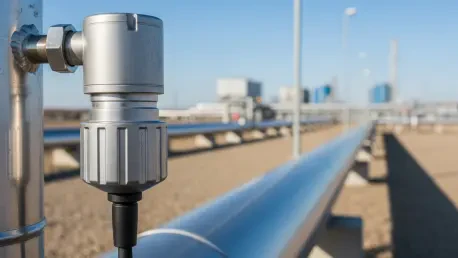
A cornerstone of the Commission’s recent guidance involves a proposed three-year suspension of financial penalties for non-compliance, scheduled to run from 2027 through 2029. While the underlying legal obligations for measurement, reporting, and verification remain strictly in place, the advice to Member States to pause the collection of heavy fines offers a much-needed reprieve for the energy sector. These fines, which can theoretically reach up to 20% of a company’s annual turnover, represent a massive financial risk that could bankrupt smaller operators or lead to significant price hikes for consumers. By adopting a strategy of phased rigor, European authorities are giving the industry a critical window to invest in advanced leak detection and repair technologies. This period allows for the maturation of satellite monitoring and ground-based sensor networks, which are necessary for providing the high-quality data the regulation demands. This temporary moratorium is not a sign of weakened resolve but rather a tactical adjustment intended to ensure that when full enforcement begins, the industry is technologically and operationally capable of meeting the highest possible standards.
National authorities and industry stakeholders recognized this interim period as a vital preparation phase rather than an opportunity for delay. The Commission’s advisory status meant that while national courts held the ultimate authority, the provided guidelines established a clear legal expectation for proactive engagement with methane reduction protocols. Businesses that proactively adopted robust monitoring systems during this window positioned themselves to avoid the severe financial consequences that loom after the full enforcement resumes in 2030. Strategic investments in automated reporting software and standardized data sharing became the primary focus for companies seeking to maintain their market share within the European landscape. Moving forward, the focus must shift toward scaling these technological solutions and fostering deeper cooperation between government regulators and private energy providers. By utilizing the current flexibility to build a resilient and transparent reporting infrastructure, the European energy sector secured a pathway toward long-term sustainability. The transition demonstrated that environmental objectives could be achieved through collaborative adaptation rather than punitive measures alone, ensuring that the drive toward zero emissions remained compatible with the bedrock of regional energy stability and economic growth.