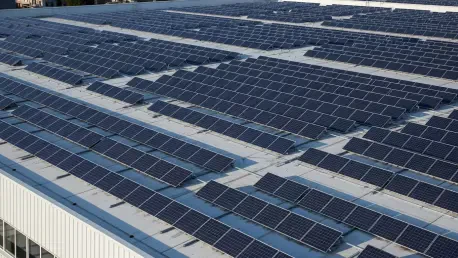

The rapid acceleration of Europe’s decarbonization strategy has placed unprecedented pressure on solar developers to find more efficient ways to generate power within increasingly crowded landscapes. As land availability becomes a primary bottleneck for renewable growth, the introduction of high-wattage modules like the 765W heterojunction (HJT) panels from Dinto Solar represents a critical shift in how utility-scale projects are conceived. These ultra-high-power components are not merely a marginal improvement over existing technology; they serve as a fundamental tool for maximizing energy density. By integrating advanced cell architectures and robust materials, this new generation of solar hardware addresses the specific technical and logistical demands of the European market. From the snowy plains of Scandinavia to the sun-drenched fields of Iberia, these modules aim to provide a versatile solution that ensures long-term grid stability and project profitability while pushing the boundaries of what current photovoltaic systems can achieve in a limited footprint.
Structural Integrity: Enhancing Durability with Advanced Engineering
The engineering behind the 765W output relies on a sophisticated 1/3-cut cell design that fundamentally alters how mechanical stress is managed across the module’s surface. Traditional large-format panels often struggle with internal pressures that lead to microcracks, which are nearly invisible fractures that eventually cause significant power degradation over years of operation. By segmenting cells more effectively, this design distributes external loads more evenly, which drastically reduces the risk of structural failure during transport or extreme weather events. Maintaining high structural integrity is paramount for ensuring that a solar plant remains productive for more than thirty years without requiring expensive part replacements. This focus on mechanical robustness means that developers can deploy these high-capacity units in high-wind zones or regions with heavy snowfall, confident that the underlying silicon will remain intact and functional despite the rigorous physical challenges of the environment.
Beyond the physical strength of the glass and frame, the modules boast a bifaciality rate of 98%, which allows the rear side of the panel to contribute almost as much energy as the front surface. This capability is particularly advantageous in Northern European regions where snow cover provides a high albedo effect, reflecting sunlight back onto the underside of the modules. By capturing this scattered light, the system can generate significantly more electricity per square meter than conventional monofacial setups, making it an ideal candidate for industrial rooftops with reflective coatings. The high bifaciality ensures that energy yield remains consistent even when direct sunlight is limited by cloud cover or seasonal variations. Such technical precision allows investors to project higher returns over the project’s life, as the ability to harvest light from both sides compensates for the spatial constraints that often limit the total capacity of many commercial solar installations across the continent.
Resilience and Scaling: Meeting the Challenges of Modern Deployment
Heterojunction technology provides a distinct advantage through its exceptional temperature coefficient, which allows the cells to maintain high performance even as ambient temperatures climb. Conventional solar panels typically experience a sharp drop in efficiency during the peak of summer heat, but HJT modules are designed to remain resilient. To overcome land-use constraints, these modules are increasingly deployed in agrivoltaic projects where vertical mounting strategies allow solar generation to coexist with farming. This dual-purpose approach optimizes land use and shifts peak production to the morning and afternoon, helping to balance the grid when demand is high. Integrating high-wattage modules into these agricultural contexts provides a blueprint for achieving renewable targets without sacrificing fertile land. It creates a relationship where solar panels protect crops while providing farmers with additional revenue. By maintaining stable output and enabling versatile installations, this technology addresses the specific geographic needs of the European market.
Industrial backing is essential for affordability, and the transition is supported by a 15 GW annual manufacturing capacity that drives down production costs. Historically, the higher cost of HJT cells was a barrier, but current economies of scale and innovations in metallization are quickly closing that price gap. The goal is to reach cost parity with existing standards within 2026, making high-output modules a viable option for both utility projects and distributed energy systems. The roadmap suggests higher gains are on the horizon, with plans for 800W modules by late 2028 and surpassing the 1,000W threshold by 2030 through perovskite tandem technology. This hybrid approach represents the next frontier of solar science, promising unprecedented power density. By committing to this research cycle, the industry ensures that Europe stays at the forefront of the energy transition. Such large-scale industrialization secures a future where solar is not only abundant but also the most cost-effective power source available globally.
Strategic Evolution: Future-Proofing European Solar Infrastructure
Stakeholders who recognized the shift toward high-power density early were able to secure the most favorable grid connections and land leases for their upcoming projects. It was recommended that developers prioritized the adoption of HJT modules to mitigate the risks associated with long-term degradation and changing climate patterns. By focusing on bifaciality and thermal stability, engineers optimized the return on investment for assets that needed to perform reliably well into the mid-century. Future considerations involved integrating these modules with energy storage systems to maximize the value of the energy produced during off-peak hours. Companies that adopted these advanced technologies established a competitive edge by lowering their levelized cost of electricity and meeting the stringent sustainability requirements of modern energy markets. The transition toward the 765W standard provided a clear blueprint for how the industry successfully balanced technical innovation with the practical needs of the European power grid.
The final step for many firms was the integration of automated monitoring systems that allowed for real-time performance tracking of these 765W modules. Data analysts reviewed the energy output across various seasons to confirm that the heterojunction technology consistently outperformed the older mono-PERC installations. It was found that the specific combination of high bifaciality and a low temperature coefficient resulted in a ten percent increase in total annual yield for projects in Mediterranean climates. This evidence drove a wider shift in procurement policies, as government tenders began favoring technologies that demonstrated such high efficiency and durability. Legislative bodies across the European Union provided incentives for agrivoltaic projects that utilized these specific modules to protect food security while hitting climate goals. Ultimately, the industry successfully transitioned to a more advanced technological baseline that ensured energy independence and economic stability for the region.