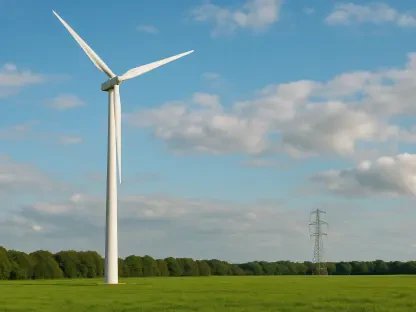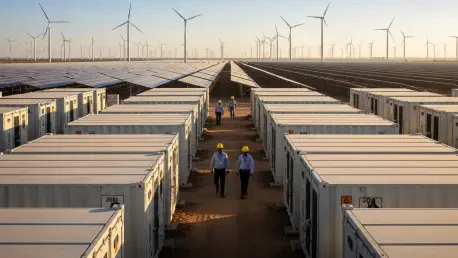

The completion of India’s most significant utility-scale battery project marks a pivotal moment for a nation striving to balance a rapidly growing economy with ambitious environmental commitments. Adani Green Energy Limited achieved a major milestone by commissioning a 250 megawatt battery energy storage system at the world’s largest renewable energy park in Khavda, Gujarat. This facility is designed to provide critical support to the power grid, ensuring that the intermittent nature of solar and wind energy does not compromise the stability of electricity delivery to millions of consumers. By deploying this infrastructure, the company has effectively demonstrated how localized energy storage can bridge the gap between generation and consumption. The scale of this project reflects a broader shift in Indian industrial policy, moving away from a reliance on fossil fuel backups toward integrated, carbon-neutral solutions that can handle the complexities of a modern power distribution network. This site now serves as the operational heart for the park’s hybrid energy strategy, managing massive flows of power generated from over five hundred square kilometers of arid land.
Integrating Advanced Storage Within the Khavda Renewable Park
Integrating high-capacity storage within the Khavda renewable park required a sophisticated blend of lithium-ion phosphate technology and intelligent energy management software. The battery energy storage system provides an impressive 500 megawatt-hours of energy, allowing the facility to store excess power during peak sunlight hours and discharge it when demand spikes or when solar generation naturally declines after sunset. This specific electrochemical configuration was chosen for its thermal stability and long cycle life, which are essential characteristics given the harsh environmental conditions of the Rann of Kutch. Engineers utilized a modular architecture that enables rapid scaling and maintenance without disrupting the overall output of the surrounding solar farms and wind turbines. Furthermore, the integration of advanced sensors and predictive analytics allows the site to respond to frequency fluctuations in the national grid within milliseconds. Such responsiveness is vital for preventing blackouts and reducing the operational stress on conventional thermal power plants.
The successful operationalization of this facility proved that India possessed the technical and financial capacity to lead the global south in the adoption of large-scale storage. Industry experts noted that the project moved the needle on energy security by demonstrating a viable path toward a twenty-four-seven carbon-free electricity supply. Moving forward from 2026 through 2028, the industry prioritized the domestic manufacturing of battery cells to reduce supply chain vulnerabilities and lower the levelized cost of storage. Policymakers took these developments as a sign that regulatory frameworks needed to evolve to better compensate storage providers for the ancillary services they provide to the grid. Future considerations focused on the recycling of battery components and the implementation of long-duration storage technologies to manage seasonal variations in weather. By treating this site as a starting point rather than a final destination, the renewable sector established a foundation for sustainable growth that balanced industrial expansion with ecological preservation. Stakeholders focused on replicating this model in other high-potential regions to solidify the country’s energy independence.