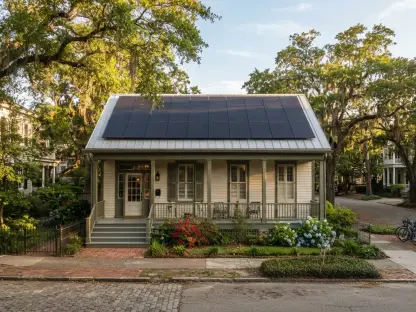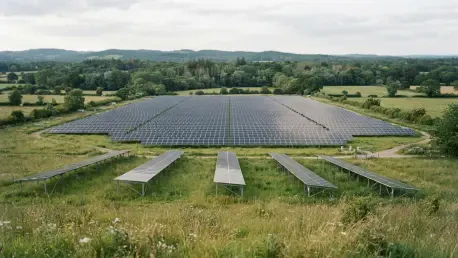

The Pats Lane Solar facility in Stockport and the Furniss Station Solar project in Oswego are both slated for completion during the fourth quarter of 2026. This timeline aligns with the broader deployment of Fund 11, a massive $128 million financing initiative recently closed by Renewable Properties to bolster its distributed electrical infrastructure. The San Francisco-based developer successfully assembled a sophisticated capital stack that combines over $77 million in project loans from Pathward and BridgePeak Energy Capital with $51 million in tax equity from Nelnet Tax Credit Services. This substantial infusion of capital represents a critical pivot point for the mid-market utility sector, moving beyond experimental phases into a mature, institutionalized asset class. By securing full lifecycle financing—from construction through permanent takeout loans—the company ensures that these 21.5-megawatt assets will remain operational for decades. This milestone highlights a significant shift in how regional power grids are being rebuilt to accommodate localized generation.
Expansion of Community Solar in Regional Markets
New York has emerged as a powerhouse for community solar, and the Fund 11 portfolio heavily leverages the state’s aggressive renewable energy mandates. In the town of Marilla, the Stolle Road Solar and Two Rod Road Solar projects stand out as the largest components of this current expansion, with each facility rated at 6.9 MWdc. Combined, these two installations alone are designed to provide clean, reliable electricity to nearly 2,500 households, significantly reducing the strain on the existing regional grid. These projects are meticulously integrated into local utility networks, ensuring that the transition to green energy does not compromise reliability or service quality.
By focusing on areas with high residential density and robust grid infrastructure, Renewable Properties effectively bridges the gap between large-scale generation and the final consumer. The integration of such high-capacity localized solar arrays serves as a blueprint for how suburban landscapes can contribute to a modern economy. This approach naturally leads to a more decentralized power model where communities are no longer solely dependent on distant, centralized power plants. The success of these initiatives demonstrates that localized solar is no longer a niche market but a core component of state-level energy strategies nationwide.
Democratizing Energy Access in the Midwest
The Minnesota segment of the portfolio operates under the Melissa Hortman Community Solar Garden Program, which serves as a national model for democratizing access to renewable energy. The 120th Street Solar site in Waseca County and the Albers Avenue Solar installation represent strategic additions to the state’s energy landscape, collectively offsetting the power needs of over 500 homes. These projects are specifically designed to enable renters and homeowners who lack suitable rooftop space to benefit from the solar economy through subscription-based models. This model provides an essential pathway for urban and rural residents to engage in environmental stewardship.
This approach effectively addresses the split-incentive problem that has historically hindered the adoption of renewable technologies in residential settings. By late 2026, these installations will contribute to a more resilient Minnesota grid, fostering local energy independence and providing a hedge against the volatility of fossil fuel prices. The expansion of these gardens ensures that the economic benefits of solar production remain within the local community, creating jobs and supporting local tax bases. It represents a fundamental shift in energy equity, allowing a wider demographic to participate in the burgeoning green economy without significant upfront costs.
Strategic Implementation of Federal Energy Incentives
A cornerstone of the financial viability of Fund 11 is the strategic application of the federal Inflation Reduction Act, which has fundamentally reshaped the economics of the American solar industry. Each of the six projects within this portfolio qualifies for the baseline 30% Investment Tax Credit, providing a solid foundation for institutional investment. However, the true financial innovation lies in the pursuit of various “adders” that reward specific developmental choices, such as the use of domestic content. This alignment with federal policy ensures that the economic benefits of the energy transition are felt throughout the manufacturing sector, reinforcing the stability of long-term investment.
By prioritizing American-made steel and manufactured products, Renewable Properties not only enhances its tax credit profile but also supports the revitalization of the domestic industrial supply chain. This commitment to domestic manufacturing helps mitigate global supply chain risks and ensures that project timelines remain on track for the 2026 completion dates. The ability to navigate these complex regulatory requirements reflects a sophisticated understanding of how policy drives private capital into essential infrastructure. These incentives act as a multiplier, turning localized energy projects into significant drivers of national economic growth and energy security.
Enhancing Social Equity Through Bonus Credits
Beyond industrial incentives, the social impact of Fund 11 is amplified by the Low-Income Communities Bonus Credit, which has been secured for four of the six projects. This particular incentive is designed to ensure that the transition to clean energy does not leave vulnerable populations behind. By prioritizing the delivery of solar benefits to low-to-moderate-income households, these projects provide tangible cost savings to those most burdened by rising utility rates. This focus on energy equity is not merely a philanthropic gesture; it is a calculated strategy to increase the resilience of local communities while maximizing federal support.
The inclusion of these bonus credits makes the projects more attractive to tax equity partners who are increasingly looking for investments that deliver both financial returns and measurable social outcomes. As the energy landscape continues to evolve, the integration of these targeted incentives will be vital for maintaining public support and ensuring benefits are shared broadly. By lowering the energy burden on disadvantaged households, Renewable Properties is helping to create a more stable and inclusive economy. This approach ensures that the environmental benefits of solar are coupled with immediate, practical financial relief for those who need it most.
Institutional Synergy and Specialized Debt Financing
The scale and speed of the Fund 11 closing were made possible by the deep institutional relationships Renewable Properties has cultivated with Pathward, N.A., and BridgePeak Energy Capital. This partnership has now surpassed $300 million in cumulative loan closings across seven states, establishing a repeatable and highly efficient financing model. BridgePeak acts as a specialized intermediary, providing the expert underwriting and technical oversight necessary for national banks like Pathward to deploy capital into the distributed energy space with confidence. This collaboration solves a primary hurdle in the renewable sector: the difficulty of securing mid-market financing.
By creating a standardized framework for construction and takeout loans, these partners have enabled the rapid deployment of solar infrastructure in regions that might otherwise struggle to attract such significant investment. This synergy is essential for scaling the transition and ensuring that developers have access to the liquidity required for multi-state portfolios. The partnership provides a blueprint for how traditional financial institutions can safely enter the renewable market by leveraging the expertise of specialized energy capital firms. This robust financial foundation is what allows for the ambitious construction schedules seen in the New York and Minnesota projects.
Reliable Partnerships in the Tax Equity Market
Complementing the debt side of the transaction is the continued participation of Nelnet Tax Credit Services, which provided $51 million in tax equity funding. This marks the fifth collaboration between Nelnet and Renewable Properties since 2019, underscoring a consistent appetite for high-quality distributed generation assets. Nelnet’s involvement as a diversified financial services provider signals that renewable energy has moved into the mainstream of corporate investment strategies. Tax equity remains a scarce resource in the solar industry, and the ability to secure long-term commitments is a competitive advantage for Renewable Properties.
This stability is particularly important as the industry navigates the complexities of the Inflation Reduction Act’s implementation through 2026. The long-term nature of this relationship allows for greater predictability in project planning and execution, ensuring that the 2.0-gigawatt pipeline under development can be brought to fruition with certainty. Reliable tax equity partners are the engine that drives the realization of federal incentives, converting credits into the literal hardware of the solar transition. This ongoing collaboration proves that distributed solar is a resilient and predictable asset class capable of delivering consistent value to corporate investors and local communities alike.
Driving Trends in Decentralized Grid Resilience
The evolution of Fund 11 reflects a broader transformation in the American power sector, moving away from centralized, fossil-fuel-dependent generation toward a more decentralized and resilient grid architecture. Distributed electrical infrastructure, which includes community solar and localized energy storage, is becoming the backbone of the modern energy system. As national demand for electricity continues to rise due to the electrification of heating and transportation, these local solutions are essential for preventing grid congestion. They provide a scalable way to meet demand without the massive costs associated with building new high-voltage transmission lines.
Community solar programs are especially effective because they decouple the benefits of renewable energy from homeownership or rooftop suitability. This inclusivity is driving a massive expansion in the customer base for clean energy, turning ordinary residents into active participants in the energy transition. The shift toward this model ensures that the power grid of the future is not only greener but also more flexible and responsive to local needs. By placing generation closer to the point of consumption, Renewable Properties is helping to reduce line losses and improve the overall efficiency of the national energy network.
Strategic Outcomes for a Modernized Energy Landscape
The successful capitalization of these projects provides a definitive roadmap for stakeholders seeking to modernize the American energy landscape. Decision-makers recognized that the path forward required a dual focus on regulatory compliance and deep institutional networking. It was concluded that the efficient use of bonus tax credits served as the primary catalyst for attracting private capital to underserved markets. Moving forward, the industry prioritized the standardization of community solar models to simplify the subscription process for end-users, thereby increasing project bankability and consumer participation.
Financial institutions and developers began to view distributed infrastructure not as a series of isolated projects, but as a cohesive national network that required integrated energy storage solutions to maximize value. By the end of this cycle, the integration of low-income incentives became a standard requirement for successful project development, ensuring that the transition remained equitable and socially responsible. These steps solidified the foundation for a resilient, decentralized grid that balanced economic viability with environmental necessity. Investors were encouraged to seek out developers with proven track records in navigating the complex intersection of federal policy and local utility requirements.