
Christopher Hailstone is a seasoned authority in energy management and utility infrastructure, with a specialized focus on how renewable resources can bolster grid reliability and security. With years of experience navigating the complexities of electricity delivery, he has become a leading voice in the transition toward sustainable power systems. In this conversation, we explore the findings of a recent forestry audit that suggests a transformative path for New Zealand’s energy landscape. We discuss the untapped potential of wood biomass to replace coal, the economic shifts required to prioritize domestic energy over low-value log exports, and the practical challenges of refining a supply chain that could power the nation’s industrial future.
The discussion centers on the massive capacity of New Zealand’s exotic forests to meet energy demands that currently rely on fossil fuels. We examine the specific petajoule contributions available from regions like the Bay of Plenty and the comparative efficiency of wood versus coal. Our conversation also highlights the inherent reliability of biomass as a year-round energy source that avoids the intermittency issues common in wind and solar power. Finally, we look at existing industrial successes and what is needed to scale these projects across the country to achieve a carbon-neutral energy sector.
Given that New Zealand currently utilizes about 46 petajoules of wood energy, how significant is the untapped potential identified in recent forestry audits for the country’s overall energy security?
The potential is quite profound when you consider that our total annual energy demand is approximately 835 petajoules. While the 46 petajoules currently provided by wood pellets and chips is a start, the audit by Peter Hall indicates we have the capacity to generate at least another 60 petajoules every year from forest biomass. To put that in perspective, the Bay of Plenty region alone could contribute 23 petajoules, which is a massive chunk of our additional needs. By tapping into this resource, we could effectively eliminate our dependence on coal, moving away from a fossil fuel that is only slightly more efficient—85% for coal versus 82.5% for wood—while gaining a much cleaner footprint.
The audit highlights a striking contrast between log exports and domestic energy potential; what are your thoughts on the economic logic of shipping resources overseas while local demand remains unmet?
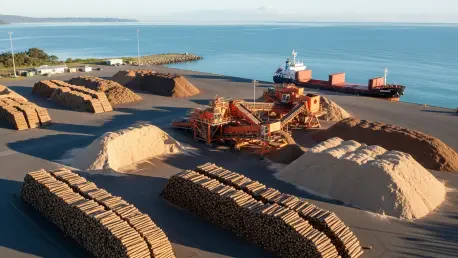
It is a difficult reality to accept that we are harvesting about 32 million tonnes of timber annually and exporting 20 million of that, mostly through the Port of Tauranga. We are seeing logs sold to markets like China for around NZ$74 a tonne, sometimes even at a loss, which feels like a missed opportunity for our own domestic energy sector. If we diverted that timber into bioenergy production, the domestic industry could absorb all of that volume and even more. This shift would not only support the forestry industry with a more stable demand but also ensure that the value created by these forests stays within our borders to power our own factories and homes.
As someone focused on grid reliability, how does forest biomass compare to more popular renewables like wind and solar in terms of maintaining a stable energy supply?
Wood biomass offers a level of reliability that weather-dependent sources like solar and wind simply cannot match because it is available year-round regardless of the season. It provides a stable, long-term energy supply that can be converted into heat, steam, electricity, and even liquid transport fuels, making it incredibly versatile for industrial applications. Our exotic forest estate, which spans about 1.818 million hectares, acts as a living battery that stores carbon and can be regenerated through consistent replanting. This ensures a steady pipeline of trees for harvesting while younger forests continue to absorb carbon dioxide, creating a balanced and secure energy cycle that keeps the lights on when the wind stops blowing.
With roughly 140 wood energy projects already active, what needs to change in the supply chain to ensure this biomass actually reaches the industrial sectors that need it most?
The infrastructure is already beginning to take shape with successful wood-fired operations at Fonterra’s Hautapu and Te Awamutu plants, as well as the automated facility at Horotiu. However, the real challenge lies in optimizing the logistics so that residues—which can make up half of every harvested tree—are efficiently collected and transported to where they are needed. We need to better utilize forest residues, thinning material, and even shelterbelt trimmings to create high-energy products like torrefied pellets. Improving this supply chain is the final hurdle to connecting our vast forest resources, which have remained at around the same acreage since the late 1990s, with the industrial plants hungry for sustainable heat and power.
What is your forecast for the role of wood biomass in New Zealand’s transition away from fossil fuels over the next decade?
I expect wood biomass to become the cornerstone of New Zealand’s industrial decarbonization, particularly as companies realize it offers a nearly identical energy conversion efficiency to coal without the carbon penalty. Within the next ten years, we will likely see a significant reduction in log exports as the domestic price for bioenergy becomes more competitive than low-margin overseas sales. As supply chains mature, the 140 projects we see today will likely triple, turning forestry into an energy powerhouse that provides the high-grade heat and reliable electricity necessary for a modern, carbon-neutral economy. Our ability to utilize 50% of each tree that was previously considered waste will be the key to making this transition both economically and environmentally sustainable.