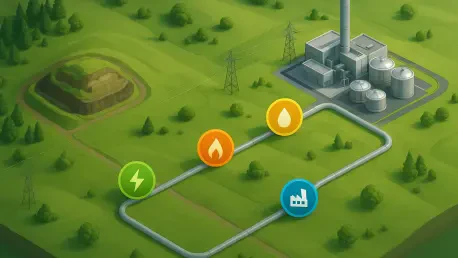

Kandiyohi County is finalized negotiations with NewCarbon to transform its landfill from a passive venting site into a high-tech renewable natural gas production facility. This initiative tackles the silent challenge of methane, a gas significantly more potent than carbon dioxide, which has historically been a wasted byproduct of modern consumption. For years, rural areas have struggled with the rising costs of environmental compliance and the physical footprint of their waste, but this project offers a definitive shift toward resource recovery. By capturing and refining these emissions, the county is not just managing trash but is instead participating in the creation of a high-value energy commodity. This partnership represents a fundamental shift in municipal logic, where decomposition is no longer allowed to dissipate uselessly into the sky. By integrating advanced harvesting technology directly into the waste management infrastructure, the county aims to meet strict environmental mandates while generating a new stream of non-tax revenue.
Infrastructure Design: Engineering a Pipeline for Success
The technical execution of the project involves the installation of specialized capture wells across both active and closed sections of the landfill to maximize gas recovery. These wells are strategically placed to intercept raw biogas—primarily a mixture of methane and carbon dioxide—before it can escape through the soil cap. Once harvested, the raw gas is directed to an on-site processing plant where it undergoes a sophisticated purification sequence. This facility utilizes advanced membrane-based filtration systems designed to strip away moisture, volatile organic compounds, and other non-methane components. This refining process is critical because it ensures the final product meets the stringent pipeline-quality standards required for commercial distribution. By upgrading the raw gas into renewable natural gas, the system creates a high-value commodity that is indistinguishable from conventional natural gas but comes from a sustainable, local source.
To facilitate the actual movement of this refined energy to the end-users, a new 14-mile pipeline will be constructed along the U.S. Highway 71 corridor, connecting the landfill’s refining facility to a regional terminal in the city of Willmar. This logistical link is essential for integrating the landfill’s output into the existing energy grid, allowing the renewable natural gas to heat homes and power local businesses. The construction of this pipeline requires careful coordination with state transportation authorities and private landowners to ensure minimal disruption during the installation phase. Building this dedicated infrastructure provides a permanent outlet for the gas, ensuring that the landfill remains a productive energy hub for decades to come. This physical connection bridges the gap between waste management and energy utility, effectively turning a remote waste site into a vital component of the regional power network through consistent delivery.
Economic Strategy: Protecting Public Interests and Taxpayers
The economic framework of the deal is structured to protect local taxpayers while generating significant long-term revenue for the county over the next quarter-century. NewCarbon has committed to covering the entire $23 million capital investment required for the facility’s design, construction, and operation, removing the financial burden from the public sector. This arrangement is particularly advantageous because it allows the county to bypass an estimated $6 million in upcoming mandated infrastructure costs that would have been required for gas control. Furthermore, the county will no longer be responsible for approximately $300,000 in annual maintenance fees associated with traditional gas management. By shifting these capital and operational expenses to the private partner, the municipality can reallocate its limited resources toward other essential public services. This financial insulation ensures that the risks of energy market volatility are borne by NewCarbon rather than the residents.
In addition to these immediate cost savings, the project establishes a lucrative revenue stream that is expected to provide at least $4 million in royalty payments over the initial 25-year contract period. This figure represents a conservative estimate, as the potential earnings may grow significantly if the landfill expands or if the volume of gas production exceeds current projections. County officials view this partnership as a proactive strategy to secure non-tax revenue that can help stabilize the local budget. Beyond the direct payments, the project serves as an insurance policy against tightening air quality regulations that might otherwise necessitate expensive, unfunded mandates. By implementing this system now, the county fulfills its environmental obligations in a way that actually pays for itself over time. This approach transforms the landfill from a cost center into a self-sustaining enterprise that contributes to the overall financial health of the region.
Ecological Benefits: Methane Capture and Site Optimization
From an ecological standpoint, the project significantly reduces the landfill’s carbon footprint by capturing methane before it enters the atmosphere where it acts as a potent greenhouse gas. Traditional landfills often rely on passive venting or simple flaring, which either releases the gas directly or burns it without recovering any useful energy. By contrast, this high-tech facility captures the methane and repurposes it as a cleaner fuel alternative, displacing the need for fossil fuel extraction elsewhere. The environmental benefits are substantial, as methane is far more effective at trapping heat in the atmosphere than carbon dioxide over a short-term horizon. By preventing these emissions, Kandiyohi County is making a measurable contribution to regional climate goals. This transition demonstrates that municipal waste sites can be active participants in the green energy transition rather than just passive observers of environmental degradation through landfilling.
The specific geography and operational history of the Kandiyohi County Landfill make it a particularly well-suited candidate for this type of biogas technology. Unlike many traditional dry landfills, this site utilizes an existing leachate recirculation system that keeps the buried waste consistently moist to aid in stabilization. This added moisture is a critical variable because it significantly accelerates the natural decomposition of organic material, which in turn results in a more consistent and higher volume of biogas. This biological acceleration ensures that the capture wells have a steady supply of raw fuel to feed the refining facility, making the entire operation more efficient and predictable. Because the landfill is already optimized for this high-rate decomposition, the transition to active gas harvesting is a logical progression of the site’s current management strategy. This synergy between waste moisture levels and gas production potential maximizes the return on investment.
Project Management: Governance and Future Operational Milestones
The partnership maintains a strict division of responsibilities to ensure efficient management of the facility while protecting the public interest at all times. Kandiyohi County will retain full ownership and control of the landfill’s daily waste operations, ensuring that the primary mission of waste disposal is never compromised by the energy project. In contrast, NewCarbon will handle all the complexities of the gas collection, refining infrastructure, and regulatory reporting associated with energy production. This separation of duties allows each entity to focus on its core expertise, reducing the likelihood of operational friction. The county’s role remains focused on public health and safety, while the private partner brings the technical specialized knowledge needed to navigate the energy market. Regular audits and oversight mechanisms were established within the contract to ensure that NewCarbon adheres to all safety and performance standards throughout the project’s life.
As the project moved into its final implementation phase, the focus shifted toward ensuring the long-term operational integrity of the site’s energy output. The county effectively concluded the period of uncertainty regarding federal gas management mandates by securing a fully funded solution that served the public interest without raising taxes. This successful transition from a passive waste site to an active energy producer became a blueprint for other rural communities seeking to monetize their waste streams. Planners established specific protocols for future infrastructure expansions, including the potential integration of solar arrays on closed landfill cells to create a hybrid energy park. This forward-looking strategy ensured that the facility remained at the cutting edge of rural development, providing a scalable model for neighboring jurisdictions. Ultimately, the partnership demonstrated how local governments successfully navigated complex energy markets to achieve both fiscal stability and meaningful ecological restoration.