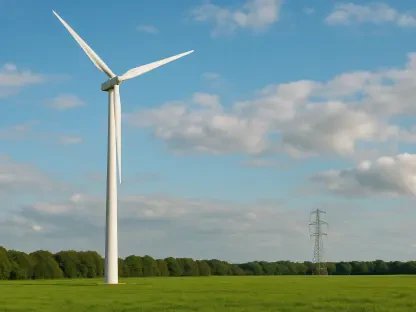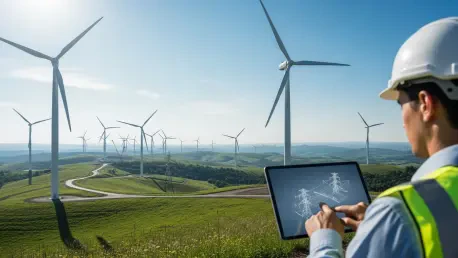

Europe stands at a critical juncture where the ambitious decarbonization targets of the next decade clash directly with the bureaucratic inertia of national administrative frameworks. While the technical capacity for onshore wind generation has never been higher due to advancements in turbine efficiency and digital grid management, the actual deployment rates frequently fall short of what is required to achieve total energy independence. Governments across the continent have pledged significant increases in renewable capacity, yet the gap between policy rhetoric and the physical installation of turbines remains a persistent obstacle to progress. This discrepancy is not merely a matter of financial investment, as capital remains abundant for green projects, but rather a reflection of the complex interplay between land-use regulations and environmental protection laws. As the continent navigates this transition, the central question remains whether current legislative structures are flexible enough to meet climate goals.
Navigating the Legislative Maze
Permitting Bottlenecks: A Stalling Mechanism
Permitting processes in many European jurisdictions have become notoriously protracted, often extending beyond five years for a single onshore wind farm project to receive final approval. These delays are frequently the result of overlapping jurisdictions where local, regional, and national authorities each demand distinct environmental impact assessments and technical reviews. In Germany and France, developers often encounter a labyrinth of administrative requirements that can stall a project indefinitely, leading to increased capital costs and potential for technological obsolescence before a turbine even begins to spin. The uncertainty associated with these long lead times discourages smaller developers who lack the balance sheets to withstand years of litigation or bureaucratic waiting. Streamlining these procedures is essential if the European Union intends to meet its targets, which call for a significant acceleration in the pace of new installations across the member state block.
Spatial Constraints: Finding Room to Grow
Land availability is becoming a primary constraint as urban sprawl and strict setback distances limit the geographic footprint available for new onshore wind farms. In countries like Poland and parts of Germany, regulations requiring turbines to be placed at distances of ten times their tip height from residential areas have effectively placed much of the rural landscape out of bounds. These rules were originally designed to address acoustic and visual concerns, but in the context of modern turbine designs that reach heights of over two hundred meters, they create massive exclusion zones that are difficult to justify scientifically. As the demand for land for housing and agriculture increases, wind developers find themselves competing for a shrinking pool of viable sites, leading to higher land-lease prices. Policymakers must reconsider these distance requirements in light of newer turbine technologies that can operate closer to communities without significantly impacting local quality of life.
Strategic Pathways for Future Expansion
Innovation and Repowering: Modernizing the Fleet
Repowering existing wind farm sites presents one of the most efficient ways to increase capacity without expanding the physical footprint of energy infrastructure across the continent. Many of Europe’s oldest wind farms occupy the most productive locations, yet they utilize outdated technology that generates only a fraction of what modern turbines could produce on the same plot. Replacing a dozen old units with three or four state-of-the-art turbines can triple the energy output while reducing the visual impact on the landscape and simplifying maintenance requirements for operators. However, the current regulatory environment often treats repowering as an entirely new project rather than an upgrade to an existing facility, forcing developers to undergo the same multi-year permitting process from scratch. This administrative redundancy acts as a major deterrent, leading many operators to keep aging, inefficient turbines in service rather than investing in high-capacity models.
Community Integration: Securing the Future
The realization of Europe’s full onshore wind potential required a fundamental shift from rigid regulatory frameworks toward more adaptive and community-centered policies. It became clear that technical innovation alone could not overcome the systemic delays inherent in fragmented permitting processes and outdated spatial restrictions. Governments that prioritized the streamlining of administrative hurdles and the implementation of clear acceleration areas saw a marked increase in the speed of new project deployments. Furthermore, the decision to treat repowering as an essential infrastructure upgrade rather than a new development permitted the rapid modernization of the continent’s aging energy fleet. By fostering direct financial participation for local citizens, authorities successfully mitigated the social friction that had previously stalled numerous high-capacity projects. These strategic adjustments ensured that the transition was technologically sound and efficient.