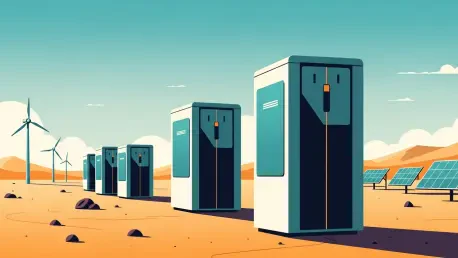

The rapid transformation of India’s energy landscape is reaching a critical inflection point as industrial sectors pivot toward massive investments in battery storage systems to secure grid reliability and minimize operational costs. As the nation moves toward its ambitious goal of achieving five hundred gigawatts of non-fossil fuel capacity, the necessity for robust energy storage solutions has never been more apparent than it is today. Projections indicate that between 2026 and 2032, the total installed capacity for industrial energy storage will increase ten times over current levels, fundamentally altering how manufacturing hubs manage power consumption. This surge is fueled by a combination of declining battery prices and a burgeoning domestic manufacturing ecosystem that aims to reduce reliance on external supply chains. Furthermore, the push for decarbonization in heavy industries is compelling firms to adopt behind-the-meter storage to maintain competitiveness in a global market that increasingly values green manufacturing.
Driving Factors Behind the Storage Expansion
Integration: Navigating the Renewable Energy Transition
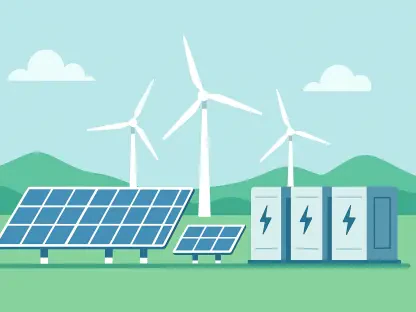
The intermittent nature of solar and wind power presents a significant challenge for grid operators who must balance supply and demand in real-time to avoid catastrophic brownouts. In the current landscape of 2026, the deployment of Battery Energy Storage Systems (BESS) has become the primary mechanism for smoothing out these fluctuations, ensuring that excess energy generated during peak sunshine is available during evening hours. This capability is particularly vital for industrial clusters that operate around the clock and require a steady, uninterrupted flow of electricity to maintain high-precision equipment. As renewable penetration increases, the reliance on traditional coal-fired plants for peaking power is expected to diminish, replaced by decentralized storage units that offer faster response times. Moreover, these systems provide ancillary services such as frequency regulation and voltage support, which are essential for maintaining the overall health of the national grid as it undergoes this massive structural shift.
Economics: Driving Cost Parity for Heavy Industry
The financial viability of energy storage is no longer a theoretical debate but a tangible reality for commercial and industrial consumers looking to optimize their power procurement strategies. By utilizing storage for peak shaving, companies are able to reduce their maximum demand charges significantly, which often constitute a large portion of their monthly utility bills. Furthermore, the ability to store electricity purchased during off-peak hours at lower tariffs and consume it during high-tariff periods provides a direct and measurable return on investment for large-scale textile and automotive plants. As battery prices continue their downward trajectory through 2032, the payback period for these systems is expected to shorten to under four years, making them a standard feature of any new industrial development project. This economic shift is also driving the adoption of Energy Storage as a Service models, where third-party providers manage the hardware and software in exchange for a portion of savings.
The path toward a tenfold increase in storage capacity required immediate and strategic coordination between private developers and utility providers to ensure a seamless grid integration. Stakeholders established clear procurement timelines and prioritized the development of standardized safety protocols to protect investments in high-density industrial zones. Engineers focused on integrating advanced battery management systems with artificial intelligence to predict maintenance needs and extend the operational lifespan of existing units. Meanwhile, financial institutions developed specialized green bonds that specifically targeted the energy storage sector, providing the necessary liquidity for rapid scaling. This coordinated approach enabled the manufacturing sector to transition away from diesel-based backup power, significantly lowering the carbon footprint of industrial operations across the subcontinent. By the turn of the decade, the focus shifted toward establishing robust recycling facilities for spent batteries.