
The beverage industry is currently witnessing a massive transformation as legacy production facilities pivot away from fossil fuels to embrace localized, renewable energy matrices. For the Portuguese leader Sumol Compal, this transition is specifically materializing at its Almeirim plant, where a comprehensive overhaul of energy sourcing has resulted in a sixty-one percent reduction in total carbon emissions. This achievement is not merely a byproduct of general efficiency improvements but is the direct result of a calculated shift toward a dual-system energy model utilizing both biomass and solar power. By integrating these technologies, the company has effectively redefined its operational footprint, moving beyond the limitations of traditional natural gas dependencies. The strategic significance of this move extends far beyond environmental stewardship, as it provides a robust framework for long-term energy security in an increasingly volatile global landscape. This massive reduction in emissions serves as a lighthouse for other industrial players looking to modernize.
Financial Support and Technical Design
Implementing such a sophisticated energy transition required a substantial capital investment of approximately four million dollars to ensure the facility was equipped with modern infrastructure. While the financial burden of such a project could be prohibitive for many organizations, Sumol Compal successfully navigated this challenge by securing significant public backing through Portugal’s Recovery and Resilience Plan. This government-led initiative provided funding that covered fifty-five percent of the total project costs, effectively lowering the barrier to entry for these high-impact technologies. The availability of these funds was a critical factor in the decision-making process, as it allowed the company to accelerate its timeline and achieve a much faster return on investment than would have been possible through private capital alone. By leveraging public-private synergy, the Almeirim facility has become a prime example of how targeted economic support can catalyze industrial decarbonization.
Strategic Funding: The Economic Catalyst
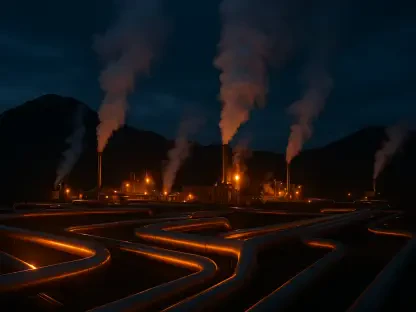
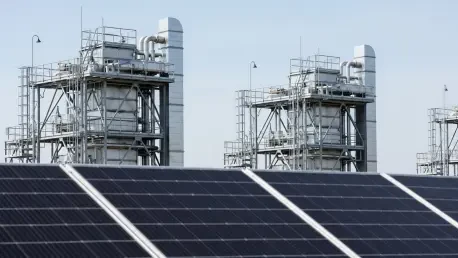
The technical architecture of the Almeirim plant relies on a specialized biomass boiler that serves as the primary engine for thermal energy production within the facility. This boiler is specifically designed to burn forest residues, a local and abundant resource, to generate the high-pressure steam necessary for critical production stages such as cleaning and pasteurization. Simultaneously, a vast array of solar panels has been integrated into the site’s footprint to handle the electricity demands of daily operations, creating a balanced and resilient energy mix. This dual-source approach ensures that the factory can maintain continuous production without being tethered to the traditional power grid or the natural gas network. By decoupling the thermal and electrical needs of the factory and addressing them through specific renewable technologies, the company has created a modular system that is both highly reliable and environmentally responsible.
Technical Integration: A Dual-Energy Infrastructure
Analysis of the operational data following the implementation of the new energy systems revealed a fascinating disparity between carbon reduction and total energy consumption. While the plant successfully slashed its greenhouse gas emissions by sixty-one percent, its total energy intake only decreased by a modest three percent. This specific metric highlights a fundamental truth in modern industrial sustainability: the type of fuel used is often significantly more important than simply reducing the volume of energy consumed. The transition from carbon-intensive natural gas to carbon-neutral biomass and renewable solar power allowed the facility to maintain its high production output while nearly eliminating its previous environmental burden. This serves as a powerful case study for why companies must focus on systemic fuel switching rather than minor efficiency tweaks if they hope to meet ambitious climate targets.
Results and Economic Benefits
Beyond the environmental advantages, the shift to a biomass and solar energy mix provides a substantial economic safety net by insulating the company from the volatility of the global gas market. Natural gas prices are frequently subject to unpredictable spikes driven by geopolitical tensions and supply chain disruptions, which can create significant financial instability for energy-intensive industries. By utilizing the sun and local forest waste, Sumol Compal has established a more predictable and controllable cost structure for its primary manufacturing hub. This operational independence allows the business to forecast its expenses with much greater accuracy, protecting profit margins from external market shocks that are entirely out of their control. The move toward local resources not only supports the regional economy but also ensures that the company’s energy supply remains secure and cost-effective regardless of international energy trends.
Emissions Performance: Decoupling Growth From Carbon
Maintaining a large-scale biomass operation introduces a set of unique logistical and regulatory challenges that require constant management and oversight from the facility’s leadership. The company must ensure a consistent and high-quality supply of forest residues, which involves coordinating with local forestry partners to maintain a sustainable and transparent supply chain. Furthermore, operating a biomass boiler on this scale necessitates strict adherence to air quality regulations and the implementation of advanced filtration systems to manage particulates and emissions. There is also the physical reality of fuel delivery and storage, as biomass requires more complex handling compared to the simple pipeline delivery of natural gas. Successfully navigating these complexities required the development of new internal protocols and a dedicated team focused on optimizing the efficiency and sustainability of the biomass lifecycle.
Future Roadmap: Scaling Decarbonization Beyond Almeirim
The transformation of the Almeirim plant successfully demonstrated a clear roadmap for how industrial manufacturers navigated the complexities of the energy transition. It was observed that the integration of localized renewable sources like biomass and solar offered a viable pathway toward deep decarbonization and long-term financial resilience. Leaders recognized that the combination of public funding and technical innovation allowed for a rapid scaling of green technologies that previously seemed out of reach for traditional factories. Moving forward, the industry prioritized the lessons learned from this project, emphasizing the importance of securing local supply chains and investing in hybrid energy systems. By treating the Almeirim success as a standardized model, organizations began to implement similar strategies across their global footprints to ensure sustainability. This initiative effectively proved that industrial growth was no longer linked to a rising carbon footprint.