
The vast expanses of the Australian Outback are no longer just a backdrop for traditional road trains fueled by diesel but are becoming the proving ground for a quiet, high-voltage revolution in logistics. Australia is currently witnessing a massive transformation in how commercial goods are moved across the continent, shifting from a niche corporate social responsibility effort to a vital economic strategy. Companies are now trading their traditional diesel engines for electric powertrains to protect themselves from soaring fuel costs and the persistent instability of global markets. This shift is not merely about environmental compliance; it is a calculated move to ensure the survival of shipping and transport networks. By adopting these technologies, the industry is creating a firewall against the inflationary pressures that have historically plagued the sector. The transition is reshaping the national landscape as depots and warehouses evolve into energy hubs.
Maximizing Operational Savings: The Financial Argument
The primary driver for this monumental shift is the massive difference in daily running costs between fossil fuels and electricity, which has fundamentally altered the spreadsheet for fleet managers. Transitioning from diesel to depot-based electric charging can cut energy bills by over 70%, which translates to millions of dollars in annual savings for mid-sized fleets that operate on consistent routes. These financial gains go directly to the bottom line, making the business case for electric vehicles far more compelling than it was during the initial testing phases years ago. As the price of battery technology has stabilized and energy management systems have become more sophisticated, the return on investment has shortened dramatically. Large-scale logistics firms are finding that the cost per kilometer for electric trucks is now a fraction of their internal combustion counterparts. This allows for a more aggressive expansion of services without the fear of fluctuating oil prices.
Beyond the immediate fuel savings, electric vehicles possess far fewer moving parts than traditional engines, which leads to significantly lower maintenance requirements and drastically reduced vehicle downtime. Many businesses are also adopting smart charging software to power their vehicles during off-peak hours when electricity rates are at their lowest, or even negative, in some regions with high solar penetration. This combination of lower upkeep and optimized energy use means that the initial investment in charging infrastructure now pays for itself in a surprisingly short period. Technicians who once spent hours on oil changes and complex exhaust systems are now focusing on software updates and battery health monitoring. Fleet uptime has increased because there are fewer mechanical failures, allowing companies to meet tighter delivery windows with higher reliability. The reliability of these systems has proven to be a decisive factor for companies looking to scale operations reliably.
Achieving Energy Sovereignty: Resilience in a Volatile World
Heavy reliance on imported diesel makes the Australian logistics sector particularly vulnerable to international conflicts and sudden price spikes in the global oil market that can occur without warning. By switching to electric power—especially when sourced from the domestic grid or on-site solar installations—companies can achieve a level of energy independence that was previously considered impossible in heavy transport. This sovereignty allows businesses to forecast their long-term operational costs with much higher accuracy, removing one of the biggest variables in the logistics industry. The ability to lock in energy prices through long-term renewable power purchase agreements provides a strategic advantage that diesel-dependent competitors simply cannot match. This localized energy sourcing keeps more capital within the Australian economy rather than exporting it to international oil producers. It transforms the fleet from a passive consumer of fuel into an active energy participant.
This shift toward domestic energy also helps de-risk the entire national economy by reducing the current account deficit and strengthening the local currency through decreased energy imports. As the heavy vehicle sector follows the lead of the passenger car market, where electric vehicle sales are climbing steadily, the demand for imported fuel begins to drop significantly. This change strengthens Australia’s economic resilience, ensuring that local supply chains are not crippled by geopolitical events happening on the other side of the world. In the event of a global supply chain disruption, an electrified fleet powered by local wind and solar can continue to function, ensuring that food and medicine reach their destinations without delay. The stabilization of the energy supply creates a ripple effect, fostering a more predictable environment for investment across all industrial sectors. This newfound independence is becoming a cornerstone of national security and economic planning for years to come.
Overcoming Infrastructure Challenges: Building the Power Grid
The timeline for switching to electric fleets is shrinking fast, with many companies compressing five-year transition plans into 18-month windows to stay competitive in a changing market. However, the physical reality of upgrading the power grid often lags behind corporate ambitions, creating a bottleneck that requires careful coordination between the public and private sectors. Setting up large-scale depot charging requires significant lead time for planning approvals, hardware procurement, and specialized electrical labor to ensure the facility can handle the increased load. Grid operators are working to streamline the connection process, but the sheer volume of demand for high-capacity power lines has created a queue for implementation. Some companies have found success by installing massive onsite battery storage systems to buffer the grid, allowing for rapid charging without overtaxing the existing infrastructure. These microgrid solutions are essential for depots in low-capacity areas.
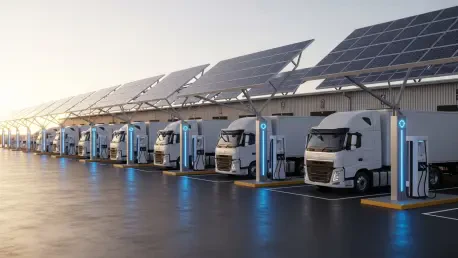
While public charging stations are important for long-haul routes across the Nullarbor, roughly 70% of the charging needs for commercial fleets must be met through private infrastructure at depots and warehouses. To overcome the high upfront costs and technical hurdles associated with these installations, many firms are turning to “Charging-as-a-Service” models as a viable solution. This approach allows logistics companies to pay for managed charging solutions as a monthly service, letting them focus on moving freight while specialists handle the complex power infrastructure and maintenance. These service providers take on the capital risk and the technical burden of keeping the chargers operational, which lowers the barrier to entry for smaller fleet operators. By outsourcing the management of the power supply, companies can scale their electric fleets more rapidly without needing to hire an internal team of electrical engineers. This financial model has shifted electrification from a cap-ex problem to a predictable operating expense.
Stabilizing the Supply Chain: Managing Consumer Inflation
The cost of moving goods from regional farms and urban supermarkets to construction sites is a major factor in the national inflation rate, directly impacting the average household budget. When diesel prices rise, those costs are almost always passed down to the consumer, increasing the daily cost of living for everyone from Sydney to Perth. Electrification serves as a macro-economic tool to keep these prices steady by insulating the freight industry from the volatility of the gas pump and the whims of oil-producing nations. By decoupling the price of groceries from the price of Brent Crude, the economy gains a layer of protection against external shocks that have traditionally driven up the Consumer Price Index. The efficiency of electric motors also means that the overall cost of transport per unit is lower, providing more room for retailers to manage their margins without raising shelf prices. This stability is crucial for maintaining consumer confidence and ensuring essential services remain affordable.
Major retail giants and grocery chains are already recognizing that a more efficient, electric supply chain is the key to maintaining competitive pricing in a crowded and transparent market. By lowering the overhead associated with transport through electrification, the entire supply chain becomes more resilient to the pressures of a fluctuating global economy. This transition ultimately benefits the end consumer by ensuring that the prices of essential goods remain stable even when global energy markets are in a state of turmoil. Furthermore, the reduction in noise and air pollution in urban delivery zones has improved the quality of life in densely populated areas, making the logistics sector a more welcome neighbor. Retailers that have successfully electrified their last-mile delivery fleets are reporting higher customer satisfaction scores due to the punctuality and cleanliness of the service. This move toward zero-emission delivery is no longer just a marketing point but a fundamental component of business.
Industry Blueprints: Success Stories and Future Implementation
Leading organizations like IKEA Australia have already demonstrated that large-scale electrification is a current reality, not a distant goal, by successfully deploying extensive electric delivery fleets. By investing in a national charging network that spans multiple states, IKEA was able to move the vast majority of its last-mile deliveries to zero-emission vehicles in just a few short years. These success stories provide a clear roadmap for other companies, showing that with the right infrastructure investment, the risks of the transition can be managed effectively and profitably. The data collected from these early adopters has allowed the industry to refine its approach to route planning and battery management, reducing the learning curve for those following in their footsteps. Other sectors, such as mining and heavy manufacturing, are now looking to these retail blueprints to understand how to manage high-output electric fleets. This cross-industry knowledge sharing is accelerating the pace of adoption.
The shift to electric fleets represented a fundamental change in economic survival rather than just environmental idealism, as businesses moved toward an energy-independent future. As government incentives grew and emissions standards became more strict, the window for a cost-effective transition required immediate action from industry leaders. Fleet operators who positioned themselves early gained a significant advantage by securing their energy supply and reducing long-term maintenance liabilities. Practical next steps for remaining diesel operators included conducting a thorough energy audit of their existing depots and exploring partnership models for infrastructure financing. Integrating smart charging software became a priority to manage peak demand and reduce overall electricity costs. By prioritizing the electrification of heavy vehicles, the logistics sector provided a stabilized foundation for the national economy. These actions ensured that the Australian supply chain was not only cleaner but significantly more resilient.