
Christopher Hailstone has spent years at the intersection of grid security and renewable integration, positioning himself as a leading voice in how we manage the modern electricity delivery system. As a utility expert, he has seen firsthand how the traditional relationship between power providers and consumers is being rewritten by the arrival of high-capacity mobile storage. With the rapid electrification of heavy-duty fleets, Hailstone’s insights into grid reliability and the emergence of virtual power plants have become essential for school districts and energy providers alike. This conversation explores the shifting landscape where a yellow school bus is no longer just a vehicle for students, but a critical asset for stabilizing the American power grid during times of extreme stress.
The prospect of a single school bus earning $12,000 in a single season sounds like a game-changer for cash-strapped school districts. How realistic is this figure for the average fleet operator today?
That $12,000 figure comes from the Beverly Public Schools pilot in Massachusetts, where a single bus discharged about 10.8 MWh of electricity into the suburban Boston grid over the summers. It is a stunning proof of concept that shows the high-end potential of these assets when they are perfectly aligned with peak demand programs like National Grid’s ConnectedSolutions. However, we have to be grounded in the data, which suggests that $6,000 per year is a more typical “norm” for many districts due to variations in discharge patterns and local market structures. Even at that lower figure, when you look at a fleet like the one being built in Boston with over 100 buses, you’re talking about a massive chunk of revenue that can pay back the marginal cost of the vehicle. It transforms a depreciating asset into a revenue-generating power plant that breathes with the needs of the community.
We are seeing a massive jump from small pilot programs to fleets with hundreds of vehicles, particularly in California. What does this scale mean for local grid stability?
The scale we are seeing now is truly unprecedented, specifically with the Zum fleet in Oakland which operates 74 buses, and the massive deployment of 238 buses planned for San Francisco. When you aggregate these vehicles, you aren’t just helping one neighborhood; you are creating a 2.1 GWh annual discharge capacity that can literally keep the lights on during a heatwave. In Northern California, these buses are integrated into the Emergency Load Reduction Program, which is the ultimate insurance policy against brownouts and blackouts. By placing these depots on high-need circuits, the impact on the local distribution grid is immediate and visceral—you can almost feel the grid’s “blood pressure” drop as these batteries kick in during those critical evening hours when the sun goes down but the heat remains.
For a transportation manager, the primary job is moving students safely, not managing energy markets. How are districts navigating the technical complexity of discharging power without disrupting their morning routes?
It is a common concern, but as Erny Epley in Fremont likes to say, he’s essentially a “bus driver with a tie” because the heavy lifting is handled by sophisticated automation and software providers. In a typical school day, a bus might return to the depot at 4:30 p.m. with its battery still 60% full, which perfectly aligns with the evening peak when the utility needs power most. For the next five or six hours, software platforms like those provided by The Mobility House manage the power flow, ensuring the bus discharges safely and then switches to charging during the “super off-peak” overnight window when electricity is cheapest. By 6 a.m., the driver walks into a depot full of buses with 100% state of charge, ready to go, without ever having to manually flip a switch or monitor a market price.
While the financial and stability benefits are clear, there have been reports of technical hurdles, such as 12-volt battery issues. How concerning are these “bumps in the road” for the long-term viability of V2G?
The technical hurdles, such as the dispatch reliability issues identified in the Dominion Energy and EPRI reports, are growing pains rather than structural failures. We saw instances where a low state of charge in a bus’s 12-volt battery—the one that actually triggers the charging system—prevented the larger traction battery from engaging when the grid called for it. This appears to be a systemic design hurdle or a firmware issue where the 12-volt battery wasn’t being maintained even while the bus was plugged in. The solution is moving toward better interoperability and specifying hardware from multiple makers to ensure backup; it’s a reminder that as we move toward 2026, we need robust engineering standards that treat these vehicles as the mission-critical grid assets they have become.
Many school districts operate in territories with vertically integrated utilities that don’t have open wholesale markets. Is there still a path to revenue for them?
Absolutely, though the “revenue” might look different than a check in the mail. In places like Georgia, where Georgia Power holds a monopoly, there isn’t a wholesale market for a fleet operator to play in, but there is immense value in capital offsets. A utility might choose to “put cash on the hood” by paying for half the battery in the bus in exchange for 10 years of load shifting during the summer months. This creates a win-win: the school district gets a significantly cheaper electrified fleet, and the utility gets a guaranteed energy storage asset exactly when they need it most. Whether it’s recurring seasonal income or a massive upfront payment that lowers the barrier to entry, the financial math for school electrification is becoming impossible to ignore.
Beyond just balancing the grid, there’s a growing conversation about local resilience. How do these buses function as an emergency resource during natural disasters?
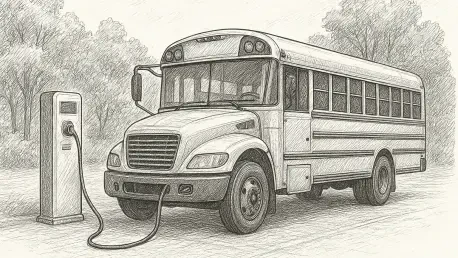
This is where the emotional and social value of the technology really shines. We are already seeing electric buses in Massachusetts being used as replacements for diesel generators at critical facilities on Martha’s Vineyard. Think about the sensory shift—instead of the loud, rattling, and polluting drone of a diesel engine during a power outage, you have a silent, emission-free “battery on wheels” providing emergency power. In the very near future, we expect to see districts like Boston dispatching idle buses to support communities hit by summer storms or wildfires, acting as mobile microgrids. It turns student transportation into a cornerstone of public safety, ensuring that even when the main lines go down, the most critical services in our society can keep running.
What is your forecast for the role of electric school buses in the national energy mix over the next few years?
My forecast is that the electric school bus will transition from being a “niche pilot project” to becoming the primary flexible capacity resource for suburban and urban distribution grids. We currently have a small fraction—just over 230 V2G-enabled buses out of more than 14,000 committed vehicles—but that ratio is going to shift rapidly as utilities realize that upgrading a substation is often more expensive than incentivizing a school fleet. I expect that by the end of this decade, the integration of bidirectional charging will be a standard requirement for all federal and state bus grants. We are moving toward a reality where the yellow school bus is just as famous for stabilizing the American grid as it is for taking kids to school, creating a cleaner, more resilient energy landscape for everyone.