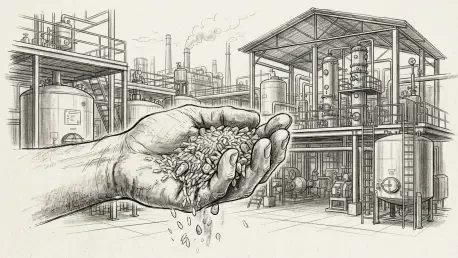

Meeting the national twenty percent petrol-blending target now relies on the production of over seven thousand million liters of ethanol from grains and rice. The Indian government has pushed aggressively for energy independence, but the roadmap for the 2026–27 supply cycle has encountered a significant economic roadblock. With the sudden strategic pivot away from sugar-based feedstocks to preserve national sugar reserves, the industrial burden has shifted entirely toward grain processors. These entities now face the daunting task of bridging a massive supply gap while navigating a volatile marketplace where input costs are no longer aligned with government-set procurement prices. This shift represents a fundamental transformation in how the country approaches its biofuel strategy, moving from a multi-feedstock model to one that is increasingly narrow and dependent on agricultural commodities that are prone to price shocks. Achieving the ambitious target of eleven thousand million liters of total ethanol production necessitates a synchronized effort to ensure that the economic foundation of the program remains sturdy enough to support such high volumes across the country.
Regulatory Pivot: Impact of Feedstock Restrictions
The Transition: Shifting From Sugar to Grain
The exclusion of sugarcane juice, syrup, and B-heavy molasses for the 2026–27 cycle was driven by the need to maintain domestic sugar availability and stabilize consumer prices, but it has left many distillers in a precarious position. By removing these traditional feedstocks, the government has effectively funneled the entire ethanol mandate toward grain-based production for the foreseeable future. This regulatory change forces a rapid adaptation within the industry, requiring facilities that once processed sugar derivatives to either pivot their operations or face obsolescence. The Grain Ethanol Manufacturers’ Association has voiced significant concern over this transition, noting that the infrastructure for grain processing involves different operational overheads and waste management protocols. This systemic shift requires a massive influx of raw maize and broken rice, placing unprecedented pressure on agricultural supply chains that are already stretched thin by food demands, making the transition as much an agricultural challenge as a significant industrial one for the nation.
Operational Scale: The Challenge of Grain Distillation
The leap in production from damaged grains and broken rice—rising from a previous eight hundred million liters to the current multi-billion liter requirement—illustrates the sheer scale of the industrial ramp-up. However, industry experts remain skeptical about whether the supply of broken rice and surplus grains can truly meet these heights without disrupting the livestock feed market. The reliance on maize, in particular, has become a double-edged sword; while it offers a viable alternative to sugar, its price volatility makes long-term planning nearly impossible for standalone distilleries. Furthermore, the logistical complexities of sourcing such vast quantities of grain from across diverse agricultural zones add a layer of expense that is not currently reflected in the standardized procurement rates. As oil marketing companies push for higher blending ratios, the disconnect between the mandated production volumes and the practical availability of affordable raw materials threatens to stall the momentum of the national program, potentially leaving a massive deficit in the supply chain.
Economic Imbalances: Pricing Disparities and Market Risks
Margin Pressures: Rising Input Costs and Price Cuts
The financial viability of maize-based ethanol is currently under threat due to a widening gap between production costs and sale prices. Over the past year, the market price of maize has surged from eighteen rupees per kilogram to twenty-seven rupees per kilogram, driven by increased demand and shifting crop yields. Simultaneously, the procurement price for maize-derived ethanol was reduced by oil marketing companies from seventy-one rupees and eighty-six paise to sixty-eight rupees and eighty-six paise per liter, creating a margin squeeze that many small distillers cannot survive. C.K. Jain, the President of the Grain Ethanol Manufacturers’ Association, has pointed out that these economic pressures discourage investment. As Bharat Petroleum Corporation Ltd extends bid deadlines for the upcoming supply year, the industry remains in a state of high uncertainty. Without a fair pricing mechanism that accounts for the rising cost of raw agricultural inputs, the sector risks a wave of defaults and plant closures as manufacturers struggle to maintain operational stability.
Strategic Outlook: Market Stability and Procurement Fairness
The resolution of these economic tensions required a comprehensive re-evaluation of how biofuel prices were indexed against agricultural commodity cycles. To stabilize the sector, the government and oil marketing companies moved toward a flexible pricing model that adjusted for seasonal fluctuations in grain costs, ensuring that distillers maintained a sustainable margin regardless of market volatility. This shift allowed for a more robust procurement framework that prevented cheaper, state-subsidized rice from cannibalizing the market for maize-based ethanol. Additionally, the industry saw an increased focus on enhancing the efficiency of grain-to-ethanol conversion through the adoption of advanced enzymatic processes and co-product utilization, such as dried distillers grains for the poultry sector. Moving forward, a transparent dialogue between the energy and agricultural departments was prioritized to align the twenty percent blending mandate with long-term food security and fair farmer compensation as the industry matured through these difficult shifts.