
The decision by Reliance Industries Limited to deploy a staggering twelve billion dollars into the compressed biogas sector represents one of the most ambitious renewable energy pivots in modern industrial history. This massive capital expenditure, specifically targeted at the state of Andhra Pradesh, signals a fundamental shift in how large-scale corporations are integrating regional agricultural cycles with national energy security goals. By moving beyond initial memorandums and committing to a full-scale infrastructure overhaul, the conglomerate is effectively betting on the long-term viability of organic waste as a primary fuel source. This initiative is not merely a financial transaction; it is a calculated effort to decarbonize a rapidly industrializing region while providing a stable, domestic alternative to volatile international gas markets. As the project rolls out across the state, it serves as a litmus test for the scalability of bio-energy in a country historically reliant on imported fossil fuels.
Economic Revitalization: Catalyzing Growth in Rural Regions
The sheer scale of this investment is expected to catalyze a monumental shift in the regional labor market, particularly within the agricultural heartlands of Andhra Pradesh. By establishing hundreds of compressed biogas units, the project is designed to generate upwards of 300,000 new jobs, providing a much-needed boost to local economies that have traditionally struggled with seasonal unemployment. These roles range from high-tech plant operations and mechanical engineering to logistical management and specialized farming of energy crops. Beyond direct employment, the secondary and tertiary sectors—such as transportation, equipment maintenance, and rural retail—stand to benefit from the increased liquidity circulating through these communities. This influx of professional opportunities effectively curtails rural-to-urban migration by offering competitive wages and stable career paths within the residents’ own districts, thereby fostering long-term social stability across the state.
From a fiscal perspective, the long-term contribution to the state treasury is projected to be immense, with estimates suggesting over sixty thousand crore rupees in revenue over the coming decades. This financial windfall stems from various taxes, duties, and levies associated with the construction and operation of the biogas plants, providing the government with essential capital for further public infrastructure development. Moreover, the project aligns perfectly with the state’s fiscal incentives, which offer significant SGST reimbursements to encourage high-value industrial projects. By creating a self-sustaining economic loop where waste is transformed into a high-demand commodity, the initiative ensures that wealth remains within the state borders. Reliance’s financial stability supports this ambition, evidenced by the company reporting a consolidated EBITDA of ₹54,067 crore in Q1 FY27. This strength allows for more predictable planning and permits the government to reinvest in social welfare programs.
Strategic Evolution: Shaping the Future of Green Energy
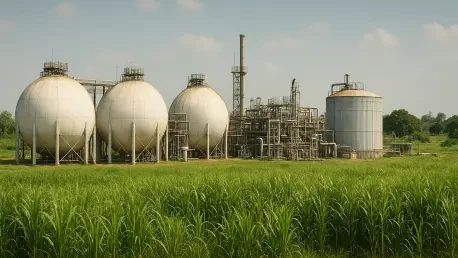
Central to the success of this biogas strategy is the systematic integration of specialized energy crops like Napier grass alongside traditional agricultural residues and organic waste. Reliance is leveraging advanced biotechnology to maximize the methane yield from these feedstocks, ensuring that the resulting compressed biogas meets the stringent quality standards required for industrial and vehicular applications. The construction of these plants represents a massive engineering feat, requiring a sophisticated network of processing units that can handle diverse organic inputs with high efficiency. By focusing on a decentralized model, the infrastructure minimizes the environmental footprint associated with transporting heavy biomass over long distances, instead placing the processing power close to the source of the waste. This logistical strategy not only improves the carbon footprint of the operation but also ensures a consistent and reliable supply of raw materials. As the rollout continues from 2026 to 2029, the infrastructure will scale rapidly.
To maximize the benefits of this twelve-billion-dollar bet, stakeholders focused on establishing a resilient ecosystem that integrated technological innovation with community-driven participation. The project demonstrated that the transition to a low-carbon economy required more than just financial capital; it demanded a fundamental restructuring of rural logistics and a deep commitment to environmental stewardship. Leaders prioritized the training of local workforces to ensure that the operational phase of these biogas plants remained sustainable and efficient over the long term. Future investments in this sector likely pivoted toward further refining the efficiency of energy crop cultivation and exploring even more diverse organic waste streams to insulate the system from agricultural fluctuations. By proving the viability of this model, the initiative provided a blueprint for other regions to follow, suggesting that the path to energy independence lay in the sustainable management of local resources.