
Christopher Hailstone brings a wealth of specialized knowledge to the table, having spent years at the intersection of energy management and grid security. As a veteran in the utilities sector, he has seen the landscape shift from centralized fossil fuel dominance to a more fragmented, yet resilient, distributed network. His background in renewable energy integration and electricity delivery makes him a leading voice on how non-profit cooperatives are currently navigating the volatile wholesale power market. In this discussion, we delve into the burgeoning role of energy storage as a survival mechanism for small utilities facing unprecedented demand. We explore the nuanced differences between member-owned cooperatives and investor-owned giants, the tactical use of residential batteries for peak shaving, and the critical importance of storage in remote areas where the hum of a single transmission line is the only thing keeping the lights on.
Many cooperatives find that wholesale demand charges account for nearly a third of total power costs, creating a significant financial burden for member-owned utilities. How are these organizations leveraging energy storage to reclaim control over their financial futures?
Non-profit utilities like Meeker Energy, which serves roughly 10,000 homes and businesses in central Minnesota, are in a unique position where they cannot simply pass on inefficiency costs without impacting their own members’ wallets. For these organizations, the wholesale cost of electricity isn’t just a line item; it is the single largest expense, often dictated by peak demand periods that drive prices into the stratosphere. To combat this, they are looking inward at consumption control, specifically through behind-the-meter residential batteries that offer a buffer against those spikes. By using storage to “shave the peak,” a cooperative can discharge stored energy during the most expensive hour of the month, which is exactly when the Tennessee Valley Authority and other wholesalers calculate their demand charges. It is a high-stakes game of precision where reducing that one specific hour of peak demand can save the cooperative millions of dollars over the fiscal year. This strategic dispatch allows smaller players to maintain a sense of autonomy in a market where they are otherwise at the mercy of rising wholesale rates.
With approximately 60% of Meeker’s members already participating in load management programs, there seems to be a limit to how much demand can be “shed” using traditional methods. In what ways is the shift toward battery storage enhancing these mature programs?
Traditional load management, while successful, has reached a point of diminishing returns where you can only ask members to cycle their air conditioners or water heaters so many times before it impacts their quality of life. Steve Kosbab at Meeker Energy has pointed out that they’ve hit a ceiling with basic demand response, which is why the utility is now testing residential batteries to provide a more seamless and powerful alternative. Unlike standby generators that run on propane or natural gas—where a member might actually lose money if fuel costs exceed the electric savings—batteries offer a cleaner, more predictable economic profile. These storage systems allow the utility to “enhance” their existing programs by drawing on stored power without the member even noticing a change in their home environment. It transforms the relationship from one of sacrifice to one of active, automated resilience, ensuring that the utility can shed load more aggressively while keeping the coffee brewing and the lights bright.
There is a massive discrepancy between the 439 MW of storage currently operated by rural cooperatives and the 28 GW that connected to the U.S. grid in 2025. What is driving the forecast that cooperative storage capacity could more than triple by 2028?
The growth we are seeing is fueled by a perfect storm of falling technology prices and an increasingly desperate need for grid reliability. While 439 MW/1,047 MWh might seem like a drop in the bucket compared to the 28 GW/57 GWh of total U.S. capacity recorded by Benchmark Mineral Intelligence, the localized impact for rural members is profound. The National Rural Electric Cooperative Association is currently tracking dozens of smaller-scale projects that are nearing the finish line, many of which are designed to firm up intermittent generation and defer expensive infrastructure upgrades. We are seeing a move toward distributed models, such as the initiative by the Guadalupe Valley Electric Cooperative near San Antonio, which plans to scale its residential battery program from a modest 2 MW to a staggering 50 MW. This rapid expansion is a response to a grid that is becoming leaner and more prone to shortfalls, making every megawatt-hour stored behind a member’s meter a vital asset for the collective whole.
Investor-owned utilities often operate on a profit model tied to capital investments, whereas non-profits do not earn a regulated rate of return. How does this fundamental difference influence the way storage programs are designed and deployed?
This is the heart of a very heated debate within the industry, particularly when you look at how different utilities approach virtual power plants. In Minnesota, Xcel Energy is moving forward with its Capacity*Connect pilot, which aims for 200 MW of utility-owned storage, but non-profit coalitions have pushed back, arguing that this model shifts financial risk to captive ratepayers. For a cooperative or a municipal utility, the goal isn’t to generate a return for shareholders but to provide the lowest possible cost for the member-owners, which often leads them to favor third-party aggregation of customer-owned resources. Not-for-profits are often more agile in this regard; as Beth Soholt of the Clean Grid Alliance noted, they don’t always need the “carrots and sticks” of state regulation to innovate because their incentive is purely the welfare of their community. This leads to more grassroots, distributed storage projects that feel more like a community cooperative effort than a top-down corporate mandate, focusing on qualitative benefits that a strictly profit-driven cost-benefit analysis might overlook.
In isolated or remote areas like rural Alaska and the Hawaiian Islands, the stakes for energy storage seem much higher than in the contiguous states. What specific economic and reliability factors are driving the adoption of large-scale batteries in these regions?
In places like rural Alaska, energy isn’t just an expense; it’s a matter of survival, and the costs of failure are astronomical. Homer Electric Association installed a 46.5 MW/93 MWh system because an outage on their single 115-kV transmission line could bleed the association of more than $20,000 every single day in added fuel costs. That is a visceral financial pain that demands a high-tech solution, leading them to secure a $100 million USDA loan to double down on their storage capacity. Similarly, in Hawaii, the Kaua‘i Island Utility Cooperative is looking at a solar-plus-storage project that will cover 20% of their entire load, with projected savings of $365 million over the next quarter-century. For a residential customer in Kauai, that translates to a potential $21 reduction in their monthly bill, which is life-changing in a high-cost-of-living area. These remote utilities are using batteries as a literal shield against the volatility of imported fuels and the physical vulnerability of being at the end of a very long, very lonely wire.
We often hear about batteries as a backup for blackouts, but how are utilities using storage on the distribution system to manage congestion and avoid the disruptive process of physical infrastructure upgrades?
This is perhaps the most underrated benefit of storage—it can act as a virtual expansion of the grid without the need for digging trenches or stringing new wires. Take Connexus Energy in Minnesota, for example; they installed a 2.5 MW/10 MWh standalone battery at a substation specifically to address congestion in a heavily loaded part of their territory. By discharging during peak times, that battery allows the existing transformer to stay in service without being overloaded, saving the members from a costly and disruptive upgrade process. Furthermore, by registering these systems as capacity assets with regional entities like MISO, the utility can capture additional wholesale market value during high-price periods. It’s a surgical approach to grid management where you place a battery exactly where the “clog” is, allowing the electricity to flow more freely and efficiently while generating revenue that goes back into the cooperative’s pockets.
As the energy landscape continues to evolve under the pressure of rising load growth and the retirement of traditional thermal assets, what is your forecast for the role of non-profit utilities in the broader national storage strategy?
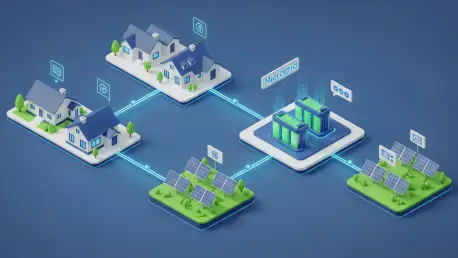
My forecast is that non-profit cooperatives and municipal utilities will become the primary laboratories for the “neighborhood-scale” grid of the future. While the industry giants focus on gigawatt-scale pipelines, these smaller entities will perfected the art of the microgrid and the virtual power plant, as seen with Blue Ridge Power Agency’s plan for 25 MW of storage across five sites or the Tennessee Valley Authority’s massive 1.5 GW storage goal. We are going to see a tripling of capacity in the rural sector by 2028, driven by the realization that reliability can no longer be guaranteed by the central grid alone. The future is one where every rural substation and many suburban homes act as a tiny powerhouse, contributing to a collective “buffer” that protects against the wild swings of the wholesale market and the increasing frequency of extreme weather events. Non-profits are proving that you don’t need a massive corporate structure to lead on technology; you just need a clear focus on what keeps the lights on for your neighbors.
What is your forecast for the future of residential battery adoption within these member-owned networks?
I believe we are on the cusp of a residential storage explosion where the home battery becomes as common as the central air conditioning unit. Over the next five to ten years, as cooperatives refine their incentive structures and programs like the one at Guadalupe Valley reach their 50 MW targets, the economic argument will become undeniable for the average homeowner. We will see a shift where members don’t just buy a battery for backup during a storm, but see it as a financial tool that actively pays for itself by interacting with the cooperative’s demand-shaving strategies. This will create a more democratic grid, where the distinction between “consumer” and “producer” blurs, and the cooperative serves as the intelligent conductor of a vast, distributed orchestra of energy. The end result will be a significantly more robust American power system that is built from the bottom up, rather than the top down, ensuring that even the most remote rural member has the same level of security and price stability as someone living in a major metropolitan hub.