
The Iberian Peninsula currently stands at a critical crossroads where the rapid integration of intermittent renewable energy sources has significantly outpaced the development of robust long-term storage solutions, leaving the regional power grid increasingly vulnerable to sudden supply-demand imbalances that could lead to catastrophic blackouts. While Spain and Portugal have emerged as global leaders in wind and solar generation, the geographic isolation of the peninsula—often referred to as an energy island due to its limited interconnection with the rest of Europe—means that local stability must be maintained through domestic assets. As the share of renewables in the total energy mix continues to climb toward eighty percent, the reliance on traditional gas-fired plants for peaking power has become both environmentally untenable and economically volatile. Consequently, the search for a massive, reliable, and sustainable buffer has intensified, focusing on mature technologies like pumped hydro storage that offer the necessary scale to bridge the gap between production and consumption.
Strengthening the Grid: The Role of Gigabatteries
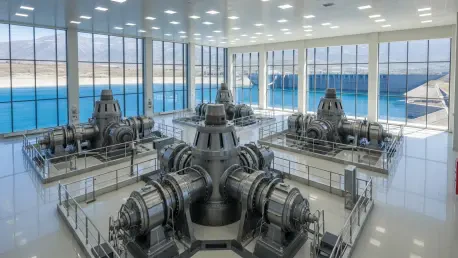
The mechanism of pumped hydro storage involves two water reservoirs at different elevations, allowing operators to move water uphill during periods of excess energy and release it through turbines when demand surges. This process effectively converts surplus solar or wind energy into potential gravitational energy, providing a massive physical battery that can operate for several hours or even days. Unlike chemical battery installations that often struggle with degradation and limited discharge durations, projects like the Tâmega Gigabattery in northern Portugal demonstrate the sheer capacity required for modern grids. This facility, which utilizes three large dams and a sophisticated pumping system, contributes significant gigawatt-hours to the regional reserve, acting as a crucial stabilizer during the late evening hours when solar output vanishes. By focusing on these high-capacity assets, the Iberian operators have managed to mitigate the risks associated with rapid cloud cover shifts or sudden drops in wind speed.
Building on this mechanical foundation, the technical versatility of modern pumped hydro units allows for ancillary services that are vital for preventing a complete grid collapse. These facilities offer black start capabilities, meaning they can initiate power generation without an external electricity supply, a feature that is indispensable during a wide-scale blackout scenario. Furthermore, the inertia provided by massive spinning turbines helps maintain the grid frequency at a steady fifty hertz, a task that inverter-based solar plants cannot easily perform on their own. As the peninsula moves away from coal and reduces its reliance on combined-cycle gas turbines, the role of hydro-pumping as a primary source of reactive power becomes even more pronounced. Engineers are now implementing advanced variable-speed turbines that allow for much finer control over the pumping process, enabling the grid to absorb even minor fluctuations in renewable output with precision while maintaining the necessary voltage levels.
Managing Resources: Environmental and Policy Integration
Despite the clear technical advantages, the expansion of pumped hydro across the Iberian landscape faced significant headwinds related to environmental conservation and water management. Constructing new reservoirs often involves the flooding of valleys, which can disrupt local ecosystems and meet resistance from agricultural communities who depend on the same water sources for irrigation. To address these concerns, developers have increasingly turned to closed-loop systems that cycle water between two isolated reservoirs rather than drawing from active river systems. This approach minimizes the impact on migratory fish populations and reduces the vulnerability of the energy supply to the prolonged droughts that have become more frequent in southern Spain. Furthermore, the repurposing of exhausted mining pits or existing hydroelectric dams for pumping capacity has emerged as a sustainable alternative that bypasses the need for massive new civil engineering projects while adhering to the stringent environmental standards of the European Union.
The historical transition toward a more resilient Iberian grid was ultimately defined by a proactive commitment to diversifying the storage portfolio beyond short-term solutions. It became clear that while lithium batteries served localized needs, the heavy lifting of national energy security required the monumental scale of pumped hydro installations. Decision-makers realized that the path forward necessitated a streamlined permitting process that balanced ecological protection with the urgent need for climate-resilient infrastructure. They focused on cross-border coordination and the optimization of existing hydraulic assets, which proved to be a more efficient strategy than starting from scratch. These efforts ensured that the peninsula moved away from the looming threat of blackouts and toward a state where renewable energy was synonymous with reliability. The region successfully treated energy storage as a vital public utility, which secured its sovereignty and long-term stability against the volatility of global fuel markets.