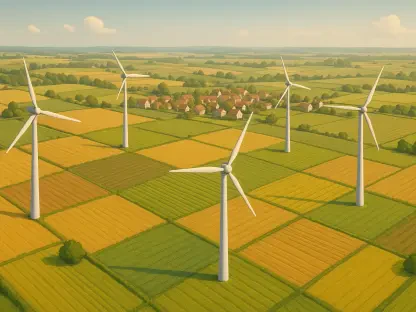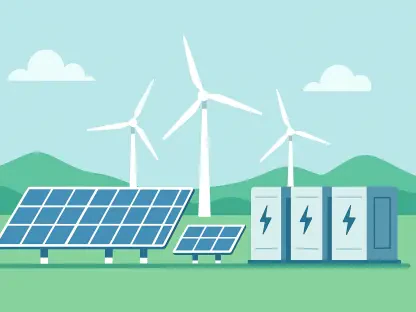

The global energy infrastructure has reached a definitive tipping point where battery storage systems no longer act as simple backup mechanisms but function as the structural backbone of a carbon-free electricity network. This transition represents a fundamental shift in how the world perceives power generation, moving away from a model of instantaneous production toward one of strategic management. As of the current year, the integration of solar and wind power is no longer considered a variable risk but a managed resource, primarily due to the massive scaling of industrial storage capacity that has stabilized price volatility and frequency fluctuations across major continental grids. The primary objective of this exploration is to dissect the mechanics of this transformation, answering critical questions regarding the technology, economics, and practical applications that have elevated storage to its current status. Readers can expect to learn how diverse chemical architectures and strategic grid deployments are resolving the timing mismatch of renewable energy while empowering sectors ranging from utility-scale providers to individual agricultural operations.
The current landscape of energy storage is characterized by a move beyond the experimentation phase into a period of industrial maturity. In 2026, the focus has shifted from whether storage is necessary to how it can be most efficiently integrated into existing and future infrastructure. This analysis covers the shift from lithium-only strategies to a more diversified chemical ecosystem, the role of long-duration systems in ensuring resilience, and the financial structures that have turned these projects into bankable assets. By examining the current progress of technology, it becomes clear that battery storage is the essential component that allows the global power grid to remain stable and reliable in an era of decarbonization.
Key Questions
How Has Battery Storage Evolved Into the Primary Stabilizer for the Modern Power Grid?
At the core of the modern energy revolution is the resolution of the inherent mismatch between when energy is generated and when it is consumed, a challenge frequently described as the timing problem. Renewable sources such as solar and wind provide significant output but are fundamentally intermittent, often peaking during periods of low demand. To address this, current grid-scale storage systems capture surplus dispatchable power and hold it for release during evening peaks or weather-induced lulls. This process has transformed intermittent renewables into reliable, baseload-equivalent resources that can respond to grid demands with millisecond precision.
The industry has standardized the measurement of these facilities through the critical metrics of power and energy. Power, measured in megawatts, defines the speed at which a system can discharge electricity to meet sudden spikes in demand, while energy, measured in megawatt-hours, determines the duration of that output. A prime example of this standard in action is the Nighthawk project in California, which provides a 300-megawatt output with a 1,200 megawatt-hour capacity. This specific four-hour discharge window has become the benchmark for utility-scale installations, allowing the grid to navigate the transition between sunset and the peak of residential and commercial consumption without relying on fossil fuel peaker plants.
Why Does Lithium Iron Phosphate Remain the Dominant Chemistry for Utility-Scale Infrastructure?
While the quest for the ultimate battery continues, Lithium Iron Phosphate, or LFP, has firmly established itself as the consensus choice for stationary storage applications. This preference stems from a strategic decision to prioritize safety, thermal stability, and long-term durability over the extreme energy density required for high-performance vehicles. LFP cells are notably more resistant to thermal runaway and can endure thousands of charge-discharge cycles with minimal degradation, making them the most financially viable option for developers seeking a twenty-year operational lifespan for their assets.
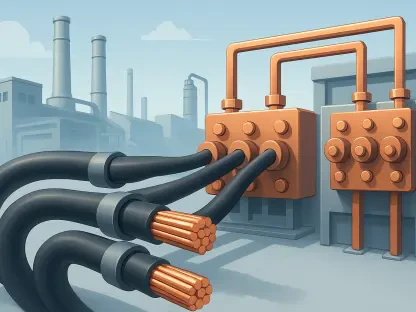
The dominance of LFP is further supported by a specialized and robust global supply chain that has matured significantly by 2026. Suppliers such as Londian Wason have optimized the production of high-grade copper foils specifically for these cells, ensuring that manufacturers like CATL and BYD can keep pace with the exponential growth in grid demand. This established ecosystem reduces the risk for financial institutions, as the technical behavior and cost structures of LFP are well understood. Consequently, most utility-scale projects now utilize this chemistry to ensure that their installations are both safe for the community and profitable for investors.
How Are Sodium-Ion Batteries Reshaping the Economics of Regional Energy Storage?
One of the most significant milestones reached in 2026 is the commercial mass production of sodium-ion battery technology. By substituting expensive and geographically concentrated lithium with abundant and inexpensive sodium, manufacturers have introduced a cost-effective alternative that is ideally suited for stationary applications. While sodium-ion cells may not match the density of their lithium counterparts, they offer a high round-trip efficiency and exceptional performance in extreme temperatures. These characteristics make them a perfect fit for regions where environmental conditions are harsh and the priority is cost-per-kilowatt-hour rather than physical weight.
The introduction of lines such as the Naxtra series has demonstrated that sodium-ion can effectively compete in the mid-market segment, particularly for residential and light commercial storage. Moreover, the environmental footprint of extracting sodium is significantly lower than that of lithium, which aligns with the broader sustainability goals of modern energy transitions. This diversification of chemistry protects the market from the price shocks associated with lithium scarcity, providing a more stable economic foundation for regional grid expansions. As these systems are deployed more widely, they are proving to be the catalyst for storage adoption in developing economies where upfront capital costs have historically been a barrier.
What Role Do Long-Duration Technologies Play in Establishing Multi-Day Grid Resilience?
While lithium and sodium systems are excellent for managing four-hour shifts in demand, they are not economically optimized for durations that span days or weeks. To fill this gap, 2026 has seen the emergence of long-duration energy storage technologies such as vanadium redox flow batteries and compressed-air systems. Flow batteries utilize large tanks of liquid electrolyte to store energy, allowing the capacity to be scaled simply by increasing the volume of the tanks. This makes them an ideal solution for providing steady, low-cost power over eight hours or more, which is essential for surviving extended periods of low renewable generation.
In addition to flow technology, the use of geological features for storage has gained momentum, such as the salt cavern compressed-air projects currently operating in parts of Europe. These facilities store energy by pumping air into underground chambers during periods of excess production and releasing it through turbines when the grid requires a massive injection of power. By combining these long-duration assets with high-speed chemical batteries, grid operators can create a multi-layered defense against instability. This hybrid approach ensures that the power grid is resilient enough to handle both the momentary fluctuations of the afternoon and the prolonged lulls of a winter storm.
How Is Localized Energy Storage Transforming the Economic Viability of Modern Agriculture?
For the agricultural sector, the current progress in storage technology has unlocked a new era of energy autonomy. Farmers who have invested in solar installations often faced the frustration of producing excess power during the day when it was least needed, only to pay high rates for grid power during the evening. The deployment of ruggedized storage systems, particularly those using sodium-ion chemistry, allows these operations to store their own midday generation for use in irrigation, climate control, and equipment charging. This shift toward self-sufficiency has turned energy from a variable operating expense into a controlled asset.
Furthermore, the rise of agrivoltaics—the simultaneous use of land for solar generation and farming—is heavily dependent on integrated storage. By utilizing localized microgrids, rural communities can maintain power even during broader grid outages, which is vital for preserving perishable goods and maintaining automated feeding systems. Because modern sodium-ion batteries require less intensive cooling than lithium systems, they are particularly well-suited for the non-climate-controlled environments typical of farm outbuildings. This democratization of energy allows rural businesses to compete more effectively and reduces the strain on the national transmission infrastructure.
What Systematic Challenges and Regulatory Bottlenecks Persist in the Deployment of Storage Assets?
Despite the rapid technological advancements seen in 2026, the industry continues to face significant logistical and regulatory hurdles. The most prominent among these is the interconnection queue, which refers to the lengthy waiting list for new storage projects to gain physical access to the national power grid. In many jurisdictions, projects that secured financing in 2026 are not expected to reach commercial operation until 2028 or even later due to the slow pace of grid upgrades and administrative processing. This delay creates a gap between the availability of technology and its actual impact on the carbon footprint of the grid.
Additionally, the concentration of the supply chain for critical materials remains a strategic vulnerability. While the shift toward sodium has mitigated some lithium-related risks, the production of high-performance components like specialized copper foils and electrolytes is still largely centralized in a few global manufacturing hubs. This centralization makes the energy transition susceptible to geopolitical shifts and trade restrictions. Furthermore, permitting processes for large-scale facilities often lag behind the pace of innovation, as local authorities struggle to update safety codes and zoning laws to accommodate the unique requirements of massive battery installations. Addressing these systemic bottlenecks is now as critical to the energy transition as the chemistry of the batteries themselves.
Recap
The integration of battery storage into the global power grid has fundamentally altered the landscape of energy production and consumption. By addressing the timing problem of renewable energy, storage systems have provided the necessary stability to move toward a truly carbon-free infrastructure. The dominance of Lithium Iron Phosphate has established a safe and bankable standard for utility-scale projects, while the commercialization of sodium-ion technology has introduced a cost-effective alternative for regional and agricultural applications. Long-duration solutions, such as flow batteries and compressed-air storage, have extended the resilience of the grid beyond the initial four-hour window, providing a safeguard against prolonged periods of low generation.
Moreover, the shift toward energy autonomy in the agricultural sector illustrates the localized benefits of these technological strides. While systemic challenges like the interconnection queue and supply chain concentration persist, the trajectory of the industry remains focused on scaling and optimization. The findings suggest that the maturity of the storage market in 2026 has made renewable energy a predictable and reliable resource for the first time. For those seeking deeper knowledge on technical cell specifications or regional regulatory frameworks, various industry publications and grid operator reports provide additional data on the ongoing deployment of these critical assets.
Final Thoughts
The shift toward battery-centric grids established a new paradigm for industrial planning. Financial institutions recognized that storage assets provided more than just backup power; they offered a mechanism for market stabilization that reduced reliance on volatile fuel markets. This realization led to the accelerated development of domestic supply chains and recycling programs that aimed to recover critical materials by the end of the decade. The integration of diverse chemical solutions ensured that the limitations of a single mineral did not hinder the broader objective of grid modernization.
As energy storage continues to evolve, the focus must now turn to the long-term sustainability of the batteries themselves and the streamlining of the bureaucratic processes that slow their deployment. Stakeholders should consider how localized storage can protect their operations from the increasing volatility of global energy prices. The success of this transition was not merely a result of laboratory breakthroughs but a consequence of a comprehensive reimagining of what a power grid could be. By moving from a reactive to a proactive energy management model, the global community has created a foundation for a more resilient and sustainable future.