
Christopher Hailstone is a seasoned authority in the shifting landscape of American energy, bringing years of expertise in grid reliability and the intricate dance between utility providers and local governments. As a leading voice in renewable energy management, he has watched the evolution of state-level siting laws and their direct impact on rural infrastructure. His perspective is particularly vital now, as we witness a significant standoff in Madison County over the Hoffman Falls Wind project, a case that highlights the friction between state green energy mandates and the financial autonomy of local industrial development agencies.
This conversation explores the breakdown of negotiations between Liberty Renewables and the Madison County Industrial Development Agency, focusing on the procedural failures that led to the denial of a substantial tax incentive package. We examine the developer’s decision to proceed with construction despite losing $30 million in potential benefits, the specific economic promises made to the residents of Eaton, Nelson, Fenner, and Smithfield, and the broader shift in power dynamics caused by state-level preemption of local siting authority.
The Madison County IDA recently made the significant decision to reject a $30 million tax break for the Hoffman Falls project; what do you believe were the critical breaking points in these negotiations that led to such a firm denial?
The tension in that meeting room was likely thick enough to cut with a knife because the IDA felt there was a fundamental breach of trust regarding host community agreements. From the perspective of the agency, Liberty Renewables essentially presented an incomplete application by claiming they had agreements in place with the towns of Eaton, Nelson, Fenner, and Smithfield when, in reality, they did not. There is a sense among local officials that the developer was trying to use the potential for a Payment-In-Lieu-Of-Taxes, or PILOT, as a high-stakes bargaining chip to force the townships into submission. It wasn’t just a paperwork error; it was viewed as a strategic maneuver that backfired when the board realized the local towns hadn’t actually signed off on the terms. By failing to execute those foundational agreements before the public hearing, the developer lost the local support they needed to secure that $30 million incentive.
Despite losing out on tens of millions of dollars in tax benefits, the developer is moving forward with construction—how does a project of this scale remain viable under such a significant financial shift, and what does this say about their long-term strategy?
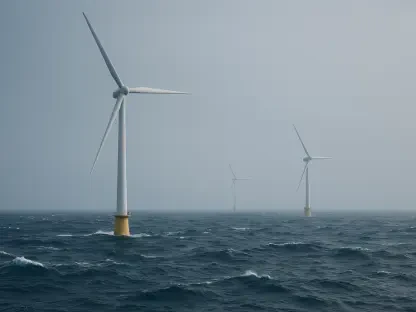
It is a bold and somewhat risky move to break ground without the security of a PILOT, but it signals that the developer is deeply committed to the 109.8 megawatts of power this site is destined to produce. By starting construction now, they are essentially betting that the long-term revenue from the 18 or 19 turbines will outweigh the immediate sting of paying full property taxes. The developer’s leadership has been very clear that while they are disappointed, they aren’t packing up; instead, they are pivoting to emphasize direct community benefits like the $1 million in electric bill savings promised over the next 10 years. They are likely calculating that the operational momentum and the eventual sale of power to the grid will stabilize the books, even if the initial profit margins are leaner than they originally hoped. This “full steam ahead” approach suggests they want to prove the project’s worth to the community and the state, perhaps hoping to mend fences once the turbines are actually spinning.
There has been a lot of discussion regarding the “meaningful benefits” promised to the host towns; could you break down how these financial commitments are expected to impact the daily lives of local residents and farmers?
The promises made to the residents of Madison County are quite specific and designed to touch several different layers of the local economy. For instance, eligible households are looking at a collective $1 million in savings on their electric bills over the next decade, which provides a very tangible, monthly relief for families feeling the squeeze of energy costs. Beyond the bills, there is a $1 million grant fund spanning 20 years earmarked for charitable programs and historic preservation, which could revitalize local landmarks that have long lacked funding. For the 50 local families and farmers who are leasing their land for the turbines, this project represents a steady, weather-proof income stream that can help keep multi-generational farms in the family. Additionally, the influx of more than 70 construction jobs and long-term operations roles brings a fresh surge of activity to local diners, hardware stores, and contractors who will be supporting the project’s infrastructure.
The loss of “home rule” in the siting of these large-scale renewable projects seems to be at the heart of the local opposition; how has the state-level fast-tracking altered the relationship between developers and rural communities?
The creation of the Office of Renewable Energy Siting, or ORES, has fundamentally changed the power balance, effectively stripping local governments of their ability to say where these massive turbines are placed. When you take away a town’s voice in the siting process, you naturally breed a sense of resentment and defensiveness among the people who have to live in the shadow of these 18 or 19 structures. In the past, Madison County was actually quite supportive of wind energy because it integrated well with agriculture—using only about 30 to 33 acres of land—but the feeling of being sidelined by a “mad dash” to meet the 70 percent renewable target has soured that relationship. Without local input, residents feel that the unique character of their woodlands and agricultural fields is being ignored by bureaucrats in Albany. This creates a situation where even an “appropriately sited” project feels like an imposition rather than a partnership, leading to the kind of legal and financial friction we are seeing today.
What is your forecast for renewable energy development in local communities?
I anticipate we will see a significant increase in legal and administrative friction between rural municipalities and state-backed developers as we move closer to the 2030 renewable energy targets. While projects like Hoffman Falls will continue to move forward because of state-level preemption, the era of easy tax breaks is likely ending; IDAs are becoming much more skeptical and will demand ironclad local agreements before even considering a PILOT. We will likely see a trend where developers offer much larger direct-to-consumer benefits—like the electric bill subsidies we see here—to bypass the traditional political roadblocks of town boards. Ultimately, the success of the grid won’t just depend on the 109.8 megawatts generated, but on whether the industry can find a way to make local farmers and neighbors feel like partners in the transition rather than just hosts to industrial machinery.