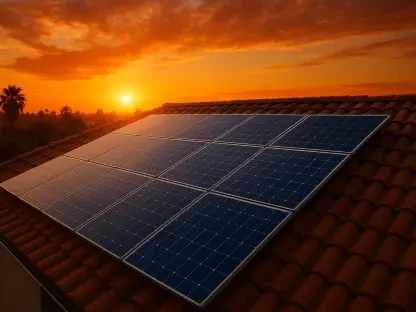

Tongwei Solar is leveraging lithography printing and advanced cleaning techniques to reach a cell efficiency milestone of 27.50% by early 2028. This ambitious objective represents a broader pivot within the Chinese renewable energy sector, moving away from simple scale toward highly specialized technological sophistication. As the industry matures, the focus has shifted to squeezing every possible percentage of performance out of existing semiconductor architectures. The current RMB 200 million investment into the Meishan manufacturing base demonstrates a commitment to refining Tunnel Oxide Passivated Contact (TOPCon) cell production lines. This transition is not merely about incremental gains but involves a fundamental re-engineering of the manufacturing process. By integrating high-precision lithography, producers are finding ways to reduce material waste while simultaneously improving the electronic properties of the solar cells. This evolution signals a new era where quality and efficiency define market leadership.
Engineering Resilience: Materials for Extreme Climates
Yingli Solar has recently taken a significant step toward solving the durability issues associated with extreme environmental conditions by initiating bulk shipments of zinc-aluminum-magnesium steel-frame modules. These innovative components are specifically designed for a 180 MW ecological remediation project located in the Ningxia Gobi desert, where temperature fluctuations are notoriously severe. Traditional aluminum frames often struggle in these settings due to a mismatch in thermal expansion coefficients between the metal and the photovoltaic glass. By utilizing a steel-based solution, manufacturers are ensuring that the structural integrity of the module remains intact over decades of service. This material alignment significantly reduces the risk of microcracks and debonding, which are common failure points in desert installations. Furthermore, the steel frames are engineered with self-healing properties that provide a robust defense against corrosion, ensuring long-term viability.
The adoption of these advanced steel frames also highlights a growing industry-wide emphasis on reducing the carbon footprint of the hardware itself. Steel production, when combined with modern coating techniques, often results in a lower environmental impact compared to the energy-intensive process of refining aluminum. This shift reflects a more holistic approach to sustainability where the life cycle of the solar panel is scrutinized as much as its energy output. Beyond the desert projects, these durable frames are likely to become a standard for large-scale utility projects across various harsh geographies. The integration of such resilient materials is essential for maintaining the high reliability required by investors and grid operators who demand consistent performance under stress. As developers look toward the coming years, the focus remains on ensuring that these physical components can withstand the test of time while contributing to a greener manufacturing supply chain.
Market Evolution: Infrastructure and Pricing Dynamics
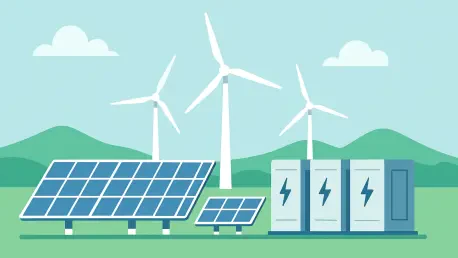
Large-scale infrastructure development continues to be the primary engine of the domestic energy sector, as seen in the recent launch of a massive 15.14 GW power base tender in Inner Mongolia. This project, spearheaded by GD Power, represents a sophisticated multi-modal energy complex that combines 8 GW of solar and 4.5 GW of wind power with traditional coal-fired generation. To manage the inherent variability of renewable energy, the site includes a substantial 8.5 GWh electrochemical energy storage system. This “mega-base” is strategically positioned to feed into the Inner Mongolia-to-Anhui ultra-high-voltage direct-current transmission line, facilitating the transport of clean energy from the western wastelands to the industrial hubs of the east. This logistical focus is crucial for balancing the national grid and ensuring that remote generation capacity is not wasted. Such projects illustrate a transition toward hybridized energy systems that leverage diverse sources to maintain a stable and reliable power supply.
Provincial authorities also took decisive action to refine the economic landscape for renewable energy by introducing competitive pricing mechanisms and long-term auction structures. In Fujian, the implementation of a mechanism price auction for over 8 billion kWh of incremental energy forced wind and solar projects to compete within a strictly defined price cap. This move established a predictable market environment for the next 12 years, ensuring that new developments remained cost-competitive against traditional power sources. The strategy effectively transitioned the industry from a reliance on subsidies to a model driven by market efficiency and technological performance. By stabilizing these prices, regulators provided the clarity needed for long-term capital investment in high-efficiency manufacturing and grid infrastructure. These collective shifts across manufacturing, logistics, and policy redefined the sector as a mature and integrated component of the national power grid. All players focused on deep optimization.