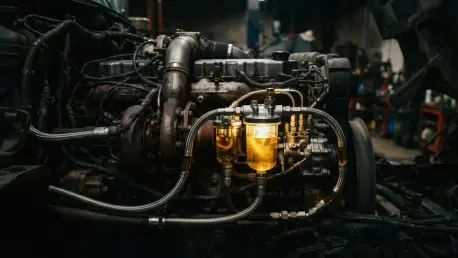

The modern landscape of heavy-duty transportation remains tethered to the diesel engine, a machine celebrated for its thermal efficiency yet criticized for its environmental footprint. In-cylinder oxygen levels inherent in vegetable-based fuels can paradoxically increase nitrogen oxide formation by providing the necessary reactants for chemical bonding at high heat. Nitrogen oxides, or NOx, comprise a significant portion of anthropogenic pollution, accounting for roughly 15% of the global total. These substances are not merely atmospheric irritants; they are the precursors to ground-level ozone and acid rain, which decimate ecosystems and corrode urban infrastructure. As regulators tighten emissions standards, the scientific community is scrutinizing the chemical behavior of various biodiesel feedstocks. The challenge lies in balancing the inherent carbon-neutrality of plant-based oils with the unintended consequence of elevated NOx levels, which can lead to severe health crises. Even small increases in exposure are linked to a significant rise in lung cancer cases, making the search for cleaner fuel blends a critical public health priority for the remainder of the decade.
Evaluating Edible Feedstocks: Performance and Variability
The utilization of edible oils as a feedstock for biodiesel production presents a unique set of challenges and opportunities within the current energy framework. While these oils are readily available and possess chemical structures that are easily converted into high-quality fuel, their performance in modern compression-ignition engines is far from uniform. The core difficulty lies in the wide variety of fatty acid compositions found across different plant species, which directly influences the combustion characteristics and the subsequent emission of nitrogen oxides. Some edible biodiesels exhibit excellent lubricity and high cetane numbers, which contribute to smoother engine operation and reduced mechanical wear over long-term use. However, the inherent oxygen content and varying viscosity levels can lead to unpredictable in-cylinder thermal dynamics. Understanding these nuances is essential for developing fuel blends that can meet stringent environmental standards without compromising the durability or efficiency of the transportation infrastructure that powers the global economy.
Performance Successes: Food-Based Oil Profiles
The performance of edible oil feedstocks in reducing nitrogen oxide emissions is remarkably variable, proving that biodiesel cannot be treated as a monolithic fuel category. Safflower oil has distinguished itself as a premier candidate in this sector, particularly when researchers utilize a fifty-fifty blend with kerosene. This specific mixture has demonstrated a capacity to reduce NOx levels by more than sixty percent compared to standard diesel. The success of safflower oil is largely due to the chemical synergy with kerosene, which possesses a high energy density that stabilizes the combustion process. By maintaining a more consistent temperature within the engine cylinder, this blend prevents the rapid heat spikes that typically lead to the formation of harmful nitrogen compounds. Furthermore, the lubricity of the vegetable oil component ensures that the engine remains protected against wear, even when running on higher-performance blends. Such results suggest that edible oils can be effective when strategically mixed with stabilizing agents.
Technical Challenges: Soybean and Palm Blends
In contrast to the success of safflower and sunflower oils, common feedstocks like soybean and palm oil present a much more complicated picture for emission control. Soybean biodiesel frequently exhibits higher NOx production than conventional mineral diesel unless the fatty acid profile is meticulously controlled to favor high levels of methyl oleate. Without this chemical adjustment, the inherent oxygen in the soybean oil facilitates a faster reaction between atmospheric nitrogen and oxygen at high temperatures. Similarly, palm oil results are highly dependent on the specific blend ratio and the load applied to the engine, often fluctuating between minor reductions and slight increases. These inconsistencies make it difficult for logistics companies to rely on these oils as a primary solution for air quality compliance. The mechanical paradox is that while these fuels burn cleaner in terms of soot and particulate matter, their oxygen-rich nature often pushes the chemical balance toward the formation of toxic nitrogen oxides during the peak heat of the power stroke.
High-Emission Risks: Canola and Rice-Bran Oils
Canola and rice-bran oils represent some of the most challenging edible feedstocks currently under evaluation in the renewable energy sector. In some experimental setups, canola oil blends have been linked to dramatic spikes in emissions, with certain studies recording increases of over eighty percent compared to low-sulfur diesel. Rice-bran oil exhibits similar issues, typically requiring the use of secondary additives like n-butanol or mechanical systems such as Exhaust Gas Recirculation (EGR) to bring emission levels down to acceptable standards. These high-viscosity oils often struggle with poor atomization, leading to larger fuel droplets that burn unevenly and create excessive heat. The resulting combustion profile is often characterized by a high heat release rate that quickly enters the thermal NOx zone, making these oils less attractive for urban transport fleets. To mitigate these effects, researchers are exploring complex tertiary blends that mix these problematic oils with lighter fuels to improve their flow characteristics while also lowering production costs.
Non-Edible Feedstocks: The Thermal Threshold Factor
Non-edible oil feedstocks have surfaced as a critical focal point for researchers aiming to decouple fuel production from the global food supply chain. Unlike their edible counterparts, these oils are derived from plants that can thrive in harsh, arid, or otherwise marginal environments, making them a more ethically and economically sustainable choice for large-scale energy production. Chemically, non-edible oils often feature higher viscosities and more complex molecular chains, which require advanced processing or the use of specific additives to optimize their performance in diesel engines. Despite these technical hurdles, the potential for significant nitrogen oxide reduction is much higher with non-edible sources, especially when integrated with modern combustion management technologies. These feedstocks allow for a circular economy where waste products or hardy wild species are converted into high-value energy, effectively reducing the carbon footprint of the heavy-duty transport sector while simultaneously addressing the pressing need for improved urban air quality.
Sustainable Alternatives: Pongamia and Algae Profiles
Non-edible oil feedstocks are widely considered the most viable long-term solution because they do not interfere with food security and often provide superior emission profiles. Pongamia pinnata, for instance, has demonstrated extraordinary performance when utilized in a dual-fuel configuration alongside biogas. This combination achieved an eighty-four percent reduction in NOx at full load, the highest recorded efficiency in recent technical reviews. The success of this dual-fuel approach lies in the low energy density of the biogas, which acts as a thermal buffer that slows down the combustion rate. By preventing the engine from reaching the critical thirteen hundred degree threshold, this method effectively suppresses the formation of nitrogen oxides at the source. Other hardy species like Azolla pinnata, a type of water fern used to create algae biodiesel, have also shown the ability to cut emissions by nearly forty percent. These plants can be cultivated in environments that are unsuitable for food crops, providing a scalable source of energy for the shipping industry.
Advanced Innovations: Nanotechnology and Jatropha
Jatropha biodiesel represents another significant breakthrough in the quest to reduce diesel emissions through non-edible feedstocks. When researchers enhanced Jatropha oil with carbon nanotubes at a concentration of fifty milligrams per liter, they observed a fifty-two percent decrease in nitrogen oxide pollutants. These nanoparticles act as catalysts that accelerate the ignition process while simultaneously smoothing out the temperature spikes within the cylinder. By creating a more controlled combustion environment, the nanotubes prevent the extreme heat that triggers the chemical bonding of nitrogen and oxygen. This nanotechnology-based approach is particularly effective because it addresses the high viscosity and ignition delay issues inherent in raw Jatropha oil. Furthermore, the use of metallic nanoparticles like aluminum oxide has shown similar potential in stabilizing the burn rate of non-edible oils. These innovations allow engineers to exploit the high cetane number of biodiesel while eliminating the emission penalties associated with vegetable-based fuels.
Future Outlook: Mitigation and Strategic Integration
The transition to cleaner diesel power successfully hinged on the sophisticated integration of alternative feedstocks and advanced chemical management. Researchers established that while biodiesel offered a renewable path, the physical property of in-cylinder oxygen necessitated precise cooling strategies to suppress the formation of nitrogen oxides. It was determined that a combination of alcohol additives and refined injection timing provided the most effective defense against the thermal NOx zone. Furthermore, the implementation of nanotechnology and the scaling of non-edible oil production were identified as the most viable solutions for the future of sustainable transportation. Moving forward, the industry should prioritize the commercialization of these advanced fuel blends to ensure that air quality standards are met without disrupting global logistics. By adopting these multi-faceted approaches, the mechanical paradox of vegetable-based fuels was finally resolved, allowing for a cleaner and more efficient energy landscape. These efforts ensured that diesel technology remained a functional component of the world’s economy.