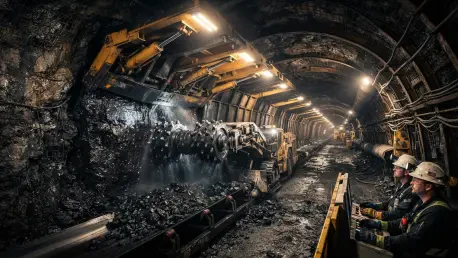

Researchers have developed a one-button drilling and bolting system that compresses a complex six-step installation sequence into a single automated action. This breakthrough serves as a cornerstone for China’s broader strategy to modernize its energy infrastructure while maintaining coal as the fundamental bedrock of national energy security. As of 2026, the industry has successfully transitioned from a fragmented landscape of over 10,000 small-scale operations to a streamlined network of approximately 4,300 high-capacity mines. This consolidation has prioritized operations capable of producing over 1.2 million tons annually, which now represent more than 85 percent of the national output. By focusing on “safe and efficient” mining models, the sector has seen the average annual capacity per mine climb to 2.73 million tons. This shift is not merely about volume; it represents a fundamental change in the industry’s safety profile, with fatality rates per million tons dropping to historic lows. The integration of advanced automation and rigorous disaster-prevention protocols has transformed coal extraction from a high-risk manual labor endeavor into a sophisticated, technology-driven industrial process that operates with unprecedented precision.
Innovative Infrastructure and Construction Techniques
Engineering Solutions: Deep-Seam Access
Accessing China’s massive coal reserves requires specialized engineering because the vast majority of deposits are located deep within complex geological strata rather than near the surface. To overcome the challenges of extreme depth, engineers have perfected a specialized “trinity” of construction techniques involving advanced drilling, freezing, and grouting methods. Vertical shaft drilling has evolved from traditional multi-stage processes to single-pass completions that can now reach depths of 660 meters with high accuracy. In areas where rock layers are unstable or saturated with water, the “freezing method” is employed to stabilize the ground during excavation. This technique, which has been refined through decades of application, allows engineers to push freezing depths to nearly 1,000 meters, ensuring that shafts remain structurally sound in even the most treacherous environments. These advancements have enabled the industry to tap into seams that were previously considered unreachable due to the technical limitations of older construction frameworks.
Beyond vertical access, the development of inclined shafts has reached new milestones in engineering prowess and operational scale. Grouting technology, which involves injecting specialized fluids into rock formations to create impermeable seals against high-pressure underground water, now effectively reaches depths exceeding 1,350 meters. A primary example of this capability is the Hetaoyu Coal Mine, which utilizes an inclined shaft spanning nearly 5.9 kilometers, currently the longest of its kind in the country. These infrastructure projects are not just feats of civil engineering; they are vital arteries that support the continuous flow of energy to industrial centers. By mastering the ability to navigate deep and unstable geological formations, the industry has established a reliable foundation for long-term production. The move toward deeper mining necessitates constant innovation in materials science and structural monitoring to ensure that these underground highways remain safe and functional throughout their decades-long operational life cycles.
The Bottleneck: Resolving Roadway Excavation
While coal extraction at the working face has advanced rapidly, the excavation of roadways or access tunnels long remained a significant bottleneck due to the labor-intensive nature of tunnel support. Traditionally, the installation of resin bolts required a tedious six-step manual sequence that significantly slowed the progress of tunnel development. The introduction of the “one-button” drilling and bolting system has fundamentally altered this dynamic by automating the entire support process. When this integrated equipment was deployed at the Caojiatan Coal Mine, it achieved a maximum daily advance of 63 meters, a rate that was previously unthinkable in such massive roadway sections. This automation not only speeds up the construction of new mining areas but also removes human workers from the most dangerous part of the tunneling process, where the risk of roof falls is highest. This technological leap ensures that tunnel development can finally keep pace with the high-speed extraction machinery used at the main coal face.
In addition to automated bolting, the industry has pivoted toward the use of full-face tunnel boring machines, known as TBMs, for rock-based roadway construction. Developed through collaborative efforts between research institutes and major mining groups, these massive machines have increased tunneling efficiency sixfold compared to traditional drill-and-blast methods. Modern TBMs have set monthly records for progress, frequently exceeding 730 meters of completed tunnel in a single thirty-day period. This transition away from explosive-based excavation reduces the vibration and structural damage to the surrounding rock, leading to more stable and longer-lasting tunnel infrastructures. The synergy between one-button bolting systems and TBM technology has created a high-speed development pipeline that allows for the rapid expansion of mining operations into new districts. As these systems become more widespread, the historical delay between exploration and extraction continues to shrink, allowing for a more responsive and agile energy production strategy.
Breakthroughs in Extraction and Intelligence
Scaling Up: Reaching the 10-Meter Extraction Frontier
The most visible evidence of technological advancement is found at the extraction face, where China has successfully entered the era of 10-meter ultra-high mining. This achievement was made possible by the development of the ZYA29000 hydraulic shield, a massive support system that provides the stability required to cut through exceptionally thick coal seams in a single pass. At the Caojiatan Coal Mine, this system is paired with high-performance shearers and conveyor belts capable of moving 8,000 tons of coal per hour. In late 2024, this setup demonstrated its full potential by recording a peak daily output of 71,800 tons from a single working face. Mining at such heights requires extreme precision in mechanical design and hydraulic control to prevent the collapse of the overlying rock strata. The success of this 10-meter frontier has effectively doubled the productivity of individual mining faces, allowing for higher total output with a smaller operational footprint and fewer required personnel.
For coal seams that are even thicker, ranging from 14 to 20 meters, engineers utilize a sophisticated “top-coal caving” method that combines mechanical cutting with gravity-assisted recovery. In this process, the bottom slice of the coal seam is cut using a shearer, while the upper portion is allowed to fracture and collapse under its own weight into a collection system at the rear of the hydraulic shields. This method relies on complex mechanical models, such as the cantilever beam–articulated rock beam theory, to ensure that the collapse occurs in a controlled and predictable manner. Top-coal caving has allowed for the efficient recovery of resources in massive seams that would otherwise be impossible to mine safely using standard techniques. By maximizing the recovery rate of these thick deposits, the industry is able to extend the lifespan of existing mines and reduce the need for new surface disturbances. These extraction technologies represent the pinnacle of mechanical engineering in the mining sector, pushing the boundaries of what is physically possible in underground environments.
Intelligence: The Digital Transformation of Mining
The current focus of coal science is the creation of the intelligent mine, a digital ecosystem built on the pillars of 5G connectivity, ubiquitous sensing, and automated control. Modern shearers and hydraulic supports are now equipped with an array of tilt sensors and high-speed data links that allow them to “feel” their way through a coal seam in real-time. This “intelligent perception” enables the machinery to identify the boundary between coal and rock, adjusting the cutting height automatically to minimize waste and protect the equipment. At the same time, hydraulic shields use coordinated cluster control to maintain optimal support strength against the immense pressure of the overlying earth. This interconnected system ensures that the entire mining face operates as a single, synchronized machine, responding instantly to changes in geological conditions. These advancements have drastically reduced the number of people required at the working face, moving operators to remote control centers located safely on the surface.
While intelligent perception and control are already operational, the next phase of digital transformation involves autonomous decision-making through data-driven algorithms. Currently, most monitoring centers provide high-fidelity reporting, but the ultimate goal is to remove the human from the immediate decision loop for routine tasks. Advanced systems are being trained to dynamically adjust conveyor speeds based on the volume of coal being cut and to optimize the trajectory of the shearer using predictive geological modeling. By integrating big data from thousands of sensors, these systems can identify potential equipment failures before they occur and suggest preventative maintenance schedules. This shift toward a “smart” mining environment is not just an incremental improvement; it is a fundamental reimagining of how energy is extracted. The result is a system that is more resilient to geological surprises and more efficient in its use of power and resources, ensuring that the industry remains competitive in a rapidly changing global energy market.
Safety Standards and Environmental Stewardship
Managing Hazards: Proactive Management of Geological Threats
The dramatic reduction in mining accidents is the direct result of a proactive, technology-first approach to managing the traditional “hidden killers” of the industry, such as gas explosions and rock bursts. To address the risk of methane buildup, engineers now utilize directional long boreholes that can exceed 800 meters in length to drain gas before the mining process even begins. This technique has increased methane extraction efficiency by over 100 percent, effectively turning a major safety hazard into a valuable fuel source for local power generation. By pre-draining the seams, the risk of explosive gas concentrations is virtually eliminated, creating a much safer environment for the workforce. Furthermore, the use of regional grouting and “curtain grouting” creates impermeable barriers that protect mines from the immense pressure of underground aquifers, preventing the catastrophic flooding events that once plagued deep-mining operations.
In the extreme depths of modern mines, the sudden release of energy known as a rock burst is a constant threat that requires advanced monitoring and mitigation strategies. China has pioneered the use of microseismic and acoustic monitoring systems that can detect the subtle sounds of rock fracturing long before a major burst occurs. When high-stress areas are identified, engineers use “precision roof cutting” and stress-relief drilling to safely dissipate the stored energy in the rock. This scientific approach to hazard management has replaced the reactive safety protocols of the past with a predictive model that anticipates problems before they endanger lives. The combination of real-time monitoring and active stress management ensures that even as mines go deeper into the earth, the safety of the miners remains the top priority. These technologies have fundamentally decoupled coal production from the high fatality rates that historically characterized the sector, setting a new global standard for underground safety.
Future Outlook: Pursuing a Green and Sustainable Future
The future of the coal industry is increasingly defined by the “Green Mining” paradigm, which seeks to balance the necessity of energy extraction with the protection of fragile ecosystems. In the arid regions of western China, “water-conserving mining” techniques are used to protect vital underground aquifers from being depleted or contaminated by extraction activities. This involves creating impermeable barriers and using backfilling techniques to maintain the natural hydrological balance of the region. By protecting the local water table, the industry ensures that mining activities do not come at the expense of agricultural or residential water needs. Additionally, the concept of “coal and gas co-mining” allows for the simultaneous extraction of multiple resources, reducing the overall environmental footprint of the energy sector. This holistic approach to resource management is essential for maintaining the industry’s social license to operate in environmentally sensitive areas.
One of the most innovative developments in the green mining movement is the use of carbon sequestration through specialized backfill materials. By mixing captured carbon dioxide with solid waste materials like fly ash and mine tailings, engineers can fill the voids left by coal extraction, effectively storing the carbon underground while preventing surface subsidence. This “multi-resource co-mining” approach aims to transform traditional coal mines into integrated energy hubs that manage coal, gas, water, and heat simultaneously. The integration of renewable energy sources, such as solar and wind, on the surface of reclaimed mining sites further enhances the sustainability of these operations. This comprehensive strategy ensures that the coal industry can contribute to national climate goals while continuing to provide the reliable baseload power that the grid requires. The transition to an intelligent, green, and safe framework has become an operational reality, proving that coal can remain a vital and evolving part of a modern, environmentally conscious energy landscape.
Navigating the High-Tech Energy Horizon
The transformation of the coal industry established a new benchmark for how traditional energy sectors adapted to the demands of the twenty-first century. Engineers successfully integrated robotics, 5G connectivity, and deep-earth construction techniques to create a mining model that was safer and more efficient than any previous iteration. The sector moved away from labor-intensive processes, opting instead for automated systems that protected human life while maximizing resource recovery. These advancements proved that even a legacy industry could reinvent itself through sustained investment in research and development. The shift toward green mining protocols ensured that environmental protection was no longer an afterthought but a core component of the extraction process. By treating coal mines as integrated energy hubs, the industry managed to align its operations with broader national goals regarding both energy security and ecological stewardship.
The roadmap for future developments suggested that the total integration of autonomous decision-making and carbon-neutral extraction remains the primary objective. Industry leaders established a clear path toward “zero-person” working faces, where machinery operates with total autonomy under the supervision of surface-based technicians. The successful deployment of carbon sequestration and backfilling techniques offered a practical solution for balancing fossil fuel use with climate targets. As these technologies matured, the lessons learned in the coal sector provided a template for other heavy industries facing similar pressures to modernize. The evolution of mining technology demonstrated that the key to longevity lay in the aggressive pursuit of intelligence and sustainability. By prioritizing safety and efficiency, the industry secured its place in a diverse energy mix, ensuring that it remained a reliable and technologically advanced contributor to the global energy market for decades to come.