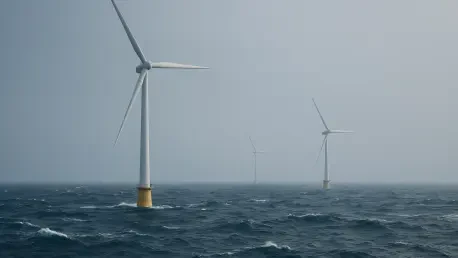

The global transition toward sustainable energy has reached a pivotal juncture where the limitations of traditional fixed-bottom offshore wind turbines are becoming increasingly apparent due to shallow-water constraints. While early developments primarily focused on the southwestern coastlines, South Korea is now pivoting its strategic focus toward the deep-sea environments off the eastern coast, specifically near the industrial powerhouse of Ulsan. Here, the average wind speeds frequently exceed eight meters per second, providing a far more consistent and powerful energy yield than what is achievable closer to shore. This geographic shift represents more than just a search for better weather conditions; it is a calculated move to redefine the national energy portfolio by tapping into vast maritime territories that were previously unreachable. By utilizing floating substructures, the industry can bypass the topographical limitations of the seabed, allowing for the deployment of massive turbine arrays in depths exceeding sixty meters. This evolution not only enhances power production but also positions the nation as a central figure in the next generation of maritime technology, as the world looks toward deeper oceans for scalable green solutions.
Industrial Synergy: Leveraging Maritime Expertise for Global Leadership
The inherent complexity of keeping massive wind turbines stable in turbulent deep-sea environments aligns perfectly with the advanced engineering capabilities of South Korea’s world-class shipbuilding sector. Major players like HD Hyundai Heavy Industries and Samsung Heavy Industries are already repurposing their extensive experience in constructing offshore oil platforms and liquefied natural gas carriers to develop innovative floating foundations. Unlike the lower-tech fixed-bottom installations or photovoltaic arrays that have seen heavy market saturation, floating offshore wind requires sophisticated mooring systems and dynamic cabling capable of withstanding extreme oceanic pressures. This technological barrier acts as a natural defensive moat, allowing Korean firms to capitalize on their historical dominance in high-end maritime manufacturing. By integrating these massive structures into existing shipyard workflows, the nation can achieve economies of scale that few other countries can replicate. This synergy transforms the energy transition into an industrial evolution that strengthens the local manufacturing base while creating a high-value export commodity for the future.
One of the most persistent hurdles in the development of renewable infrastructure is the social friction caused by the proximity of energy projects to residential and fishing communities. By moving wind farms approximately sixty-five kilometers away from the coastline, South Korea effectively mitigates common complaints regarding noise pollution and the degradation of scenic coastal vistas. This distance ensures that the visual impact is virtually nonexistent from the shore, which significantly streamlines the permitting process and reduces the likelihood of local opposition. Furthermore, these far-offshore locations minimize interference with coastal shipping lanes and artisanal fishing grounds, which have historically been points of contention for near-shore wind projects. The ability to operate in the open ocean provides the necessary space to deploy larger, more efficient turbines that can capture stronger, unobstructed winds. This strategic isolation from human settlements allows for more ambitious project scales, turning the vast expanse of the East Sea into a high-capacity power plant that functions efficiently without disrupting the daily lives or economic activities of residents.
To move forward, the government implemented a separate auction market specifically for floating wind to account for its unique cost structures and technical demands. This policy change encouraged private investment by providing a predictable revenue stream that recognized the higher capital intensity of deep-sea foundations compared to traditional wind projects. Furthermore, state-run financial institutions provided critical seed funding that de-risked the early phases of port infrastructure expansion and the construction of specialized heavy-lift vessels. Stakeholders also established a centralized database for oceanic conditions to assist in the standardization of mooring systems and dynamic cabling across various projects. These actions ensured that the national supply chain remained competitive against international rivals while fostering a domestic track record necessary for global expansion. Designers successfully integrated fifteen-megawatt turbines into semi-submersible platforms, which provided a reliable blueprint for future high-capacity arrays. By focusing on these technical solutions, the nation effectively transitioned into a dominant global provider of maritime energy technology.